Notice: تابع WP_Block_Type_Registry::register به طورنادرست فراخوانی شد. نامهای نوع بلوک نباید حروف بزرگ داشته باشند. لطفاً برای اطلاعات بیشتر، اشکال زدایی در وردپرس را مشاهده کنید. (این پیام در نگارش 5.0.0 افزوده شده است.) in /home/ethicsho/public_html/wp-includes/functions.php on line 5313
Warning: Use of undefined constant TDC_PATH_LEGACY - assumed 'TDC_PATH_LEGACY' (this will throw an Error in a future version of PHP) in /home/ethicsho/public_html/wp-content/plugins/td-composer/td-composer.php on line 109
Warning: Use of undefined constant TDSP_THEME_PATH - assumed 'TDSP_THEME_PATH' (this will throw an Error in a future version of PHP) in /home/ethicsho/public_html/wp-content/plugins/td-composer/td-composer.php on line 113 بایگانیهای BJ1012 .M545 2005 - خانه اخلاق پژوهان جوان Notice: Trying to access array offset on value of type bool in /home/ethicsho/public_html/wp-content/plugins/wp-ulike/inc/general-functions.php on line 807
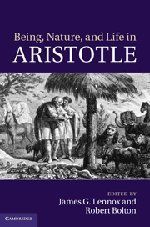
“This volume of essays explores major connected themes in Aristotle’s metaphysics, philosophy of nature, and ethics, especially themes related to essence, definition, teleology, activity, potentiality, and the highest good. The volume is united by the belief that all aspects of Aristotle’s work need to be studied together if any one of the areas of thought is to be fully understood. Many of the papers were contributions to a conference at the University of Pittsburgh entitled ‘Being, Nature, and Life in Aristotle’, to honor Professor Allan Gotthelf’s many contributions to the field of ancient philosophy; a few are contributions from those who were invited but could not attend. The contributors, all longstanding friends of Professor Gotthelf, are among the most accomplished scholars in the field of ancient philosophy today”–
Celadon, a poor nation on a poor planet, engaged in civil war and a haven for every type of villainy in space, is ripe for cleanup. The military could pacify it handily, but it would take a statesman to fix it.But some statesmen have ethics, which politicians and megacorps find inconvenient. President Bishwanath compounded the sin by being astute, ambitious and capable. Something had to be done, because a working nation isn’t much use for pork and graft.When the word comes down that he is dead, the politicians move on with a new plan, re-allocating resources, and finding a new, more pliable president to put in place.There are three problems with this solution. Bishwanath is not dead. His mercenary bodyguards are more loyal than the politicians. And if they’re not on contract, there are no rules.
How should we decide which inequalities between people are justified, and which are unjustified? One answer is that such inequalities are only justified where there is a corresponding variation in responsible action or choice on the part of the persons concerned. This view, which has become known as ‘luck egalitarianism’, has come to occupy a central place in recent debates about distributive justice. This book is the first full length treatment of this significant development in contemporary political philosophy. Each of its three parts addresses a key question concerning the theory. Which version of luck egalitarian comes closest to realizing luck egalitarian objectives? Does luck egalitarianism succeed as a view of egalitarian justice? And is it sound as an account of distributive justice in general? The book provides a distinctive answer to each of these questions, along the way engaging with the leading theorists identified in the literature as luck egalitarians, such as Richard Arneson, G. A. Cohen, and Ronald Dworkin, as well as the most influential critics, including Elizabeth Anderson, Marc Fleurbaey, Susan Hurley, Samuel Scheffler, and Jonathan Wolff. Key Features *Presents a critical survey of already classic debates about responsibility, equality and justice *Provides a sustained engagement with luck egalitarianism’s critics *Stakes a distinctive position on the key questions regarding luck egalitarianism
Regenerative medicine is rich with promethean promises. The use of human embryonic stem cells in research is justified by its advocates in terms of promises to cure a wide range of diseases and disabilities, from Alzheimer’s and Parkinsonism to the results of heart attacks and spinal cord injuries. More broadly, there is the promethean allure of being able to redesign human biological nature in terms of the goals and concerns of humans. Needless to say, these allures and promises have provoked a wide range of not just moral but metaphysical reflections that reveal and reflect deep fault-lines in our cultures. The essays in this volume, directly and indirectly, present the points of controversy as they tease out the character of the moral issues that confront any attempt to develop the human regenerative technologies that might move us from a human to a post-human nature. Although one can appreciate the disputes as independently philosophical, they are surely also a function of the conflict between a Christian and a post-Christian culture, in that Christianity has from its beginning recognized a fundamental prohibition against the taking of early human life. Even the philosophical disputes that frame secular bioethics are often motivated and shaped by these background cultural conflicts. These essays display this circumstance in rich ways.
ما از اخلاق چه انتظاری داریم؟ این سوال شاید تاحدودی برای عموم مردم و یا متخصصان این رشته قابل پاسخ باشد؛ اینکه خوب بودن را به ما بیاموزد و در تنظیم روابط فردی م...

جشن کتاب تهران به ایستگاه سی و یکم رسیده است. حال و احوال نشر کتاب خوب نیست و باید فرهنگدوستان را به خرید و هدیه دادن کتاب ترغیب نمود. خانه اخلاقپژوهان جوان ب...

بنیاد کتابهای اخلاق اسلامی عمدتا پالایش جان از آلودگیها و آراستن آن به زیباییها است. اندیشه محوری این قبیل کتابها آن است که انسان فعلی آنی نیست که باید باشد...

-
0 Comments