Notice: تابع WP_Block_Type_Registry::register به طورنادرست فراخوانی شد. نامهای نوع بلوک نباید حروف بزرگ داشته باشند. لطفاً برای اطلاعات بیشتر، اشکال زدایی در وردپرس را مشاهده کنید. (این پیام در نگارش 5.0.0 افزوده شده است.) in /home/ethicsho/public_html/wp-includes/functions.php on line 5313
Warning: Use of undefined constant TDC_PATH_LEGACY - assumed 'TDC_PATH_LEGACY' (this will throw an Error in a future version of PHP) in /home/ethicsho/public_html/wp-content/plugins/td-composer/td-composer.php on line 109
Warning: Use of undefined constant TDSP_THEME_PATH - assumed 'TDSP_THEME_PATH' (this will throw an Error in a future version of PHP) in /home/ethicsho/public_html/wp-content/plugins/td-composer/td-composer.php on line 113 بایگانیهای BH39 .K54 2005 - خانه اخلاق پژوهان جوان Notice: Trying to access array offset on value of type bool in /home/ethicsho/public_html/wp-content/plugins/wp-ulike/inc/general-functions.php on line 807
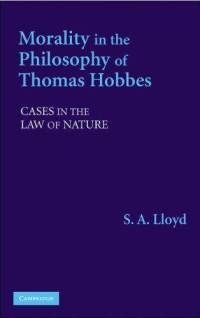
In this book, S. A. Lloyd offers a radically new interpretation of Hobbes’s laws of nature, revealing them to be not egoistic precepts of personal prudence but rather moral instructions for obtaining the common good. This account of Hobbes’s moral philosophy stands in contrast to both divine command and rational choice interpretations. Drawing from the core notion of reciprocity, Lloyd explains Hobbes’s system of “cases in the law of nature” and situates Hobbes’s moral philosophy in the broader context of his political philosophy and views on religion. Offering ingenious new arguments, Lloyd defends a reciprocity interpretation of the laws of nature through which humanity’s common good is secured.
In this important book, Jeffrey Reiman responds to recent assaults on liberal theory by proposing a “critical moral liberalism.” It is liberal in maintaining the emphasis of classical liberalism on individual freedom, moral in adhering to a distinctive vision of the good life rather than professing neutrality, and critical in taking seriously the objection-raised by feminists and Marxists, among others-that liberal theories often serve as ideological cover for oppression of one group by others. Critical moral liberalism has a conception of ideology, and resources for testing the suspicion that arrangements that look free are really oppressive. Reiman sets forth the basic arguments for the liberal moral obligation to maximize people’s ability to govern their own lives, and for the conception of the good life that goes with this. He considers and answers objections to the liberal project, and defends liberal conceptions of privacy, moral virtue, economic justice, and Constitutional interpretation. Reiman then takes up specific policy issues, among them abortion, infanticide, euthanasia, moral education, capital punishment, and threats to privacy from modern information technology. Critical Moral Liberalism will be of interest to scholars and students of ethics, social and political philosophy, political theory, and public policy.
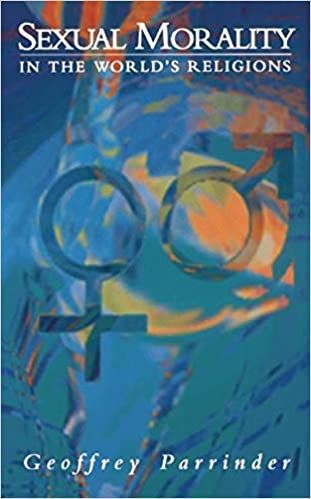
An exploration of sex and religion together within the historical andontemporary contexts of each of the world’s major living religions, from thencient traditions and practices of both Eastern and Western religions to theodern influences of medicine, psychology and women’s rights. The book covers wide range of subjects, including marriage and celibacy, monogamy andolygamy, homosexuality, passion and love, veiling and harems, Yoga andantra, Yin and Yang, mystical union and symbolism.
Crispin Wright’s Truth and Objectivity brought about a far-reaching reorientation of the metaphysical debates concerning realism and truth. The essays in this companion volume prefigure, elaborate, or defend the proposals put forward in that landmark work. The collection includes the Gareth Evans memorial lecture in which the program of Truth and Objectivity was first announced, as well as all of Wright’s published reactions to the extensive commentary his study provoked; it presents substantial new developments and applications of the pluralistic outlook on the realism debates proposed in Truth and Objectivity, and further pursues its distinctive minimalist conceptions of truth and of truth-aptitude. Among the papers are important discussions of coherence conceptions of truth, of Hilary Putnam’s most recent views on truth, and of the classical debate between correspondence, coherence, pragmatism, and deflationary conceptions of the notion. Others are concerned with Kripke’s famous argument against physicalist conceptions of sensation; the distinction between minimal truth-aptitude and cognitive command; a novel prospectus for a philosophy of vagueness; and a new proposal about the most resilient interpretation of relativism.
ما از اخلاق چه انتظاری داریم؟ این سوال شاید تاحدودی برای عموم مردم و یا متخصصان این رشته قابل پاسخ باشد؛ اینکه خوب بودن را به ما بیاموزد و در تنظیم روابط فردی م...

جشن کتاب تهران به ایستگاه سی و یکم رسیده است. حال و احوال نشر کتاب خوب نیست و باید فرهنگدوستان را به خرید و هدیه دادن کتاب ترغیب نمود. خانه اخلاقپژوهان جوان ب...

بنیاد کتابهای اخلاق اسلامی عمدتا پالایش جان از آلودگیها و آراستن آن به زیباییها است. اندیشه محوری این قبیل کتابها آن است که انسان فعلی آنی نیست که باید باشد...

-
0 Comments