Notice: تابع WP_Block_Type_Registry::register به طورنادرست فراخوانی شد. نامهای نوع بلوک نباید حروف بزرگ داشته باشند. لطفاً برای اطلاعات بیشتر، اشکال زدایی در وردپرس را مشاهده کنید. (این پیام در نگارش 5.0.0 افزوده شده است.) in /home/ethicsho/public_html/wp-includes/functions.php on line 5313
Warning: Use of undefined constant TDC_PATH_LEGACY - assumed 'TDC_PATH_LEGACY' (this will throw an Error in a future version of PHP) in /home/ethicsho/public_html/wp-content/plugins/td-composer/td-composer.php on line 109
Warning: Use of undefined constant TDSP_THEME_PATH - assumed 'TDSP_THEME_PATH' (this will throw an Error in a future version of PHP) in /home/ethicsho/public_html/wp-content/plugins/td-composer/td-composer.php on line 113 بایگانیهای BF724.85.S45 .C48 2002 - خانه اخلاق پژوهان جوان Notice: Trying to access array offset on value of type bool in /home/ethicsho/public_html/wp-content/plugins/wp-ulike/inc/general-functions.php on line 807
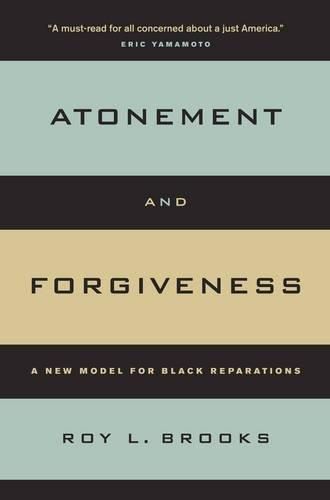
Roy L. Brooks reframes one of the most important, controversial, and misunderstood issues of our time in this far-reaching reassessment of the growing debate on black reparation. Atonement and Forgiveness shifts the focus of the issue from the backward-looking question of compensation for victims to a more forward-looking racial reconciliation. Offering a comprehensive discussion of the history of the black redress movement, this book puts forward a powerful new plan for repairing the damaged relationship between the federal government and black Americans in the aftermath of 240 years of slavery and another 100 years of government-sanctioned racial segregation. Key to Brooks’s vision is the government’s clear signal that it understands the magnitude of the atrocity it committed against an innocent people, that it takes full responsibility, and that it publicly requests forgiveness–in other words, that it apologizes. The government must make that apology believable, Brooks explains, by a tangible act that turns the rhetoric of apology into a meaningful, material reality, that is, by reparation. Apology and reparation together constitute atonement. Atonement, in turn, imposes a reciprocal civic obligation on black Americans to forgive, which allows black Americans to start relinquishing racial resentment and to begin trusting the government’s commitment to racial equality. Brooks’s bold proposal situates the argument for reparations within a larger, international framework–namely, a post-Holocaust vision of government responsibility for genocide, slavery, apartheid, and similar acts of injustice. Atonement and Forgiveness makes a passionate, convincing case that only with this spirit of heightened morality, identity, egalitarianism, and restorative justice can genuine racial reconciliation take place in America. Roy L. Brooks reframes one of the most important, controversial, and misunderstood issues of our time in this far-reaching reassessment of the growing debate on black reparation. Atonement and Forgiveness shifts the focus of the issue from the backward-looking question of compensation for victims to a more forward-looking racial reconciliation. Offering a comprehensive discussion of the history of the black redress movement, this book puts forward a powerful new plan for repairing the damaged relationship between the federal government and black Americans in the aftermath of 240 years of slavery and another 100 years of government-sanctioned racial segregation. Key to Brooks’s vision is the government’s clear signal that it understands the magnitude of the atrocity it committed against an innocent people, that it takes full responsibility, and that it publicly requests forgiveness–in other words, that it apologizes. The government must make that apology believable, Brooks explains, by a tangible act that turns the rhetoric of apology into a meaningful, material reality, that is, by reparation. Apology and reparation together constitute atonement. Atonement, in turn, imposes a reciprocal civic obligation on black Americans to forgive, which allows black Americans to start relinquishing racial resentment and to begin trusting the government’s commitment to racial equality. Brooks’s bold proposal situates the argument for reparations within a larger, international framework–namely, a post-Holocaust vision of government responsibility for genocide, slavery, apartheid, and similar acts of injustice. Atonement and Forgiveness makes a passionate, convincing case that only with this spirit of heightened morality, identity, egalitarianism, and restorative justice can genuine racial reconciliation take place in America.
The time has come to reform philosophy, says Hilary Putnam, one of America’s great philosophers. He calls upon philosophers to attend to the gap between the present condition of their subject and the human aspirations that philosophy should and once did claim to represent. Putnam’s goal is to embed philosophy in social life.The first part of this book is dedicated to metaphysical questions. Putnam rejects the contemporary metaphysics that insists on describing both the mind and the world from a God’s-eye view. In its place he argues for pluralism, for a philosophy that is not a closed systematic method but a human practice connected to real life. Philosophy has a task, to be sure, but it is not to provide an inventory of the basic furniture of the universe or to separate reality in itself from our own projections. Putnam makes it clear that science is not in the business of describing a ready-made world, and philosophy should not be in that business either.The author moves on to show that the larger human context in which science matters is a world of values animated by ethics and aesthetic judgments. No adequate philosophy should try to explain away ethical facts. The dimension of history is added in the third part of the book. Here Putnam takes up a set of American philosophers, some firmly within and others outside the canon of analytic philosophy, such as William James and C. S. Peirce, and he explores the pragmatist contribution to philosophy from James to Quine and Goodman.This book connects issues in metaphysics with cultural and literary issues and argues that the collapse of philosophical realism does not entail a fall into the abyss of relativism and postmodern skepticism. It is aimed primarily at philosophers but should appeal to a wide range of humanists and social scientists.
Arguments have consequences in world politics that are as real as the military forces of states or the balance of power among them. Neta Crawford reveals how ethical arguments, not power politics or economics, explain decolonization, the greatest change in world politics to occur over the last five hundred years. The book also analyzes how argument might be used to to remake contemporary world politics, suggesting how such arguments apply to the issue of humanitarian intervention.
This collection of essays addresses some of the most important issues in philosophy, involving God, the mind, freedom, knowledge, and ethics. It can accompany James and Stuart Rachels’ introductory text, Problems from Philosophy, or it can stand alone with great effectiveness. The Truth About the World and Problems from Philosophy are James Rachels’ last contributions to philosophy, and each book has now been revised by his son, Stuart. In these two books, the respected author found a culminating expression for his love of philosophy.
ما از اخلاق چه انتظاری داریم؟ این سوال شاید تاحدودی برای عموم مردم و یا متخصصان این رشته قابل پاسخ باشد؛ اینکه خوب بودن را به ما بیاموزد و در تنظیم روابط فردی م...

جشن کتاب تهران به ایستگاه سی و یکم رسیده است. حال و احوال نشر کتاب خوب نیست و باید فرهنگدوستان را به خرید و هدیه دادن کتاب ترغیب نمود. خانه اخلاقپژوهان جوان ب...

بنیاد کتابهای اخلاق اسلامی عمدتا پالایش جان از آلودگیها و آراستن آن به زیباییها است. اندیشه محوری این قبیل کتابها آن است که انسان فعلی آنی نیست که باید باشد...

-
0 Comments