Notice: تابع WP_Block_Type_Registry::register به طورنادرست فراخوانی شد. نامهای نوع بلوک نباید حروف بزرگ داشته باشند. لطفاً برای اطلاعات بیشتر، اشکال زدایی در وردپرس را مشاهده کنید. (این پیام در نگارش 5.0.0 افزوده شده است.) in /home/ethicsho/public_html/wp-includes/functions.php on line 5313
Warning: Use of undefined constant TDC_PATH_LEGACY - assumed 'TDC_PATH_LEGACY' (this will throw an Error in a future version of PHP) in /home/ethicsho/public_html/wp-content/plugins/td-composer/td-composer.php on line 109
Warning: Use of undefined constant TDSP_THEME_PATH - assumed 'TDSP_THEME_PATH' (this will throw an Error in a future version of PHP) in /home/ethicsho/public_html/wp-content/plugins/td-composer/td-composer.php on line 113 بایگانیهای BD450 .H2355 2007 - خانه اخلاق پژوهان جوان Notice: Trying to access array offset on value of type bool in /home/ethicsho/public_html/wp-content/plugins/wp-ulike/inc/general-functions.php on line 807
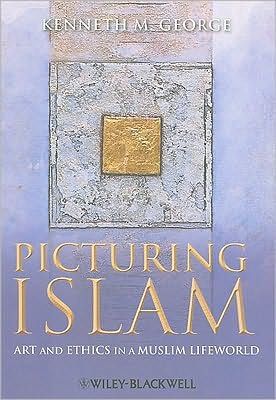
Picturing Islam: Art and Ethics in a Muslim Lifeworld explores issues of religion, nationalism, ethnicity, and globalization through the life and work of the prominent contemporary Indonesian artist Abdul Djalil Pirous. + Presents a unique addition to the anthropology of art and religion + Demonstrates the impact of Islam, ethnicity, nationalism, and globalization on the work and life of an internationally recognized postcolonial artist + Weaves together visual and narrative materials to tell an engrossing story of a cosmopolitan Muslim artist + Looks at contemporary Islamic art and the way it has been produced in the world’s largest Muslim nation, Indonesia
This handbook describes the broad aspects of risk management involving scientific policy judgment, uncertainty analysis, perception considerations, statistical insights, and strategic thinking. This book presents all the important concepts to enable the reader to “see the big picture.” This ability is extremely important – it allows the decision maker or strategic environmental planner to understand and cope with a wide variety of complex and interlinked pieces of information and data. The text presents environmental problems and, whenever applicable, the methodology required to reach a successful solution. Decisions and policies are examined. The book covers numerous objective and subjective components of environmental risk decision making. It details quantitative and comparative risk, and investigates the cost and feasibility of different decisions. Social pressures, safety, and political, religious, ethical, and psychological issues are addressed. How to evaluate the potential impact on the quality of life also is discussed. Any company doing risk assessment, risk management, or risk communication, as well as those doing environmental decision making will find this reference to be invaluable. It is also suitable as a text for courses in environmental management, environmental science, and risk assessment in the areas of risk management and strategic environmental planning.
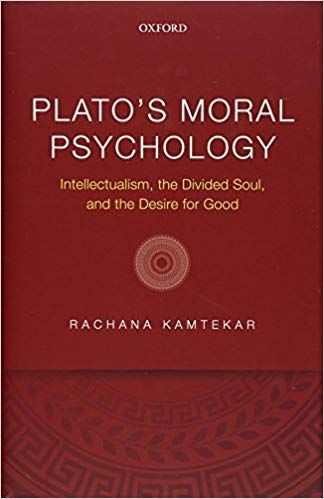
Plato’s Moral Psychology is concerned with Plato’s account of the soul and its impact on our living well or badly, virtuously or viciously. The core of Plato’s moral psychology is his account of human motivation, and Rachana Kamtekar argues that throughout the dialogues Plato maintains that human beings have a natural desire for our own good, and that actions and conditions contrary to this desire are involuntary (from which follows the ‘Socratic paradox’ that wrongdoing is involuntary). Our natural desire for our own good may be manifested in different ways: by our pursuit of what we calculate is best, but also by our pursuit of pleasant or fine things – pursuits which Plato assigns to distinct parts of the soul. Kamtekar develops a very different interpretation of Plato’s moral psychology from the mainstream interpretation, according to which Plato first proposes that human beings only do what we believe to be the best of the things we can do (‘Socratic intellectualism’) and then in the middle dialogues rejects this in favour of the view that the soul is divided into parts with some good-dependent and some good-independent motivations (‘the divided soul’).
“What does it mean to “be white”? Jennifer Harvey asks this question in order to consider how white U.S. Americans can fully participate in racial justice-making. Exploring native, African, and white American relations in two moments of United States history, she illustrates how “white” identities are the concrete embodiments of deeply problematic moral realities. She argues that movements for reparations for people of African descent and sovereignty for Native peoples attempt to redress such realities. Such movements, she concludes, are thus critical for racial justice and for the moral and spiritual transformation of white people in the United States.”–BOOK JACKET.
Can it be justifiable to commit oneself ‘by faith’ to a religious claim when its truth lacks adequate support from one’s total available evidence? In Believing by Faith, John Bishop defends a version of fideism inspired by William James’s 1896 lecture ‘The Will to Believe’. By critiquing both ‘isolationist’ (Wittgensteinian) and Reformed epistemologies of religious belief, Bishop argues that anyone who accepts that our publicly available evidence is equally open to theistic and naturalist/atheistic interpretations will need to defend a modest fideist position. This modest fideism understands theistic commitment as involving ‘doxastic venture’ – practical commitment to propositions held to be true through ‘passional’ causes (causes other than the recognition of evidence of or for their truth). While Bishop argues that concern about the justifiability of religious doxastic venture is ultimately moral concern, he accepts that faith-ventures can be morally justifiable only if they are in accord with the proper exercise of our rational epistemic capacities. Legitimate faith-ventures may thus never be counter-evidential, and, furthermore, may be made supra-evidentially only when the truth of the faith-proposition concerned necessarily cannot be settled on the basis of evidence. Bishop extends this Jamesian account by requiring that justifiable faith-ventures should also be morally acceptable both in motivation and content. Hard-line evidentialists, however, insist that all religious faith-ventures are morally wrong. Bishop thus conducts an extended debate between fideists and hard-line evidentialists, arguing that neither side can succeed in establishing the irrationality of its opposition. He concludes by suggesting that fideism may nevertheless be morally preferable, as a less dogmatic, more self-accepting, even a more loving, position than its evidentialist rival.
ما از اخلاق چه انتظاری داریم؟ این سوال شاید تاحدودی برای عموم مردم و یا متخصصان این رشته قابل پاسخ باشد؛ اینکه خوب بودن را به ما بیاموزد و در تنظیم روابط فردی م...

جشن کتاب تهران به ایستگاه سی و یکم رسیده است. حال و احوال نشر کتاب خوب نیست و باید فرهنگدوستان را به خرید و هدیه دادن کتاب ترغیب نمود. خانه اخلاقپژوهان جوان ب...

بنیاد کتابهای اخلاق اسلامی عمدتا پالایش جان از آلودگیها و آراستن آن به زیباییها است. اندیشه محوری این قبیل کتابها آن است که انسان فعلی آنی نیست که باید باشد...

-
0 Comments