Notice: تابع WP_Block_Type_Registry::register به طورنادرست فراخوانی شد. نامهای نوع بلوک نباید حروف بزرگ داشته باشند. لطفاً برای اطلاعات بیشتر، اشکال زدایی در وردپرس را مشاهده کنید. (این پیام در نگارش 5.0.0 افزوده شده است.) in /home/ethicsho/public_html/wp-includes/functions.php on line 5313
Warning: Use of undefined constant TDC_PATH_LEGACY - assumed 'TDC_PATH_LEGACY' (this will throw an Error in a future version of PHP) in /home/ethicsho/public_html/wp-content/plugins/td-composer/td-composer.php on line 109
Warning: Use of undefined constant TDSP_THEME_PATH - assumed 'TDSP_THEME_PATH' (this will throw an Error in a future version of PHP) in /home/ethicsho/public_html/wp-content/plugins/td-composer/td-composer.php on line 113 بایگانیهای BD21 .P48 2005 - خانه اخلاق پژوهان جوان Notice: Trying to access array offset on value of type bool in /home/ethicsho/public_html/wp-content/plugins/wp-ulike/inc/general-functions.php on line 807
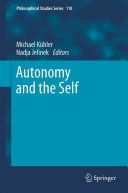
This volume addresses the complex interplay between the conditions of an agent’s personal autonomy and the constitution of her self in light of two influential background assumptions: a libertarian thesis according to which it is essential for personal autonomy to be able to choose freely how one’s self is shaped, on the one hand, and a line of thought following especially the seminal work of Harry Frankfurt according to which personal autonomy necessarily rests on an already sufficiently shaped self, on the other hand. Given this conceptual framework, a number of influential aspects within current debate can be addressed in a new and illuminating light: accordingly, the volume’s contributions range from 1) discussing fundamental conceptual interconnections between personal autonomy and freedom of the will, 2) addressing the exact role and understanding of different personal traits, e.g. Frankfurt’s notion of volitional necessities, commitments to norms and ideals, emotions, the phenomenon of weakness of will, and psychocorporeal aspects, 3) and finally taking into account social influences, which are discussed in terms of their ability to buttress, to weaken, or even to serve as necessary preconditions of personal autonomy and the forming of one’s self. The volume thus provides readers with an extensive and most up-to-date discussion of various influential strands of current philosophical debate on the topic. It is of equal interest to all those already engaged in the debate as well as to readers trying to get an up-to-date overview or looking for a textbook to use in courses.
The concept of luck has played an important role in debates concerning free will and moral responsibility, yet participants in these debates have relied upon an intuitive notion of what luck is. Neil Levy develops an account of luck, which is then applied to the free will debate. He argues that the standard luck objection succeeds against common accounts of libertarian free will, but that it is possible to amend libertarian accounts so that they are no more vulnerable to luck than is compatibilism. But compatibilist accounts of luck are themselves vulnerable to a powerful luck objection: historical compatibilisms cannot satisfactorily explain how agents can take responsibility for their constitutive luck; non-historical compatibilisms run into insurmountable difficulties with the epistemic condition on control over action. Levy argues that because epistemic conditions on control are so demanding that they are rarely satisfied, agents are not blameworthy for performing actions that they take to be best in a given situation. It follows that if there are any actions for which agents are responsible, they are akratic actions; but even these are unacceptably subject to luck. Levy goes on to discuss recent non-historical compatibilisms, and argues that they do not offer a viable alternative to control-based compatibilisms. He suggests that luck undermines our freedom and moral responsibility no matter whether determinism is true or not.
ما از اخلاق چه انتظاری داریم؟ این سوال شاید تاحدودی برای عموم مردم و یا متخصصان این رشته قابل پاسخ باشد؛ اینکه خوب بودن را به ما بیاموزد و در تنظیم روابط فردی م...

جشن کتاب تهران به ایستگاه سی و یکم رسیده است. حال و احوال نشر کتاب خوب نیست و باید فرهنگدوستان را به خرید و هدیه دادن کتاب ترغیب نمود. خانه اخلاقپژوهان جوان ب...

بنیاد کتابهای اخلاق اسلامی عمدتا پالایش جان از آلودگیها و آراستن آن به زیباییها است. اندیشه محوری این قبیل کتابها آن است که انسان فعلی آنی نیست که باید باشد...

-
0 Comments