Notice: تابع WP_Block_Type_Registry::register به طورنادرست فراخوانی شد. نامهای نوع بلوک نباید حروف بزرگ داشته باشند. لطفاً برای اطلاعات بیشتر، اشکال زدایی در وردپرس را مشاهده کنید. (این پیام در نگارش 5.0.0 افزوده شده است.) in /home/ethicsho/public_html/wp-includes/functions.php on line 5313
Warning: Use of undefined constant TDC_PATH_LEGACY - assumed 'TDC_PATH_LEGACY' (this will throw an Error in a future version of PHP) in /home/ethicsho/public_html/wp-content/plugins/td-composer/td-composer.php on line 109
Warning: Use of undefined constant TDSP_THEME_PATH - assumed 'TDSP_THEME_PATH' (this will throw an Error in a future version of PHP) in /home/ethicsho/public_html/wp-content/plugins/td-composer/td-composer.php on line 113 بایگانیهای BD111 .D428 2006 - خانه اخلاق پژوهان جوان Notice: Trying to access array offset on value of type bool in /home/ethicsho/public_html/wp-content/plugins/wp-ulike/inc/general-functions.php on line 807
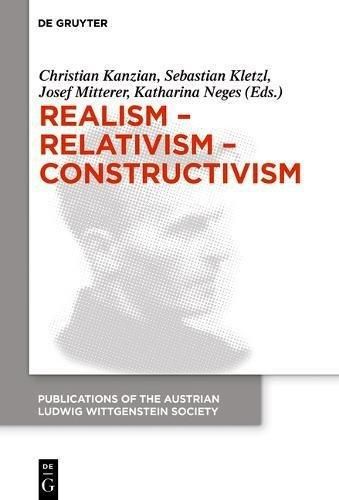
Publications of the series include the official proceedings of the ALWS-conferences and of their special workshops. THeseries is open also for other high-quality publications, especially on the philosophy of Ludwig Wittgenstein and its influence on contemporary systematic philosophy.
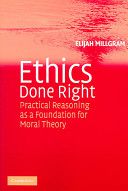
Ethics Done Right examines how practical reasoning can be put into the service of ethical and moral theory. Elijah Millgram demonstrates that the key to thinking about ethics is to understand generally how to make decisions. The papers in this volume support a methodological approach and trace the connections between two kinds of theory in utilitarianism, Kantian ethics, virtue ethics, Hume’s moral philosophy, and moral particularism. Unlike other studies of ethics, the book does not advocate a particular moral theory. Rather, it offers a tool that enables one to decide for oneself.
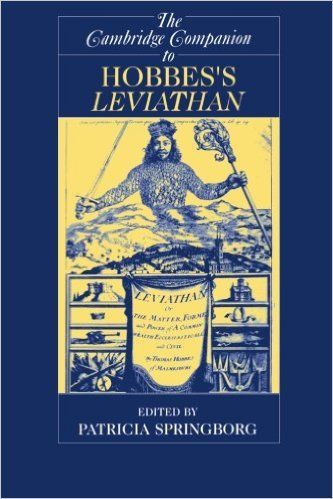
This Companion makes a new departure in Hobbes scholarship, addressing a philosopher whose impact was as great on Continental European theories of state and legal systems as it was at home. This volume is a systematic attempt to incorporate work from both the Anglophone and Continental traditions, bringing together newly commissioned work by scholars from ten different countries in a topic-by-topic sequence of essays that follows the structure of Leviathan, re-examining the relationship among Hobbes’s physics, metaphysics, politics, psychology, and religion. Collectively they showcase important revisionist scholarship that re-examines both the context for Leviathan and its reception, demonstrating the degree to which Hobbes was indebted to the long tradition of European humanist thought. This Cambridge Companion shows that Hobbes’s legacy was never lost and that he belongs to a tradition of reflection on political theory and governance that is still alive, both in Europe and in the diaspora.
Truth — Meaning — Reality presents a fresh approach to philosophy: a broad and unified deflationism that encompasses language, thought, knowledge, reality, and the relations between them. Horwich’s story begins with a minimalist view of truth according to which this extraordinary concept is far less profound and substantial than has usually been assumed, since it stems entirely from our regarding “It is true that dogs bark” as equivalent to “Dogs bark,” and similarly in the case of all other statements. There’s nothing more to truth than that! This view turns out to be of fundamental importance throughout the subject. In the first instance it paves the way to an account of meaning as use, whereby the sense of each word-type is given by its basic patterns of deployment rather than by its association with a feature of the non-linguistic world. And the combination of deflated truth and ‘meaning as use’ then yields a perspective from which the long-standing debates between forms of “realism” and “anti-realism” must be preconceived. We are able to see that the positions typically adopted in these debates are all defective — contrived products of the mistaken assumption that reality, together with our representation of it, must exhibit a rigid uniformity and that deviations from the norm would be intolerably “weird.” The fourteen essays collected here constitute a coherent and complete expression of this three-pronged philosophy. Each of them is self-standing. But they have been revised and arranged so as to reveal the power and plausibility of Horwich’s overall approach. is three-pronged philosophy.
ما از اخلاق چه انتظاری داریم؟ این سوال شاید تاحدودی برای عموم مردم و یا متخصصان این رشته قابل پاسخ باشد؛ اینکه خوب بودن را به ما بیاموزد و در تنظیم روابط فردی م...

جشن کتاب تهران به ایستگاه سی و یکم رسیده است. حال و احوال نشر کتاب خوب نیست و باید فرهنگدوستان را به خرید و هدیه دادن کتاب ترغیب نمود. خانه اخلاقپژوهان جوان ب...

بنیاد کتابهای اخلاق اسلامی عمدتا پالایش جان از آلودگیها و آراستن آن به زیباییها است. اندیشه محوری این قبیل کتابها آن است که انسان فعلی آنی نیست که باید باشد...

-
0 Comments