Notice: تابع WP_Block_Type_Registry::register به طورنادرست فراخوانی شد. نامهای نوع بلوک نباید حروف بزرگ داشته باشند. لطفاً برای اطلاعات بیشتر، اشکال زدایی در وردپرس را مشاهده کنید. (این پیام در نگارش 5.0.0 افزوده شده است.) in /home/ethicsho/public_html/wp-includes/functions.php on line 5313
Warning: Use of undefined constant TDC_PATH_LEGACY - assumed 'TDC_PATH_LEGACY' (this will throw an Error in a future version of PHP) in /home/ethicsho/public_html/wp-content/plugins/td-composer/td-composer.php on line 109
Warning: Use of undefined constant TDSP_THEME_PATH - assumed 'TDSP_THEME_PATH' (this will throw an Error in a future version of PHP) in /home/ethicsho/public_html/wp-content/plugins/td-composer/td-composer.php on line 113 بایگانیهای B485 .C59 2009 - خانه اخلاق پژوهان جوان Notice: Trying to access array offset on value of type bool in /home/ethicsho/public_html/wp-content/plugins/wp-ulike/inc/general-functions.php on line 807
Immanuel Kant (1724-1804) is arguably the most influential of the Enlightenment Philosophers. In this outstanding introduction, Paul Guyer introduces and assesses all the major aspects of Kant’s thought. Beginning with a helpful overview of Kant’s life and times, Guyer introduces the “Copernican revolution” Kant brought about in metaphysics and epistemology, carefully introducing his arguments about the nature of experience, space and time in his most influential but difficult work,The Critique of Pure Reason.He gives a much-needed explanation of Kant’s famous theory of transcendental idealism, a cornerstone of his philosophy as a whole. He then examines Kant’s moral philosophy, clearly explaining Kant’s celebrated “categorical imperative” and his theories of duty, freedom of the will, and rights. Finally, he covers Kant’s aesthetics, in particular his arguments about the nature of beauty and the sublime and their relation to human freedom and happiness. A concluding chapterconsiders Kant’s legacy and his influence on the shape of contemporary philosophy. Kant is an ideal starting point for anyone coming to the philosopher for the first time, as well as those studying Kant in related disciplines.
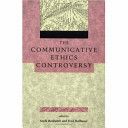
This timely reader in moral philosophy addresses a controversy that strongly affected recent European reflections on the relevance of ethics for theories of democratic institutions and democratic legitimacy. The debate centers around the idea of a communicative ethics as articulated by Jurgen Habermas and Karl-Otto Apel, and it is representative both of recent attempts to bridge the gap between Continental and Anglo-American philosophy and of the turn to language that has characterized much of recent philosophy.The Communicative Ethics Controversy illustrates philosophical dialogue in action, moving from theses to counterarguments to rejoinders. Theoretical statements by Habermas, Apel, and two of their leading students, Dietrich Bohler and Robert Alexy, are followed by a series of five arguments by their leading critics, who represent viewpoints ranging from Kantian idealism to Wittgensteinian ordinary-language theory. Fred Dallmayr’s introduction and Seyla Benhabib’s incisive conclusion place the debate in perspective, bringing it up to date and relating it to the Anglo-American context.Seyla Benhabib is Associate Professor of Philosophy and Women’s Studies at the State University of New York, Stony Brook. Fred Dallmayr is Packey Dee Professor of Government at the University of Notre Dame.Contributors: Robert Alexy. Karl-Otto Apel. Seyla Benhabib. Dietrich Bohler. Jurgen Habermas. Otfried Hoffe. KarlHeinz Ilting. Hermann Lubbe. Herbert Schnadelbach. Albrecht Wellmer.
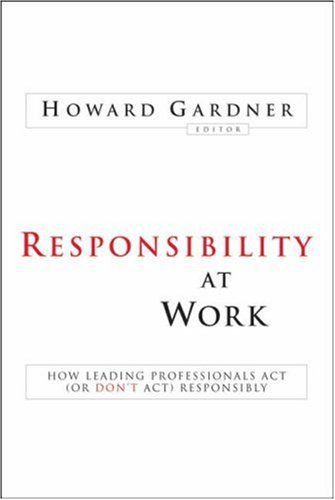
Responsibilityat WorkMost persons strive to produce work that is of excellent technical quality, is pursued in an ethical and socially responsible way, and has the qualities of being engaging and meaningful. How can we attain this ideal of good work in a world that changes so rapidly and all too often features an ethically compromised milieu? Filled with original essays by Howard Gardner, William Damon, Mihaly Csikszentmihalyi, and Jeanne Nakamura and based on a large-scale research project, the GoodWork(R) Project, Responsibility at Work reflects the information gleaned from in-depth interviews with more than 1,200 people from nine different professions–journalism, genetics, theatre, higher education, philanthropy, law, medicine, business, and precollegiate education. The book reveals how motivation, culture, and professional norms can intersect to produce work that is personally, socially, and economically beneficial.?At the heart of the study is the revelation that the key to good work is responsibilty–taking ownership for one’s work and its wider impact.The authors examine how responsibility for work is shaped by both personal and professional components and explore the factors that cause a sense of responsibility, the obstacles that lead to compromised work, and the educational interventions that can lead to a greater sense of responsibility. Most important, this volume provides strategies for cultivating greater responsibility in both seasoned workers as well as the young people who will one day enter the workplace.?
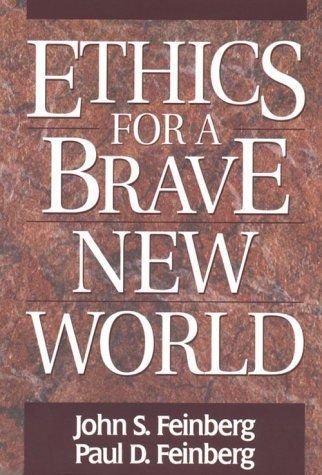
Abortion bull; Fetal Tissue Use bull; Euthanasia bull; Civil Disobedience bull; Divorce and Remarriage bull; Genetic Engineering and Screening bull; Artificial Insemination bull; Freezing Embryos bull; Cloning bull; Surrogate Motherhood bull; Homosexuality bull; Capital Punishment bull; Sexual Morality bull; Birth Control bull; Nuclear Arms bull; War”So much is changing today in regard to the control of life and death and the understanding of human sexuality, some may think it impossible to address these topics from a Christian perspective. We strongly disagree. Scripture sets forth enough principles that it is possible to evaluate contemporary practices in light of biblical teaching. Moreover, it is not only possible to address these matters biblically-it is mandatory to do so. As Christians we must speak to these topics.” (from Preface)Two respected theological spokesmen present here a carefully reasoned, thoroughly biblical discussion of basic ethical issues confronting church and society. An invaluable resource for all who desire to become better prepared to face and resolve the moral dilemmas of our day.
Can it be justifiable to commit oneself ‘by faith’ to a religious claim when its truth lacks adequate support from one’s total available evidence? In Believing by Faith, John Bishop defends a version of fideism inspired by William James’s 1896 lecture ‘The Will to Believe’. By critiquing both ‘isolationist’ (Wittgensteinian) and Reformed epistemologies of religious belief, Bishop argues that anyone who accepts that our publicly available evidence is equally open to theistic and naturalist/atheistic interpretations will need to defend a modest fideist position. This modest fideism understands theistic commitment as involving ‘doxastic venture’ – practical commitment to propositions held to be true through ‘passional’ causes (causes other than the recognition of evidence of or for their truth). While Bishop argues that concern about the justifiability of religious doxastic venture is ultimately moral concern, he accepts that faith-ventures can be morally justifiable only if they are in accord with the proper exercise of our rational epistemic capacities. Legitimate faith-ventures may thus never be counter-evidential, and, furthermore, may be made supra-evidentially only when the truth of the faith-proposition concerned necessarily cannot be settled on the basis of evidence. Bishop extends this Jamesian account by requiring that justifiable faith-ventures should also be morally acceptable both in motivation and content. Hard-line evidentialists, however, insist that all religious faith-ventures are morally wrong. Bishop thus conducts an extended debate between fideists and hard-line evidentialists, arguing that neither side can succeed in establishing the irrationality of its opposition. He concludes by suggesting that fideism may nevertheless be morally preferable, as a less dogmatic, more self-accepting, even a more loving, position than its evidentialist rival.
ما از اخلاق چه انتظاری داریم؟ این سوال شاید تاحدودی برای عموم مردم و یا متخصصان این رشته قابل پاسخ باشد؛ اینکه خوب بودن را به ما بیاموزد و در تنظیم روابط فردی م...

جشن کتاب تهران به ایستگاه سی و یکم رسیده است. حال و احوال نشر کتاب خوب نیست و باید فرهنگدوستان را به خرید و هدیه دادن کتاب ترغیب نمود. خانه اخلاقپژوهان جوان ب...

بنیاد کتابهای اخلاق اسلامی عمدتا پالایش جان از آلودگیها و آراستن آن به زیباییها است. اندیشه محوری این قبیل کتابها آن است که انسان فعلی آنی نیست که باید باشد...

-
0 Comments