Notice: تابع WP_Block_Type_Registry::register به طورنادرست فراخوانی شد. نامهای نوع بلوک نباید حروف بزرگ داشته باشند. لطفاً برای اطلاعات بیشتر، اشکال زدایی در وردپرس را مشاهده کنید. (این پیام در نگارش 5.0.0 افزوده شده است.) in /home/ethicsho/public_html/wp-includes/functions.php on line 5313
Warning: Use of undefined constant TDC_PATH_LEGACY - assumed 'TDC_PATH_LEGACY' (this will throw an Error in a future version of PHP) in /home/ethicsho/public_html/wp-content/plugins/td-composer/td-composer.php on line 109
Warning: Use of undefined constant TDSP_THEME_PATH - assumed 'TDSP_THEME_PATH' (this will throw an Error in a future version of PHP) in /home/ethicsho/public_html/wp-content/plugins/td-composer/td-composer.php on line 113 بایگانیهای B3313.Z73 .H38 2008 - خانه اخلاق پژوهان جوان Notice: Trying to access array offset on value of type bool in /home/ethicsho/public_html/wp-content/plugins/wp-ulike/inc/general-functions.php on line 807
Helps psychologists clarify what they value, consider how they should behave, and determine what constitutes proper professional conduct. This book is unique in stressing the importance of positive ethics?that is, ways in which psychologists can reach their highest ethical ideals, rather than just avoiding breaking rules. Using the 2002 APA Code of Ethics as a guide, the authors lay out a five-step model for resolving ethical dilemmas, illustrating the discussion with thumbnail sketches of both ethical and questionable behaviors. Throughout, they stress the importance of self-care, which involves self-regulation, emotional competence, and an understanding of the unique occupational challenges of being a psychologist. Provides guidance on dealing with ethically complex issues like competence, multiple relationships, informed consent, confidentiality (including confidentiality with life endangering patients), fees and financial issues, public statements, and risk management. Individual chapters are devoted to special issues for psychologists working in forensics, teaching, business, assessment, therapy, and supervision and training. This book is ideal for classroom use or self-study.
How do the hard facts of political responsibility shape and constrain the demands of ethical life? That question lies at the heart of the problem of ‘dirty hands’ in public life. Those who exercise political power often feel they must act in ways that would otherwise be considered immoral: indeed, paradoxically, they sometimes feel that it would be immoral of them not to perform or condone such acts as killing or lying. John Parrish offers a wide-ranging account of how this important philosophical problem emerged and developed, tracing it – and its proposed solutions – from ancient Greece through the Enlightenment. His central argument is that many of our most familiar concepts and institutions – from Augustine’s interiorised ethics, to Hobbes’s sovereign state, to Adam Smith’s ‘invisible hand’, understanding of the modern commercial economy – were designed partly as responses to the ethical problem of dirty hands in public life.
Where can religions find sources of legitimacy for human rights? How do, and how should, religious leaders and communities respond to human rights as defined in modern International Law? When religious precepts contradict human rights standards – for example in relation to freedom of expression or in relation to punishments – which should trump the other, and why? Can human rights and religious teachings be interpreted in a manner which brings reconciliation closer? Do the modern concept and system of human rights undermine the very vision of society that religions aim to impart? Is a reference to God in the discussion of human rights misplaced? Do human fallibilities with respect to interpretation, judicial reasoning and the understanding of human oneness and dignity provide the key to the undeniable and sometimes devastating conflicts that have arisen between, and within, religions and the human rights movement? In this volume, academics and lawyers tackle these most difficult questions head-on, with candour and creativity, and the collection is rendered unique by the further contributions of a remarkable range of other professionals, including senior religious leaders and representatives, journalists, diplomats and civil servants, both national and international. Most notably, the contributors do not shy away from the boldest question of all – summed up in the book’s title. The thoroughly edited and revised papers which make up this collection were originally prepared for a ground-breaking conference organised by the Clemens Nathan Research Centre, the University of London Institute of Commonwealth Studies and Martinus Nijhoff/Brill.
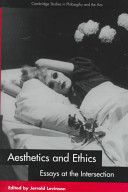
This major collection of essays stands at the border of aesthetics and ethics and deals with charged issues of practical import: art and morality, the ethics of taste, and censorship. As such its potential interest is by no means confined to professional philosophers; it should also appeal to art historians and critics, literary theorists, and students of film. Prominent philosophers in both aesthetics and ethics tackle a wide array of issues. Some of the questions explored in the volume include: Can art be morally enlightening and, if so, how? If a work of art is morally better does that make it better as art? Is morally deficient art to be shunned, or even censored? Do subjects of artworks have rights as to how they are represented? Do artists have duties as artists and duties as human beings, and if so, to whom? How much tension is there between the demands of art and the demands of life?
ما از اخلاق چه انتظاری داریم؟ این سوال شاید تاحدودی برای عموم مردم و یا متخصصان این رشته قابل پاسخ باشد؛ اینکه خوب بودن را به ما بیاموزد و در تنظیم روابط فردی م...

جشن کتاب تهران به ایستگاه سی و یکم رسیده است. حال و احوال نشر کتاب خوب نیست و باید فرهنگدوستان را به خرید و هدیه دادن کتاب ترغیب نمود. خانه اخلاقپژوهان جوان ب...

بنیاد کتابهای اخلاق اسلامی عمدتا پالایش جان از آلودگیها و آراستن آن به زیباییها است. اندیشه محوری این قبیل کتابها آن است که انسان فعلی آنی نیست که باید باشد...

-
0 Comments