Notice: تابع WP_Block_Type_Registry::register به طورنادرست فراخوانی شد. نامهای نوع بلوک نباید حروف بزرگ داشته باشند. لطفاً برای اطلاعات بیشتر، اشکال زدایی در وردپرس را مشاهده کنید. (این پیام در نگارش 5.0.0 افزوده شده است.) in /home/ethicsho/public_html/wp-includes/functions.php on line 5313
Warning: Use of undefined constant TDC_PATH_LEGACY - assumed 'TDC_PATH_LEGACY' (this will throw an Error in a future version of PHP) in /home/ethicsho/public_html/wp-content/plugins/td-composer/td-composer.php on line 109
Warning: Use of undefined constant TDSP_THEME_PATH - assumed 'TDSP_THEME_PATH' (this will throw an Error in a future version of PHP) in /home/ethicsho/public_html/wp-content/plugins/td-composer/td-composer.php on line 113 بایگانیهای B178 .M67 2000 - خانه اخلاق پژوهان جوان Notice: Trying to access array offset on value of type bool in /home/ethicsho/public_html/wp-content/plugins/wp-ulike/inc/general-functions.php on line 807
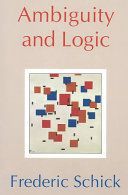
In this book Frederic Schick develops his challenge to standard decision theory. Professor Schick argues that talk of the beliefs and desires of an agent is not sufficient to explain choices. To account for a given choice we need to take into consideration how the agent understands the problem, how he sees in a selective way the options open to him. This book questions the foundations of technical and philosophical decision theory and will appeal to all those who work in that field, be they philosophers, economists or psychologists.
In this important book, Dr. Laura Schlessinger shows men and women that they can have a Good Life no matter how Bad their Childhood. For each of us, there is a connection between our early family dynamics and experiences and our current attitudes and decisions. Many of the people Dr. Laura has helped did not realize how their histories impacted their adult lives, or how their choices in people, repetitive situations, and decisions — even their emotional reactions — were connected to those early negative experiences, playing a major role in their current unhappiness. For these people and millions like them, too much time is dedicated to repeating the ugly dynamics of childhood in a vain attempt to repair or cope with deep hurt and longings. Too often they use their emotional pain to control others or excuse their own inappropriate and destructive behaviors. Some turn to therapy, only to find themselves trapped in their self-pitying victim mode, robbed of optimism, confidence, and growth. Dr. Laura will help you realize that no matter what circumstances you came from or currently live in, you are ultimately responsible for how you react to them. The acceptance of this basic truth is the source of your power to secure the Good Life you long for. In her signature straightforward style, with real-life examples, Dr. Laura shows you what you will gain by not being satisfied with an identity as a victim, or even as a survivor — but striving to be a victor! In Bad Childhood — Good Life, Dr. Laura will guide you to accept the truth of the assaults on your psyche and soul, understand your unique coping style and how it impacts your daily thoughts and actions, and help you embrace a life of more peace and happiness. Bad Childhood — Good Life comes from a compassionate and personal place. Dr. Laura also reveals some of her own experiences with a difficult childhood and what efforts it took to attain a Good Life. She writes, “My resilience has paid off, and I’m doing the best I can with what I’ve got.” Now you can, too.
This book is a profound and creative treatise on modernity and its challenge to social science. Alan Wolfe argues that modern liberal democracies, such as the U.S. and Scandinavia, have broken with traditional sources of morality and instead have relied upon economic and political frameworks to define their obligations to one another. Wolfe calls for reinvigorating a sense of community and thus an sense of obligation to the larger society.
Jurgen Habermas is unquestionably one of the foremost philosophers writing today. His notions of communicative action and rationality have exerted a profound influence within philosophy and the social sciences. This volume examines the historical and intellectual contexts out of which Habermas’ work emerged, and offers an overview of his main ideas, including those in his most recent publication. Amongst the topics discussed are his relationship to the Frankfurt School of critical theory and Marx, his unique contributions to the philosophy of the social sciences, the concept of ‘communicative ethics’, and the critique of post-modernism. New readers and non-specialists will find this the most convenient, accessible guide to Habermas currently available. Advanced students will find a conspectus of recent developments in the interpretation of Habermas.
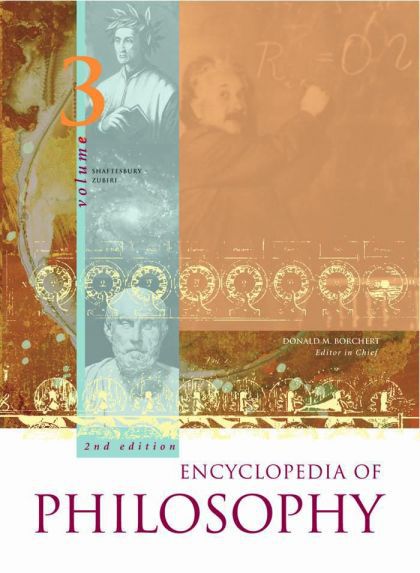
Containing material from hundreds of highly distinguished contributors representing the world’s top universities and institutions, the second edition has a truly global perspective. It contains more than 2,100 entries — including more than 450 new articles. Among the many topics covered are African, Islamic, Jewish, Russian, Chinese, and Buddhist philosophies; bioethics and biomedical ethics; art and aesthetics; epistemology; metaphysics; peace and war; social and political philosophy; the Holocaust; feminist thought; and much more. Additionally, the second edition also features 1,000 biographical entries on major figures in philosophical thought throughout history.
ما از اخلاق چه انتظاری داریم؟ این سوال شاید تاحدودی برای عموم مردم و یا متخصصان این رشته قابل پاسخ باشد؛ اینکه خوب بودن را به ما بیاموزد و در تنظیم روابط فردی م...

جشن کتاب تهران به ایستگاه سی و یکم رسیده است. حال و احوال نشر کتاب خوب نیست و باید فرهنگدوستان را به خرید و هدیه دادن کتاب ترغیب نمود. خانه اخلاقپژوهان جوان ب...

بنیاد کتابهای اخلاق اسلامی عمدتا پالایش جان از آلودگیها و آراستن آن به زیباییها است. اندیشه محوری این قبیل کتابها آن است که انسان فعلی آنی نیست که باید باشد...

-
0 Comments