Notice: تابع WP_Block_Type_Registry::register به طورنادرست فراخوانی شد. نامهای نوع بلوک نباید حروف بزرگ داشته باشند. لطفاً برای اطلاعات بیشتر، اشکال زدایی در وردپرس را مشاهده کنید. (این پیام در نگارش 5.0.0 افزوده شده است.) in /home/ethicsho/public_html/wp-includes/functions.php on line 5313
Warning: Use of undefined constant TDC_PATH_LEGACY - assumed 'TDC_PATH_LEGACY' (this will throw an Error in a future version of PHP) in /home/ethicsho/public_html/wp-content/plugins/td-composer/td-composer.php on line 109
Warning: Use of undefined constant TDSP_THEME_PATH - assumed 'TDSP_THEME_PATH' (this will throw an Error in a future version of PHP) in /home/ethicsho/public_html/wp-content/plugins/td-composer/td-composer.php on line 113 بایگانیهای B1641 .G481 1991 - خانه اخلاق پژوهان جوان Notice: Trying to access array offset on value of type bool in /home/ethicsho/public_html/wp-content/plugins/wp-ulike/inc/general-functions.php on line 807
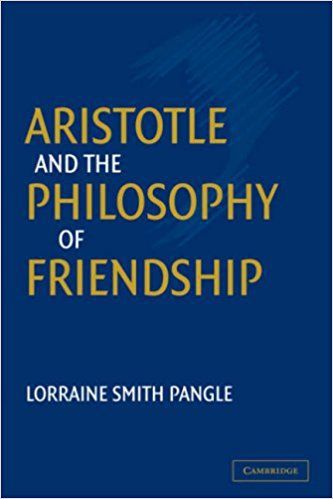
This is the first book to offer a comprehensive account of the major philosophical works on friendship and its relationship to self-love. The book gives central place to Aristotle’s searching examination of friendship in the Nicomachean Ethics. Lorraine Pangle argues that the difficulties surrounding this discussion are soon dispelled once one understands the purpose of the Ethics as both a source of practical guidance for life and a profound, theoretical investigation into human nature. The book also provides fresh interpretations of works on friendship by Plato, Cicero, Epicurus, Seneca, Montaigne and Bacon. The author shows how each of these thinkers sheds light on central questions of moral philosophy: is human sociability rooted in neediness or strength? is the best life chiefly solitary, or dedicated to a community with others? Clearly structured and engagingly written, this book will appeal to a broad swathe of readers across philosophy, classics and political science.
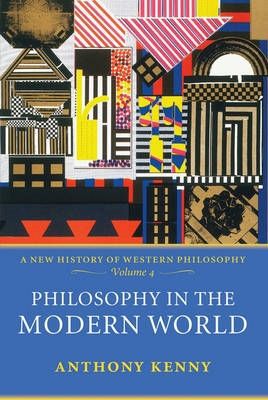
Here is the concluding volume of Sir Anthony Kenny’s monumental four-volume history of philosophy, the first major single-author narrative history to appear for several decades. Here Kenny tells the fascinating story of the development of philosophy in the modern world, from the early nineteenth century to the end of the millennium. Alongside (and intertwined with) extraordinary scientific advances, cultural changes, and political upheavals, the last two centuries have seen some of the most intriguing and original developments in philosophical thinking, which have transformed our understanding of ourselves and our world. In the first part of the book, Kenny offers a lively narrative introducing the major thinkers in their historical context. Among those we meet are the great figures of continental European philosophy, from Schopenhauer, Kierkegaard, and Nietzsche to Heidegger, Sartre, and Derrida; the Pragmatists such as C.S. Pierce and William James, who first developed a distinctively American philosophical tradition; Marx, Darwin, and Freud, the non-philosophers whose influence on philosophy was immense; and Wittgenstein and Russell, friends and colleagues who set the agenda for analytic philosophy in the twentieth century. Kenny then proceeds to guide the reader lucidly through the nine main areas of philosophical work in the period, offering a serious engagement with ideas and arguments about logic, language, epistemology, metaphysics, ethics, aesthetics, politics, and the existence of God. Graced with many beautiful illustrations, Philosophy in the Modern World concludes Kenny’s stimulating history of the intellectual development of Western civilization, allowing readers to trace the birth and growth of philosophy from antiquity to the present day.
Biomedical ethics is a burgeoning academic field with complex and far-reaching consequences. Whereas in Western secular bioethics this subject falls within larger ethical theories and applications (utilitarianism, deontology, teleology, and the like), Islamic biomedical ethics has yet to find its natural academic home in Islamic studies. In this pioneering work, Abdulaziz Sachedina – a scholar with life-long academic training in Islamic law – relates classic Muslim religious values to the new ethical challenges that arise from medical research and practice. He depends on Muslim legal theory, but then looks deeper than juridical practice to search for the underlying reasons that determine the rightness or wrongness of a particular action. Drawing on the work of diverse Muslim theologians, he outlines a form of moral reasoning that can derive and produce decisions that underscore the spirit of the Shari’a. These decisions, he argues, still leave room to revisit earlier decisions and formulate new ones, which in turn need not be understood as absolute or final. After laying out this methodology, he applies it to a series of ethical questions surrounding the human life-cycle from birth to death, including such issues as abortion, euthanasia, and organ donation. The implications of Sachedina’s work are broad. His writing is unique in that it aims at conversing with Jewish and Christian ethics, moving beyond the Islamic fatwa literature to search for a common language of moral justification and legitimization among the followers of the Abrahamic traditions. He argues that Islamic theological ethics be organically connected with the legal tradition of Islam to enable it to sit in dialogue with secular and scripture-based bioethics in other faith communities. A breakthrough in Islamic bioethical studies, this volume is welcome and long-overdue reading for anyone interested in facing the difficult questions posed by modern medicine not only to the Muslim faithful but to the ethically-minded at large.
It is widely recognized that American culture is both exceptionally religious and exceptionally violent. Americans participate in religious communities in high numbers, yet American citizens also own guns at rates far beyond those of citizens in other industrialized nations. Since9/11, United States scholars have understandably discussed religious violence in terms of terrorist acts, a focus that follows United States policy. Yet, according to Jon Pahl, to identify religious violence only with terrorism fails to address the long history of American violence rooted in religion throughout the country’s history. In essence, Americans have found ways to consider blessed some very brutal attitudes and behaviors both domestically and globally.In Empire of Sacrifice, Pahl explains how both of these distinctive features of American culture work together by exploring how constructions along the lines of age, race, and gender have operated to centralize cultural power across American civil or cultural religions in ways that dont always appear to be “religious” at all. Pahl traces the development of these forms of systemic violence throughout American history, using evidence from popular culture, including movies such as Rebel without a Cause and Reefer Madness and works of literature such as The Narrative of the Life of Frederick Douglass and The Handmaid’s Tale, to illuminate historical events. Throughout, Pahl focuses an intense light on the complex and durable interactions between religion and violence in American history, from Puritan Boston to George W. Bushs Baghdad.
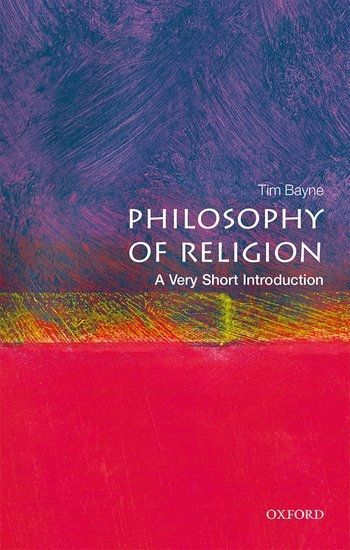
What is the philosophy of religion? How can we distinguish it from theology on the one hand and the psychology/sociology of religious belief on the other? What does it mean to describe God as ‘eternal’? And should religious people want there to be good arguments for the existence of God, or is religious belief only authentic in the absence of these good arguments?00In this ‘Very Short Introduction’ Tim Bayne introduces the field of philosophy of religion, and engages with some of the most burning questions that philosophers discuss. Considering how ‘religion’ should be defined, and whether we even need to be able to define it in order to engage in the philosophy of religion, he goes on to discuss whether the existence of God matters. Exploring the problem of evil, Bayne also debates the connection between faith and reason, and the related question of what role reason should play in religious contexts. Shedding light on the relationship between science and religion, Bayne finishes by considering the topics of reincarnation and the afterlife.
ما از اخلاق چه انتظاری داریم؟ این سوال شاید تاحدودی برای عموم مردم و یا متخصصان این رشته قابل پاسخ باشد؛ اینکه خوب بودن را به ما بیاموزد و در تنظیم روابط فردی م...

جشن کتاب تهران به ایستگاه سی و یکم رسیده است. حال و احوال نشر کتاب خوب نیست و باید فرهنگدوستان را به خرید و هدیه دادن کتاب ترغیب نمود. خانه اخلاقپژوهان جوان ب...

بنیاد کتابهای اخلاق اسلامی عمدتا پالایش جان از آلودگیها و آراستن آن به زیباییها است. اندیشه محوری این قبیل کتابها آن است که انسان فعلی آنی نیست که باید باشد...

-
0 Comments