Notice: تابع WP_Block_Type_Registry::register به طورنادرست فراخوانی شد. نامهای نوع بلوک نباید حروف بزرگ داشته باشند. لطفاً برای اطلاعات بیشتر، اشکال زدایی در وردپرس را مشاهده کنید. (این پیام در نگارش 5.0.0 افزوده شده است.) in /home/ethicsho/public_html/wp-includes/functions.php on line 5313
Warning: Use of undefined constant TDC_PATH_LEGACY - assumed 'TDC_PATH_LEGACY' (this will throw an Error in a future version of PHP) in /home/ethicsho/public_html/wp-content/plugins/td-composer/td-composer.php on line 109
Warning: Use of undefined constant TDSP_THEME_PATH - assumed 'TDSP_THEME_PATH' (this will throw an Error in a future version of PHP) in /home/ethicsho/public_html/wp-content/plugins/td-composer/td-composer.php on line 113 بایگانیهای B1603.U873 .C75 1997 - خانه اخلاق پژوهان جوان Notice: Trying to access array offset on value of type bool in /home/ethicsho/public_html/wp-content/plugins/wp-ulike/inc/general-functions.php on line 807
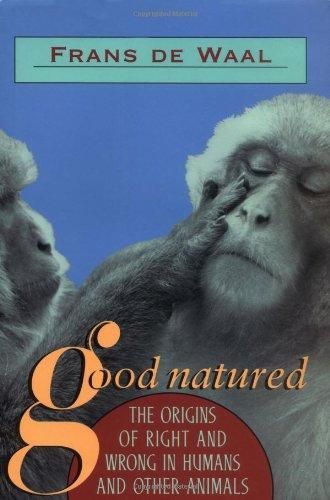
To observe a dog’s guilty look.to witness a gorilla’s self-sacrifice for a wounded mate, to watch an elephant herd’s communal effort on behalf of a stranded calf–to catch animals in certain acts is to wonder what moves them. Might there he a code of ethics in the animal kingdom? Must an animal be human to he humane? In this provocative book, a renowned scientist takes on those who have declared ethics uniquely human Making a compelling case for a morality grounded in biology, he shows how ethical behavior is as much a matter of evolution as any other trait, in humans and animals alike.World famous for his brilliant descriptions of Machiavellian power plays among chimpanzees-the nastier side of animal life–Frans de Waal here contends that animals have a nice side as well. Making his case through vivid anecdotes drawn from his work with apes and monkeys and holstered by the intriguing, voluminous data from his and others’ ongoing research, de Waal shows us that many of the building blocks of morality are natural: they can he observed in other animals. Through his eyes, we see how not just primates but all kinds of animals, from marine mammals to dogs, respond to social rules, help each other, share food, resolve conflict to mutual satisfaction, even develop a crude sense of justice and fairness.Natural selection may be harsh, but it has produced highly successful species that survive through cooperation and mutual assistance. De Waal identifies this paradox as the key to an evolutionary account of morality, and demonstrates that human morality could never have developed without the foundation of fellow feeling our species shares with other animals. As his work makes clear, a morality grounded in biology leads to an entirely different conception of what it means to he human–and humane.
Virtue ethics has attracted a lot of attention over the past few decades, and more recently there has been considerable interest in virtue epistemology as an alternative to traditional approaches in that field. Ironically, although virtue epistemology got its inspiration from virtue ethics, this is the first book that brings virtue epistemologists and virtue ethicists together to contribute their particular expertise, and the first that is devoted to the topic of intellectual virtue. All new and right up to date, the papers collected here by Zagzebski and DePaul demonstrate the benefit of each branch of philosophy to the other. Intellectual Virtue will be required reading for anyone working in either field.
This beautifully written book by one of the world’s leading moral philosophers argues that the key to a fulfilled life is to pursue wholeheartedly what one cares about, that love is the most authoritative form of caring, and that the purest form of love is, in a complicated way, self-love. Harry Frankfurt writes that it is through caring that we infuse the world with meaning. Caring provides us with stable ambitions and concerns; it shapes the framework of aims and interests within which we lead our lives. The most basic and essential question for a person to raise about the conduct of his or her life is not what he or she should care about but what, in fact, he or she cannot help caring about. The most important form of caring, Frankfurt writes, is love, a nonvoluntary, disinterested concern for the flourishing of what is loved. Love is so important because meaningful practical reasoning must be grounded in ends that we do not seek only to attain other ends, and because it is in loving that we become bound to final ends desired for their own sakes. Frankfurt argues that the purest form of love is self-love. This sounds perverse, but self-love–as distinct from self-indulgence–is at heart a disinterested concern for whatever it is that the person loves. The most elementary form of self-love is nothing more than the desire of a person to love. Insofar as this is true, self-love is simply a commitment to finding meaning in our lives.
ما از اخلاق چه انتظاری داریم؟ این سوال شاید تاحدودی برای عموم مردم و یا متخصصان این رشته قابل پاسخ باشد؛ اینکه خوب بودن را به ما بیاموزد و در تنظیم روابط فردی م...

جشن کتاب تهران به ایستگاه سی و یکم رسیده است. حال و احوال نشر کتاب خوب نیست و باید فرهنگدوستان را به خرید و هدیه دادن کتاب ترغیب نمود. خانه اخلاقپژوهان جوان ب...

بنیاد کتابهای اخلاق اسلامی عمدتا پالایش جان از آلودگیها و آراستن آن به زیباییها است. اندیشه محوری این قبیل کتابها آن است که انسان فعلی آنی نیست که باید باشد...

-
0 Comments