Notice: تابع WP_Block_Type_Registry::register به طورنادرست فراخوانی شد. نامهای نوع بلوک نباید حروف بزرگ داشته باشند. لطفاً برای اطلاعات بیشتر، اشکال زدایی در وردپرس را مشاهده کنید. (این پیام در نگارش 5.0.0 افزوده شده است.) in /home/ethicsho/public_html/wp-includes/functions.php on line 5313
Warning: Use of undefined constant TDC_PATH_LEGACY - assumed 'TDC_PATH_LEGACY' (this will throw an Error in a future version of PHP) in /home/ethicsho/public_html/wp-content/plugins/td-composer/td-composer.php on line 109
Warning: Use of undefined constant TDSP_THEME_PATH - assumed 'TDSP_THEME_PATH' (this will throw an Error in a future version of PHP) in /home/ethicsho/public_html/wp-content/plugins/td-composer/td-composer.php on line 113 بایگانیهای B1298.R4 .W65 1996 - خانه اخلاق پژوهان جوان Notice: Trying to access array offset on value of type bool in /home/ethicsho/public_html/wp-content/plugins/wp-ulike/inc/general-functions.php on line 807
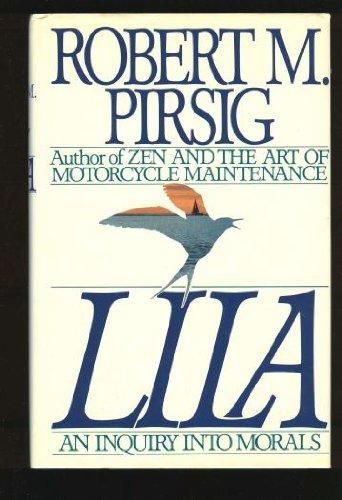
A major publishing event–the bestselling author of Zen and the Art of Motorcycle Maintenance continues the journey in a passionate philosophical exploration of what we live for. A sailboat cruising the Hudson sets the scene for a new voyage as mysterious and compelling as the journey of his first classic. (Philosophy)
New examples of white collar crime, business scandals from Wall Street to Main Street, and more are all featured in ETHICAL DILEMMAS AND DECISIONS IN CRIMINAL JUSTICE. Real-life cases and situations demonstrate the significance of ethics in the world of criminal justice today for those studying or contemplating a career in criminal justice.
Human beings necessarily understand their social worlds in moral terms, orienting their lives, relationships, and activities around socially-produced notions of right and wrong.Morality is sociologically understood as more than simply helping or harming others; it encompasses any way that individuals form understandings of what behaviors are better than others, what goals are most laudable, and what “proper” people believe, feel, and do. Morality involves the explicit and implicit sets of rules and shared understandings that keep human social groups intact. Morality includes both the “shoulds” and “should nots” of human activity, its proactive and inhibitive elements.At one time, sociologists were centrally concerned with morality, issues like social cohesion, values, the goals and norms that structure society, and the ways individuals get socialized to reproduce those concerns. In the last half-century, however, explicit interest in these topics has waned, and modern sociology has become uninterested in these matters and morality has become marginalized within the discipline.But a resurgence in the topic is happening in related disciplines – psychology, neurology, philosophy, and anthropology – and in the wider national discourse. Sociology has much to offer, but is not fully engaged in this conversation. Many scholars work on areas that would fall under the umbrella of a sociology of morality but do not self-identify in such a manner, nor orient their efforts toward conceptualizing what we know, and should know, along these dimensions.The Handbook of the Sociology of Morality fills a niche within sociology making explicit the shared concerns of scholars across the disciplines as they relate to an often-overlooked dimension of human social life. It is unique in social science as it would be the first systematic compilation of the wider social structural, cultural, cross-national, organizational, and interactional dimension of human moral (understood broadly) thought, feeling, and behavior.
We send money to help famine victims halfway around the world. We campaign to save whales and oceans. We stay up all night to comfort a friend with a broken relationship. People will at times risk — even lose — their lives for others, including strangers. Why do we do these things? What motivates such behavior? Altruism in Humans takes a hard-science look at the possibility that we humans have the capacity to care for others for their sakes rather than simply for our own. Based on an extensive series of theory-testing laboratory experiments conducted over the past 35 years, this book details a theory of altruistic motivation, offers a comprehensive summary of the research designed to test the empathy-altruism hypothesis, and considers the theoretical and practical implications of this conclusion. Authored by the world’s preeminent scholar on altruism, this landmark work is an authoritative scholarly resource on the theory surrounding altruism and its potential contribution to better interpersonal relations and a better society.
Two essays on utilitarianism, written from opposite points of view, by J. J. C. Smart and Bernard Williams. In the first part of the book Professor Smart advocates a modern and sophisticated version of classical utilitarianism; he tries to formulate a consistent and persuasive elaboration of the doctrine that the rightness and wrongness of actions is determined solely by their consequences, and in particular their consequences for the sum total of human happiness. This is a revised version of Professor Smart’s famous essay ‘an outline of a system of utilitarian ethics’, first published in 1961 but long unobtainable. In Part II Bernard Williams offers a sustained and vigorous critique of utilitarian assumptions, arguments and ideals. He finds inadequate the theory of action implied by utilitarianism, and he argues that utilitarianism fails to engage at a serious level with the real problems of moral and political philosophy, and fails to make sense of notions such as integrity, or even human happiness itself. Both authors are agreed on utilitarianism’s importance: it cuts across a number of different philosophical disputes and combines a systematic account of mata-ethical problems with a distinctive and substantive moral stand. It thus is, or involves, philosophy in both the traditional and the narrower, professional sense of the word, and is a key topic (often the first topic) in introductory philosophy courses. This book should also be of interest to welfare economists, political scientists and decision-theorists.
ما از اخلاق چه انتظاری داریم؟ این سوال شاید تاحدودی برای عموم مردم و یا متخصصان این رشته قابل پاسخ باشد؛ اینکه خوب بودن را به ما بیاموزد و در تنظیم روابط فردی م...

جشن کتاب تهران به ایستگاه سی و یکم رسیده است. حال و احوال نشر کتاب خوب نیست و باید فرهنگدوستان را به خرید و هدیه دادن کتاب ترغیب نمود. خانه اخلاقپژوهان جوان ب...

بنیاد کتابهای اخلاق اسلامی عمدتا پالایش جان از آلودگیها و آراستن آن به زیباییها است. اندیشه محوری این قبیل کتابها آن است که انسان فعلی آنی نیست که باید باشد...

-
0 Comments