Notice: تابع WP_Block_Type_Registry::register به طورنادرست فراخوانی شد. نامهای نوع بلوک نباید حروف بزرگ داشته باشند. لطفاً برای اطلاعات بیشتر، اشکال زدایی در وردپرس را مشاهده کنید. (این پیام در نگارش 5.0.0 افزوده شده است.) in /home/ethicsho/public_html/wp-includes/functions.php on line 5313
Warning: Use of undefined constant TDC_PATH_LEGACY - assumed 'TDC_PATH_LEGACY' (this will throw an Error in a future version of PHP) in /home/ethicsho/public_html/wp-content/plugins/td-composer/td-composer.php on line 109
Warning: Use of undefined constant TDSP_THEME_PATH - assumed 'TDSP_THEME_PATH' (this will throw an Error in a future version of PHP) in /home/ethicsho/public_html/wp-content/plugins/td-composer/td-composer.php on line 113 بایگانیهای B105.I56 .S37 1995 - خانه اخلاق پژوهان جوان Notice: Trying to access array offset on value of type bool in /home/ethicsho/public_html/wp-content/plugins/wp-ulike/inc/general-functions.php on line 807
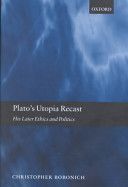
Plato’s Utopia Recast is an illuminating reappraisal of Plato’s later works, which reveals radical changes in his ethical and political theory. Christopher Bobonich examines later dialogues, with a special emphasis upon the Laws, and argues that in these late works, Plato both rethinks and revises the basic ethical and political positions that he held in his better-known earlier works, such as the Republic. This book will change our understanding of Plato. His controversial moral and political theory, so influential in Western thought, will henceforth be seen in a new light.
Written across the disciplines of art history, literature, philosophy, sociology, and theology, the ten essays comprising the collection all insist on multidimensional definitions of evil.Taking its title from a moment in Shakespeare’s Tempest when Prospero acknowledges his responsibility for Caliban, this collection explores the necessarily ambivalent relationship between humanity and evil. To what extent are a given society’s definitions of evil self-serving? Which figures are marginalized in the process of identifying evil? How is humanity itself implicated in the production of evil? Is evil itself something fundamentally human? These questions, indicative of the kinds of issues raised in this collection, seem all the more pressing in light of recent world events.The ten essays were originally presented at the First Global Conference on Perspectives on Evil and Human Wickedness, held in March 2000, in Lady Margaret Hall, Oxford University.At the Interface/Probing the Boundaries seeks to encourage and promote cutting edge inter-disciplinary and multi-disciplinary projects and inquiry. By bringing people together from differing contexts, disciplines, professions, and vocations, the aim is to engage in conversations that are innovative, imaginative, and creatively interactive.Inter-Disciplinary dialogue enables people to go beyond the boundaries of what they usually encounter and share in perspectives that are new, challenging, and richly rewarding. This kind of dialogue often illuminates one’s own area of work, is suggestive of new possibilities for development, and creates exciting horizons for future conversations with persons from a wide variety of national and international settings.By sharing cross-disciplinary insights and perspectives, ATI/PTB publications are designed to be both exploratory examinations of particular areas and issues, and rigorous inquiries into specific subjects. Books in the series are enabling resources which will encourage sustained and creative dialogue, and become the future resource for further inquiries and research.
This important new book develops a new concept of autonomy. The notion of autonomy has emerged as central to contemporary moral and political philosophy, particularly in the area of applied ethics. Professor Dworkin examines the nature and value of autonomy and used the concept to analyze various practical moral issues such as proxy consent in the medical context, paternalism, and entrapment by law enforcement officials.
This book is written by leading international experts in Christian ethics and is aimed at students in upper-level undergraduate courses, at teachers and at graduate students. It will be useful as well to ministers and other professionals within the church. Its eighteen chapters provide a thorough introduction to Christian ethics that is both authoritative and up-to-date. All contributors have been chosen because they are significant scholars with a proven track record of balanced, comprehensive and comprehensible writing.
ما از اخلاق چه انتظاری داریم؟ این سوال شاید تاحدودی برای عموم مردم و یا متخصصان این رشته قابل پاسخ باشد؛ اینکه خوب بودن را به ما بیاموزد و در تنظیم روابط فردی م...

جشن کتاب تهران به ایستگاه سی و یکم رسیده است. حال و احوال نشر کتاب خوب نیست و باید فرهنگدوستان را به خرید و هدیه دادن کتاب ترغیب نمود. خانه اخلاقپژوهان جوان ب...

بنیاد کتابهای اخلاق اسلامی عمدتا پالایش جان از آلودگیها و آراستن آن به زیباییها است. اندیشه محوری این قبیل کتابها آن است که انسان فعلی آنی نیست که باید باشد...

-
0 Comments