


Notice: تابع WP_Block_Type_Registry::register به طورنادرست فراخوانی شد. نامهای نوع بلوک نباید حروف بزرگ داشته باشند. لطفاً برای اطلاعات بیشتر، اشکال زدایی در وردپرس را مشاهده کنید. (این پیام در نگارش 5.0.0 افزوده شده است.) in /home/ethicsho/public_html/wp-includes/functions.php on line 5313
Warning: Use of undefined constant TDC_PATH_LEGACY - assumed 'TDC_PATH_LEGACY' (this will throw an Error in a future version of PHP) in /home/ethicsho/public_html/wp-content/plugins/td-composer/td-composer.php on line 109
Warning: Use of undefined constant TDSP_THEME_PATH - assumed 'TDSP_THEME_PATH' (this will throw an Error in a future version of PHP) in /home/ethicsho/public_html/wp-content/plugins/td-composer/td-composer.php on line 113 بایگانیهای English - صفحه 154 از 155 - خانه اخلاق پژوهان جوان Notice: Trying to access array offset on value of type bool in /home/ethicsho/public_html/wp-content/plugins/wp-ulike/inc/general-functions.php on line 807
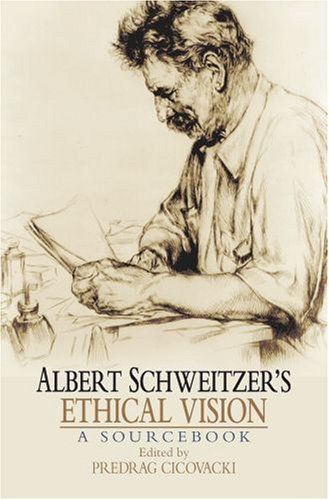
The philosophy of Albert Schweitzer has proved widely influential in modern thinking, especially in the field of ethics. His leading ethical idea can be summarized in the phrase “reverence for life” – namely, that good consists in maintaining and perfecting life, and evil consists in destroying and obstructing life. For Schweitzer, all life is sacred. Ethics thus deals with human attitudes and behavior toward all living beings. Unlike many moral philosophers, Schweitzer argues that knowledge of human nature does not provide a sufficient foundation for any adequate moral theory. That is why he bases his ethics on much broader foundations, articulated in his philosophy of civilization and the philosophy of religion. Schweitzer argues that the material aspect of our civilization has become far more important than its spiritual counterpart. Even organized religion has put itself in the service of politics and economy, thereby losing its vitality and moral authority. Schweitzer’s ethics of reverence for life, argues Predrag Cicovacki, offers a viable alternative at a time when traditional ethical theories are found inadequate. Schweitzer’s robust and un-dogmatic idealism may offer the best antidote to the prevailing relativism and nihilism of the postmodern epoch. His ethical vision directs us toward a new way of building a more just and more peaceful world. Collecting sixteen of Schweitzer’s most effective essays, this volume serves as a compelling introduction to this remarkable thinker and humanist.
What are the roots of human nature and what is wrong with the scientific picture of what and who we are? Was Thomas Hobbes right to say that human life is “solitary, poor, nasty, brutish, and short?” In this new work, biologist Mary Clark argues that the Western view of human nature is built around a highly atomistic and ideological framework that encourages us to think about the world and ourselves in the wrong way. Beginning with some of the problems that emerge from building “laws” of human nature upon “laws” of physics, Mary Clark tackles an astonishing array of problems: what role genes play in the development of the brain, how we generated the concepts of mind and meaning we accept today and what is wrong with them, to the way we think about the formation of individual and group identity, conflict resolution and the environment. Throughout the book, she critically scrutinizes many widely-held views, whether it is what Darwin actually said about adaptive fitness and survival, received models of human nature such as man the “warrior” or “hunter,” or whether it is right to think of emotions as an unfortunate legacy of our evolutionary heritage. Arguing for a more expansive view of science and human nature, she makes a strong case for the role of culture in constructing what and who we are without falling into the trap of relativism.
Legal ethics is often described as an oxymoron or contradiction in terms – lay people find the concept amusing and lawyers can find ethics impossible. The best lawyers are those who have come to grips with their own values and actively seek to improve their ethical practise. This book is designed to help law students and new lawyers understand and modify their own ethical priorities, not just because this knowledge makes it easier to practise law and earn an income, but because self-aware, ethical legal practice is right and feels better than anything else. Packed with case studies of ethical scandals and dilemmas from real life legal practice in Australia, each chapter delves into the most difficult issues lawyers face. From lawyers’ part in corporate fraud to the ethics of time-based billing, Parker and Evans expose the values that underlie current practice and set out the alternatives ethical lawyers might follow.
Close-up insights on how experts in the field are re-interpreting ethical principles to create workable policies for today and tomorrow, from the creators of the 2007 APS Code of Ethics First cooperative project between Wiley-Blackwell and the APS Offers a close-up view of how enduring ethical principles are reinvented to ensure lasting relevance in times of modernisation and professional change Will be an accredited option for APS Professional Development – the book will be built into PD workshops and also available for PD credits outside that context Essential reading for those involved in healthcare ethics internationally
ما از اخلاق چه انتظاری داریم؟ این سوال شاید تاحدودی برای عموم مردم و یا متخصصان این رشته قابل پاسخ باشد؛ اینکه خوب بودن را به ما بیاموزد و در تنظیم روابط فردی م...

جشن کتاب تهران به ایستگاه سی و یکم رسیده است. حال و احوال نشر کتاب خوب نیست و باید فرهنگدوستان را به خرید و هدیه دادن کتاب ترغیب نمود. خانه اخلاقپژوهان جوان ب...

بنیاد کتابهای اخلاق اسلامی عمدتا پالایش جان از آلودگیها و آراستن آن به زیباییها است. اندیشه محوری این قبیل کتابها آن است که انسان فعلی آنی نیست که باید باشد...

-
0 Comments