Notice: تابع WP_Block_Type_Registry::register به طورنادرست فراخوانی شد. نامهای نوع بلوک نباید حروف بزرگ داشته باشند. لطفاً برای اطلاعات بیشتر، اشکال زدایی در وردپرس را مشاهده کنید. (این پیام در نگارش 5.0.0 افزوده شده است.) in /home/ethicsho/public_html/wp-includes/functions.php on line 5313
Warning: Use of undefined constant TDC_PATH_LEGACY - assumed 'TDC_PATH_LEGACY' (this will throw an Error in a future version of PHP) in /home/ethicsho/public_html/wp-content/plugins/td-composer/td-composer.php on line 109
Warning: Use of undefined constant TDSP_THEME_PATH - assumed 'TDSP_THEME_PATH' (this will throw an Error in a future version of PHP) in /home/ethicsho/public_html/wp-content/plugins/td-composer/td-composer.php on line 113 بایگانیهای 9970021338 - خانه اخلاق پژوهان جوان Notice: Trying to access array offset on value of type bool in /home/ethicsho/public_html/wp-content/plugins/wp-ulike/inc/general-functions.php on line 807
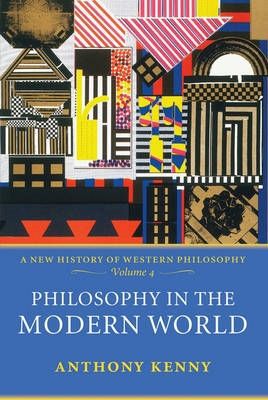
Here is the concluding volume of Sir Anthony Kenny’s monumental four-volume history of philosophy, the first major single-author narrative history to appear for several decades. Here Kenny tells the fascinating story of the development of philosophy in the modern world, from the early nineteenth century to the end of the millennium. Alongside (and intertwined with) extraordinary scientific advances, cultural changes, and political upheavals, the last two centuries have seen some of the most intriguing and original developments in philosophical thinking, which have transformed our understanding of ourselves and our world. In the first part of the book, Kenny offers a lively narrative introducing the major thinkers in their historical context. Among those we meet are the great figures of continental European philosophy, from Schopenhauer, Kierkegaard, and Nietzsche to Heidegger, Sartre, and Derrida; the Pragmatists such as C.S. Pierce and William James, who first developed a distinctively American philosophical tradition; Marx, Darwin, and Freud, the non-philosophers whose influence on philosophy was immense; and Wittgenstein and Russell, friends and colleagues who set the agenda for analytic philosophy in the twentieth century. Kenny then proceeds to guide the reader lucidly through the nine main areas of philosophical work in the period, offering a serious engagement with ideas and arguments about logic, language, epistemology, metaphysics, ethics, aesthetics, politics, and the existence of God. Graced with many beautiful illustrations, Philosophy in the Modern World concludes Kenny’s stimulating history of the intellectual development of Western civilization, allowing readers to trace the birth and growth of philosophy from antiquity to the present day.
This exceptional book examines and explains Plato’s answer to the normative question, “How ought we to live?” It discusses Plato’s conception of the virtues; his views about the connection between the virtues and happiness; and the account of reason, desire, and motivation that underlies his arguments about the virtues. Plato’s answer to the epistemological question, “How can we know how we ought to live?” is also discussed. His views on knowledge, belief, and inquiry, and his theory of Forms, are examined, insofar as they are relevant to his ethical view. Terence Irwin traces the development of Plato’s moral philosophy, from the Socratic dialogues to its fullest exposition in the Republic. Plato’s Ethics discusses Plato’s reasons for abandoning or modifying some aspects of Socratic ethics, and for believing that he preserves Socrates’ essential insights. A brief and selective discussion of the Statesmen, Philebus, and Laws is included. Replacing Irwin’s earlier Plato’s Moral Theory (Oxford, 1977), this book gives a clearer and fuller account of the main questions and discusses some recent controversies in the interpretation of Plato’s ethics. It does not presuppose any knowledge of Greek or any extensive knowledge of Plato.
Contemporary Debates in Moral Theory features pairs of newly commissioned essays by some of the leading theorists working in the field today. Brings together fresh debates on the most controversial issues in moral theory Questions include: Are moral requirements derived from reason? How demanding is morality? Are virtues the proper starting point for moral theorizing? Lively debate format sharply defines the issues, and paves the way for further discussion. Will serve as an accessible introduction to the major topics in contemporary moral theory, while also capturing the imagination of professional philosophers.
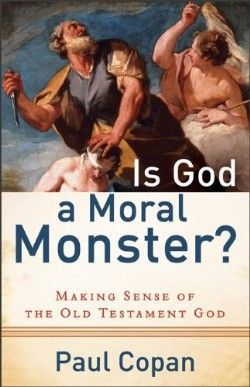
A recent string of popular-level books written by the New Atheists have leveled the accusation that the God of the Old Testament is nothing but a bully, a murderer, and a cosmic child abuser. This viewpoint is even making inroads into the church. How are Christians to respond to such accusations? And how are we to reconcile the seemingly disconnected natures of God portrayed in the two testaments?In this timely and readable book, apologist Paul Copan takes on some of the most vexing accusations of our time, including:God is arrogant and jealous God punishes people too harshly God is guilty of ethnic cleansing God oppresses women God endorses slavery Christianity causes violence and moreCopan not only answers God’s critics, he also shows how to read both the Old and New Testaments faithfully, seeing an unchanging, righteous, and loving God in both.
ما از اخلاق چه انتظاری داریم؟ این سوال شاید تاحدودی برای عموم مردم و یا متخصصان این رشته قابل پاسخ باشد؛ اینکه خوب بودن را به ما بیاموزد و در تنظیم روابط فردی م...

جشن کتاب تهران به ایستگاه سی و یکم رسیده است. حال و احوال نشر کتاب خوب نیست و باید فرهنگدوستان را به خرید و هدیه دادن کتاب ترغیب نمود. خانه اخلاقپژوهان جوان ب...

بنیاد کتابهای اخلاق اسلامی عمدتا پالایش جان از آلودگیها و آراستن آن به زیباییها است. اندیشه محوری این قبیل کتابها آن است که انسان فعلی آنی نیست که باید باشد...

-
0 Comments