Notice: تابع WP_Block_Type_Registry::register به طورنادرست فراخوانی شد. نامهای نوع بلوک نباید حروف بزرگ داشته باشند. لطفاً برای اطلاعات بیشتر، اشکال زدایی در وردپرس را مشاهده کنید. (این پیام در نگارش 5.0.0 افزوده شده است.) in /home/ethicsho/public_html/wp-includes/functions.php on line 5313
Warning: Use of undefined constant TDC_PATH_LEGACY - assumed 'TDC_PATH_LEGACY' (this will throw an Error in a future version of PHP) in /home/ethicsho/public_html/wp-content/plugins/td-composer/td-composer.php on line 109
Warning: Use of undefined constant TDSP_THEME_PATH - assumed 'TDSP_THEME_PATH' (this will throw an Error in a future version of PHP) in /home/ethicsho/public_html/wp-content/plugins/td-composer/td-composer.php on line 113 بایگانیهای 9781847062963 - خانه اخلاق پژوهان جوان Notice: Trying to access array offset on value of type bool in /home/ethicsho/public_html/wp-content/plugins/wp-ulike/inc/general-functions.php on line 807
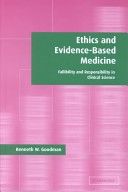
The growth of evidence-based medicine has occurred against a backdrop of health care reform, managed care, cost containment, and quality improvement. Clinicians have been urged to adopt the rigors of science while remaining true to their ‘clinical judgment’. This incisive book reviews the history and conceptual origins of evidence-based practice and discusses key ethical issues that arise in clinical practice, public health, and health policy. It is essential reading for all physicians, and practitioners in epidemiology and public health.
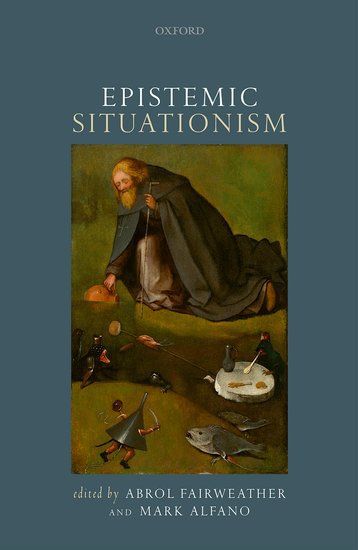
“This volume is the first sustained examination of epistemic situationism, the clash between virtue epistemology and the situationist hypothesis supported by research in empirical psychology. Current research in social psychology suggests that environmental variables have greater explanatory and predictive power than traits in explaining human behavior and this has raised serious challenges to ethical theories, such as virtue ethics, that rely on a psychology of personality traits. However, virtue epistemology appears to assume the same trait-based psychology as virtue ethics does, and the research challenging virtue theories in ethics is relevant to philosophical theorizing about knowledge as well. Until recently virtue epistemology and situationism were separate literatures, but philosophers have begun to examine the apparent incompatibility between situationist psychology and virtue epistemology. Much of the psychological research that raises questions about the empirical adequacy of the moral psychology of virtue ethics also appears to raise doubts about the empirical adequacy of the epistemic psychology assumed by virtue epistemology. Responsibilist virtue epistemology appears particularly vulnerable because epistemic virtues like open-mindedness, conscientiousness, and intellectual courage are traits of intellectual character, but reliabilist virtue epistemology appeals to the psychology of cognitive skill, abilities, and competences that may be similarly vulnerable. The essays in this volume take up this new problem of epistemic situationism from multiple points of view – some skeptical or revisionary, others conservative.”–
These two volumes, edited by the distinguished Cornell University Plato scholar Gail Fine, contain some 37 articles on various aspects of Plato’s philosophy. Most of the articles have been previously published, although some have been revised for these volumes. None dates from before 1970 and almost all are by scholars from the English-speaking world. These volumes will be widely understood to be doing for Plato scholarship in the last thirty years what the three well-known volumes edited by Gregory Vlastos (two on Plato, one on Socrates) did for Plato scholarship in the period between the end of World War II and 1970. Just as Vlastos attempted to assemble the best of Anglo-American scholarship to provide a snapshot of the contemporary ‘state-of-the-art,’ so Fine’s volumes will no doubt be taken to have done the same. Remarkably, most of the essays in Fine’s volumes cover a range of topics and employ a method strikingly similar to those in Vlastos’ volumes.
The quality of the essays is uniformly very high. A number of them will become or already have become standard starting-points for further discussion of a topic. A re-reading of the essays in the Vlastos volumes after reading these would no doubt be illuminating. Having said this much, it is truly remarkable that in roughly 1000 pages of material there is hardly even a mention of approaches to Plato in the last generation other than that of what can best be termed the Anglo-American analytic tradition.
ما از اخلاق چه انتظاری داریم؟ این سوال شاید تاحدودی برای عموم مردم و یا متخصصان این رشته قابل پاسخ باشد؛ اینکه خوب بودن را به ما بیاموزد و در تنظیم روابط فردی م...

جشن کتاب تهران به ایستگاه سی و یکم رسیده است. حال و احوال نشر کتاب خوب نیست و باید فرهنگدوستان را به خرید و هدیه دادن کتاب ترغیب نمود. خانه اخلاقپژوهان جوان ب...

بنیاد کتابهای اخلاق اسلامی عمدتا پالایش جان از آلودگیها و آراستن آن به زیباییها است. اندیشه محوری این قبیل کتابها آن است که انسان فعلی آنی نیست که باید باشد...

-
0 Comments