Notice: تابع WP_Block_Type_Registry::register به طورنادرست فراخوانی شد. نامهای نوع بلوک نباید حروف بزرگ داشته باشند. لطفاً برای اطلاعات بیشتر، اشکال زدایی در وردپرس را مشاهده کنید. (این پیام در نگارش 5.0.0 افزوده شده است.) in /home/ethicsho/public_html/wp-includes/functions.php on line 5313
Warning: Use of undefined constant TDC_PATH_LEGACY - assumed 'TDC_PATH_LEGACY' (this will throw an Error in a future version of PHP) in /home/ethicsho/public_html/wp-content/plugins/td-composer/td-composer.php on line 109
Warning: Use of undefined constant TDSP_THEME_PATH - assumed 'TDSP_THEME_PATH' (this will throw an Error in a future version of PHP) in /home/ethicsho/public_html/wp-content/plugins/td-composer/td-composer.php on line 113 بایگانیهای 9781845117160 - خانه اخلاق پژوهان جوان Notice: Trying to access array offset on value of type bool in /home/ethicsho/public_html/wp-content/plugins/wp-ulike/inc/general-functions.php on line 807
In this crisply written book, Hanno Sauer offers the first book-length treatment of debunking arguments in ethics, developing an empirically informed and philosophically sophisticated account of genealogical arguments and their significance for the reliability of moral cognition. He breaks new ground by introducing a series of novel distinctions into the current debate, which allows him to develop a framework for assessing the prospects of debunking or vindicating our moral intuitions. He also challenges the justification of some of our moral judgments by showing that they are based on epistemically defective processes.
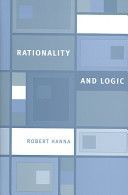
In Rationality and Logic, Robert Hanna argues that logic is intrinsically psychological and that human psychology is intrinsically logical. He claims that logic is cognitively constructed by rational animals (including humans) and that rational animals are essentially logical animals. In order to do so, he defends the broadly Kantian thesis that all (and only) rational animals possess an innate cognitive “logic faculty.” Hanna’s claims challenge the conventional philosophical wisdom that sees logic as a fully formal or “topic-neutral” science irreconcilably separate from the species- or individual-specific focus of empirical psychology. Logic and psychology went their separate ways after attacks by Frege and Husserl on logical psychologism—the explanatory reduction of logic to empirical psychology. Hanna argues, however, that—despite the fact that logical psychologism is false—there is an essential link between logic and psychology. Rational human animals constitute the basic class of cognizers or thinkers studied by cognitive psychology; given the connection between rationality and logic that Hanna claims, it follows that the nature of logic is significantly revealed to us by cognitive psychology. Hanna’s proposed “logical cognitivism” has two important consequences: the recognition by logically oriented philosophers that psychologists are their colleagues in the metadiscipline of cognitive science; and radical changes in cognitive science itself. Cognitive science, Hanna argues, is not at bottom a natural science; it is both an objective or truth-oriented science and a normative human science, as is logic itself.
The concept of luck has played an important role in debates concerning free will and moral responsibility, yet participants in these debates have relied upon an intuitive notion of what luck is. Neil Levy develops an account of luck, which is then applied to the free will debate. He argues that the standard luck objection succeeds against common accounts of libertarian free will, but that it is possible to amend libertarian accounts so that they are no more vulnerable to luck than is compatibilism. But compatibilist accounts of luck are themselves vulnerable to a powerful luck objection: historical compatibilisms cannot satisfactorily explain how agents can take responsibility for their constitutive luck; non-historical compatibilisms run into insurmountable difficulties with the epistemic condition on control over action. Levy argues that because epistemic conditions on control are so demanding that they are rarely satisfied, agents are not blameworthy for performing actions that they take to be best in a given situation. It follows that if there are any actions for which agents are responsible, they are akratic actions; but even these are unacceptably subject to luck. Levy goes on to discuss recent non-historical compatibilisms, and argues that they do not offer a viable alternative to control-based compatibilisms. He suggests that luck undermines our freedom and moral responsibility no matter whether determinism is true or not.
ما از اخلاق چه انتظاری داریم؟ این سوال شاید تاحدودی برای عموم مردم و یا متخصصان این رشته قابل پاسخ باشد؛ اینکه خوب بودن را به ما بیاموزد و در تنظیم روابط فردی م...

جشن کتاب تهران به ایستگاه سی و یکم رسیده است. حال و احوال نشر کتاب خوب نیست و باید فرهنگدوستان را به خرید و هدیه دادن کتاب ترغیب نمود. خانه اخلاقپژوهان جوان ب...

بنیاد کتابهای اخلاق اسلامی عمدتا پالایش جان از آلودگیها و آراستن آن به زیباییها است. اندیشه محوری این قبیل کتابها آن است که انسان فعلی آنی نیست که باید باشد...

-
0 Comments