Notice: تابع WP_Block_Type_Registry::register به طورنادرست فراخوانی شد. نامهای نوع بلوک نباید حروف بزرگ داشته باشند. لطفاً برای اطلاعات بیشتر، اشکال زدایی در وردپرس را مشاهده کنید. (این پیام در نگارش 5.0.0 افزوده شده است.) in /home/ethicsho/public_html/wp-includes/functions.php on line 5313
Warning: Use of undefined constant TDC_PATH_LEGACY - assumed 'TDC_PATH_LEGACY' (this will throw an Error in a future version of PHP) in /home/ethicsho/public_html/wp-content/plugins/td-composer/td-composer.php on line 109
Warning: Use of undefined constant TDSP_THEME_PATH - assumed 'TDSP_THEME_PATH' (this will throw an Error in a future version of PHP) in /home/ethicsho/public_html/wp-content/plugins/td-composer/td-composer.php on line 113 بایگانیهای 9781612184227 - خانه اخلاق پژوهان جوان Notice: Trying to access array offset on value of type bool in /home/ethicsho/public_html/wp-content/plugins/wp-ulike/inc/general-functions.php on line 807
The Hegel Dictionary is a comprehensive and accessible guide to the world of G.W.F. Hegel, one of the most important and influential thinkers in the history of philosophy. Meticulously researched and extensively cross-referenced, this unique book provides a firm grounding in the central themes of Hegel’s thought. Students will discover a wealth of useful information and analysis. A-Z entries include clear definitions of key terms used in Hegel’s writings and detailed synopses of his major works. The Dictionary also includes entries on Hegel’s philosophical influences, such as Kant, Fichte, and Schelling, and those he influenced, including Marx. It covers everything that is essential to a sound understanding of Hegel’s philosophy, offering clear and accessible explanations of often complex terminology. The Hegel Dictionary is the ideal resource for anyone reading or studying Hegel or Modern European Philosophy more generally.
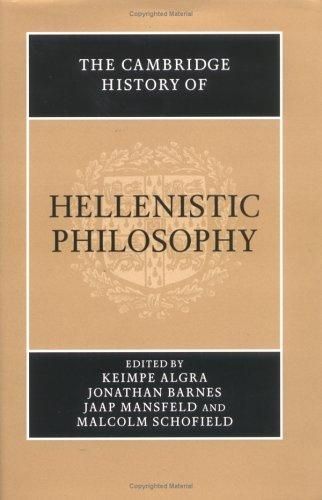
A full account of the philosophy of the Greek and Roman worlds from the last days of Aristotle (c. 320 BC) until 100 BC. Hellenistic philosophy, for long relatively neglected and unappreciated, has over the last decade been the object of a considerable amount of scholarly attention. The time has come for a general reference work which pulls the subject together and presents an overview. The History is organised by subject, rather than chronologically or by philosophical school, with sections on logic, epistemology, physics and metaphysics, ethics and politics. It has been written by specialists but is intended to be a source of reference for any student of ancient philosophy, for students of classical antiquity and for students of the philosophy of later periods. Greek and Latin are used sparingly and always translated in the main text.
‘This is an outline of a coherence theory of law. Its basic ideas are: reasonable support and weighing of reasons. All the rest is commentary.’These words at the beginning of the preface of this book perfectly indicate what On Law and Reason is about. It is a theory about the nature of the law which emphasises the role of reason in the law and which refuses to limit the role of reason to the application of deductive logic.In 1989, when the first edition of On Law and Reason appeared, this book was ground breaking for several reasons. It provided a rationalistic theory of the law in the language of analytic philosophy and based on a thorough understanding of the results, including technical ones, of analytic philosophy. That was not an obvious combination at the time of the book’s first appearance and still is not. The result is an analytical rigor that is usually associated with positivist theories of the law, combined with a philosophical position that is not natural law in a strict sense, but which shares with it the emphasis on the role of reason in determining what the law is. If only for this rare combination, On Law and Reason still deserves careful study.On Law and Reason also foreshadowed and influenced a development in the field of Legal Logic that would take place in the nineties of the 20th century, namely the development of non-monotonic (‘defeasible’) logics for the analysis of legal reasoning. In the new Introduction to this second edition, this aspect is explored in some more detail.
In this book, Weikart helps unlock the mystery of Hitler’s evil by vividly demonstrating the surprising conclusion that Hitler’s immorality flowed from a coherent ethic. Hitler was inspired by evolutionary ethics to pursue the utopian project of biologically improving the human race. This ethic underlay or influenced almost every major feature of Nazi policy: eugenics (i.e., measures to improve human heredity, including compulsory sterilization), euthanasia, racism, population expansion, offensive warfare, and racial extermination.
ما از اخلاق چه انتظاری داریم؟ این سوال شاید تاحدودی برای عموم مردم و یا متخصصان این رشته قابل پاسخ باشد؛ اینکه خوب بودن را به ما بیاموزد و در تنظیم روابط فردی م...

جشن کتاب تهران به ایستگاه سی و یکم رسیده است. حال و احوال نشر کتاب خوب نیست و باید فرهنگدوستان را به خرید و هدیه دادن کتاب ترغیب نمود. خانه اخلاقپژوهان جوان ب...

بنیاد کتابهای اخلاق اسلامی عمدتا پالایش جان از آلودگیها و آراستن آن به زیباییها است. اندیشه محوری این قبیل کتابها آن است که انسان فعلی آنی نیست که باید باشد...

-
0 Comments