Notice: تابع WP_Block_Type_Registry::register به طورنادرست فراخوانی شد. نامهای نوع بلوک نباید حروف بزرگ داشته باشند. لطفاً برای اطلاعات بیشتر، اشکال زدایی در وردپرس را مشاهده کنید. (این پیام در نگارش 5.0.0 افزوده شده است.) in /home/ethicsho/public_html/wp-includes/functions.php on line 5313
Warning: Use of undefined constant TDC_PATH_LEGACY - assumed 'TDC_PATH_LEGACY' (this will throw an Error in a future version of PHP) in /home/ethicsho/public_html/wp-content/plugins/td-composer/td-composer.php on line 109
Warning: Use of undefined constant TDSP_THEME_PATH - assumed 'TDSP_THEME_PATH' (this will throw an Error in a future version of PHP) in /home/ethicsho/public_html/wp-content/plugins/td-composer/td-composer.php on line 113 بایگانیهای 9781572305106 - خانه اخلاق پژوهان جوان Notice: Trying to access array offset on value of type bool in /home/ethicsho/public_html/wp-content/plugins/wp-ulike/inc/general-functions.php on line 807
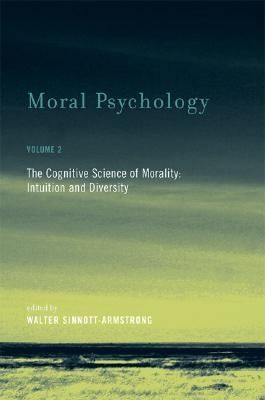
For much of the twentieth century, philosophy and science went their separate ways. In moral philosophy, fear of the so-called naturalistic fallacy kept moral philosophers from incorporating developments in biology and psychology. Since the 1990s, however, many philosophers have drawn on recent advances in cognitive psychology, brain science, and evolutionary psychology to inform their work. This collaborative trend is especially strong in moral philosophy, and these three volumes bring together some of the most innovative work by both philosophers and psychologists in this emerging interdisciplinary field.Contributors to Volume 2:Fredrik Bjorklund (University of Lund), James Blair (National Institute of Mental Health), Paul Bloomfield (University of Connecticut), Fiery Cushman (Harvard University), Justin D’Arms (Ohio State University), John Deigh (University of Texas at Austin), John Doris (Washington University), Julia Driver (Dartmouth College), Ben Fraser (Australian National University Research School of Social Science), Gerd Gigerenzer (Max Plank Institute), Michael Gill (University of Arizona), Jonathan Haidt (University of Virginia) Marc Hauser (Harvard University), Daniel Jacobson (Bowling Green State University), Joshua Knobe (University of North Carolina at Chapel Hill), Brian Leiter (University of Texas at Austin), Don Loeb (University of Vermont), Ron Mallon (University of Utah), Darcia Narvaez (University of Notre Dame), Shaun Nichols (University of Arizona), Alexandra Plakias (University of Michigan), Jesse Prinz (University of North Carolina at Chapel Hill), Geoffrey Sayre-McCord (University of North Carolina, Chapel Hill), Russ Shafer-Landau (University of Wisconsin), Walter Sinnott-Armstrong (Dartmouth College), Cass Sunstein (University of Chicago), William Tolhurst (University of Northern Illinois), Liane Young (Harvard University).
According to an ancient and still popular view — sometimes known as ‘eudaimonism’ — a person’s well-being, or quality of life, is ultimately determined by his or her level of happiness. According to this view, the happier a person is, the better off he is. The doctrine is controversial in part because the nature of happiness is controversial. In What Is This Thing Called Happiness? Fred Feldman presents a study of the nature and value of happiness. Part One contains critical discussions of the main philosophical and psychological theories of happiness. Feldman presents arguments designed to show that each of these theories is problematic. Part Two contains his presentation and defense of his own theory of happiness, which is a form of attitudinal hedonism. On this view, a person’s level of happiness may be identified with the extent to which he or she takes pleasure in things. Feldman shows that if we understand happiness as he proposes, it becomes reasonable to suppose that a person’s well-being is determined by his or her level of happiness. This view has important implications not only for moral philosophy, but also for the emerging field of hedonic psychology. Part Three contains discussions of some interactions between the proposed theory of happiness and empirical research into happiness.
“Critical philosophical investigation of the question: What is the meaning of life? Discusses views prominent in analytic philosophy, phenomenology, and existentialism, drawing especially on the thought of Tolstoy, Wittgenstein, Sartre, and Camus and exploring in depth the insights these thinkers offer regarding their own difficulties concerning the meaning of life”–Provided by publisher.
This narrative about two boys from different backgrounds touches on family, forgiveness, sport, and making peace with tragedy. Dan Snyder was not a sure thing in professional hockey, but defied expectations—playing for both the minor league’s Chicago Wolves and the NHL’s Atlanta Thrashers. Dany Heatley, on the other hand, had been tapped for success from the start as a college star and high draft pick. The two made an unlikely pair, but became friends. In September of 2003, the then 22-year-old Heatley lost control of his speeding Ferrari; Snyder was thrown from the vehicle and died six days later. The loss of their teammate, friend, and son sent those who knew Snyder looking for healing or revenge. As the legal story unfolds, so too does a story of forgiveness, rooted in the Canadian Mennonite tradition from which Snyder hailed. Snyder’s family, taking an approach to their loss dictated by their faith, chose to make peace with both Heatley and his parents. This story of forgiveness reveals a lesson in loss, hope, and peace in the face of tragedy.
Intellectual property (IP) is a crucial contributor to economic growth and competitiveness within the EU. This book offers a compact and accessible account of EU intellectual property law and policy, covering copyright, patents, designs, trademarks and the enforcement of rights. The author also addresses aspects of the free movement of goods and services, competition law, customs measures and anti-counterfeiting efforts. Setting EU intellectual property law in its wider international context, this work reveals the framework within which the national IP laws of member states operate. The book seeks to highlight the most important policy issues and arguments of relevance to the EU, both within the Union, and in its relations with the rest of the world. With its the detailed references, cross-referencing and suggestions for further readings, EU Intellectual Property Law and Policy is essential reading for postgraduate students and academic lawyers in IP and EU law. Practitioners seeking a broad account of the area will also appreciate this important contribution.
ما از اخلاق چه انتظاری داریم؟ این سوال شاید تاحدودی برای عموم مردم و یا متخصصان این رشته قابل پاسخ باشد؛ اینکه خوب بودن را به ما بیاموزد و در تنظیم روابط فردی م...

جشن کتاب تهران به ایستگاه سی و یکم رسیده است. حال و احوال نشر کتاب خوب نیست و باید فرهنگدوستان را به خرید و هدیه دادن کتاب ترغیب نمود. خانه اخلاقپژوهان جوان ب...

بنیاد کتابهای اخلاق اسلامی عمدتا پالایش جان از آلودگیها و آراستن آن به زیباییها است. اندیشه محوری این قبیل کتابها آن است که انسان فعلی آنی نیست که باید باشد...

-
0 Comments