Notice: تابع WP_Block_Type_Registry::register به طورنادرست فراخوانی شد. نامهای نوع بلوک نباید حروف بزرگ داشته باشند. لطفاً برای اطلاعات بیشتر، اشکال زدایی در وردپرس را مشاهده کنید. (این پیام در نگارش 5.0.0 افزوده شده است.) in /home/ethicsho/public_html/wp-includes/functions.php on line 5313
Warning: Use of undefined constant TDC_PATH_LEGACY - assumed 'TDC_PATH_LEGACY' (this will throw an Error in a future version of PHP) in /home/ethicsho/public_html/wp-content/plugins/td-composer/td-composer.php on line 109
Warning: Use of undefined constant TDSP_THEME_PATH - assumed 'TDSP_THEME_PATH' (this will throw an Error in a future version of PHP) in /home/ethicsho/public_html/wp-content/plugins/td-composer/td-composer.php on line 113 بایگانیهای 9781557531377 - خانه اخلاق پژوهان جوان Notice: Trying to access array offset on value of type bool in /home/ethicsho/public_html/wp-content/plugins/wp-ulike/inc/general-functions.php on line 807
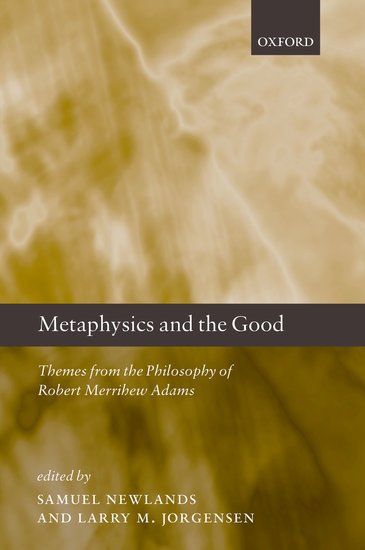
Throughout his philosophical career at Michigan, UCLA, Yale, and Oxford, Robert Merrihew Adams’s wide-ranging contributions have deeply shaped the structure of debates in metaphysics, philosophy of religion, history of philosophy, and ethics. Metaphysics and the Good: Themes from the Philosophy of Robert Merrihew Adams provides, for the first time, a collection of original essays by leading philosophers dedicated to exploring many of the facets of Adams’s thought, a philosophical outlook that combines Christian theism, neo-Platonism, moral realism, metaphysical idealism, and a commitment to both historical sensitivity and rigorous analytic engagement. Tied together by their aim of exploring, expanding, and experimenting with Adams’s views, these eleven essays are coupled with an intellectual autobiography by Adams himself that was commissioned especially for this volume. As the introduction to the volume explains, the purpose of Metaphysics and the Good is to explore Adams’s work in the very manner that he prescribes for understanding the ideas of others. By experimenting with Adams’s conclusions, “pulling a string here to see what moves over there, so to speak,” as Adams puts it, our authors throw into greater relief what makes Adams such an original and stimulating philosopher. In doing so, these essays contribute not only to the exploration of Adams’s continuing interests, but they also advance original and important philosophical insights of their own.
Promoting Islam as a defender of human rights is laden with difficulties. Advocates of human rights will readily point out numerous humanitarian failures carried out in the name of Islam. In The Rights of God, Irene Oh looks at human rights and Islam as a religious issue rather than a political or legal one and draws on three revered Islamic scholars to offer a broad range of perspectives that challenge our assumptions about the role of religion in human rights. The theoretical shift from the conception of morality based in natural duty and law to one of rights has created tensions that hinder a fruitful exchange between human rights theorists and religious thinkers. Does the static identification of human rights with lists of specific rights, such as those found in the Universal Declaration of Human Rights, make sense given the cultural, historical, and religious diversity of the societies in which these rights are to be respected and implemented? In examining human rights issues of the contemporary Islamic world, Oh illustrates how the value of religious scholarship cannot be overestimated. Oh analyzes the commentaries of Abul A’la Maududi, Sayyid Qutb, and Abdolkarim Soroush — all prominent and often controversial Islamic thinkers — on the topics of political participation, religious toleration, and freedom of conscience. While Maududi and Qutb represent traditional Islam, and Soroush a more reform and Western-friendly approach, all three contend that Islam is indeed capable of accommodating and advocating human rights. Whereas disentangling politics and culture from religion is never easy, Oh shows that the attempt must be made in order to understand and overcome the historical obstacles that prevent genuine dialogue from taking place across religious and cultural boundaries.
What are the resources and needs, the strengths and the vulnerabilities of patients, of society, or of nature? How do we evaluate the societal potential of scientific discovery? It is fairly well assured that we are influencing the terms of existence of many inhabitants of this planet, from flora to fauna to humans. Moreover, history has shown that while technologies can be used neutrally, they can be (and have been) used to the great benefit – or the great detriment – of human life and the fate of the world as a whole. How various types of knowledge and technological ability will be deployed is up to us, individually and collectively. How such information and ability should be deployed, and for what reasons, are questions at the core of bioethical inquiry. These are the “expanding horizons in bioethics” to which this volume refers. This volume is comprised of fourteen essays. It is a rare gathering of scholarly opinion, featuring well-known experts from a diversity of disciplines. The topics addressed are of immediate concern to the public. The essays ask questions about human nature, genetic technologies, reproductive rights, human subjects research, and environmental issues – all in provocative and challenging new ways. Yet the themes that emerge throughout the volume are of enduring interest to anyone concerned about the interactions of scientific development, ethics, and society. This volume is of interest to students and teachers of bioethics and related topics, as well as to professionals working in these disciplines. “The collection of essays makes an original contribution through the generally very high standard of scholarship of the papers, and through the engagement by those authors with very contemporary issues in bioethics… It is rare that so many highly original views are collected in one volume.” Quote from a pre-publication review.
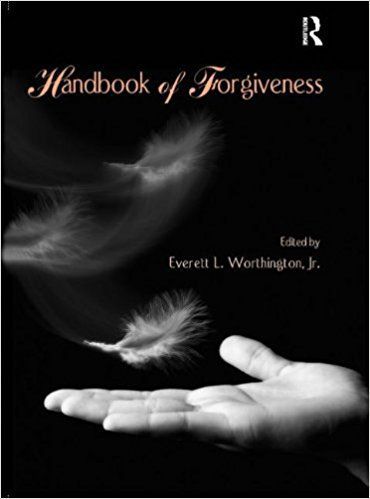
There is a need in both public and professional sectors for a deeper, and more complete understanding of forgiveness, as we are – in the author’s own words – on the threshold of an age of forgiveness and reconciliation. And yet despite continued interest and development in the field, researchers, clinicians, practitioners, and academics have long been without a comprehensive resource on which to base their work. The Handbook of Forgiveness summarizes the state of the science in the research, practice, and teaching of forgiveness. Chapters approach forgiveness and reconciliation from a variety of perspectives, drawing on related work in fields such as biology, personality, social psychology, clinical psychology, developmental psychology, philosophy, neuroscience, and international/political implications. The Handbook provides comprehensive treatments of the topic, integrating theoretical considerations, methodological discussions, and practical interventions strategies in order to appeal to researchers, clinicians, and practitioners. This volume is the most up-to-date and authoritative resource on the understanding of the science of forgiveness. The Handbook of Forgiveness has been chosen as a Book of Distinction by Templeton Press.
ما از اخلاق چه انتظاری داریم؟ این سوال شاید تاحدودی برای عموم مردم و یا متخصصان این رشته قابل پاسخ باشد؛ اینکه خوب بودن را به ما بیاموزد و در تنظیم روابط فردی م...

جشن کتاب تهران به ایستگاه سی و یکم رسیده است. حال و احوال نشر کتاب خوب نیست و باید فرهنگدوستان را به خرید و هدیه دادن کتاب ترغیب نمود. خانه اخلاقپژوهان جوان ب...

بنیاد کتابهای اخلاق اسلامی عمدتا پالایش جان از آلودگیها و آراستن آن به زیباییها است. اندیشه محوری این قبیل کتابها آن است که انسان فعلی آنی نیست که باید باشد...

-
0 Comments