Notice: تابع WP_Block_Type_Registry::register به طورنادرست فراخوانی شد. نامهای نوع بلوک نباید حروف بزرگ داشته باشند. لطفاً برای اطلاعات بیشتر، اشکال زدایی در وردپرس را مشاهده کنید. (این پیام در نگارش 5.0.0 افزوده شده است.) in /home/ethicsho/public_html/wp-includes/functions.php on line 5313
Warning: Use of undefined constant TDC_PATH_LEGACY - assumed 'TDC_PATH_LEGACY' (this will throw an Error in a future version of PHP) in /home/ethicsho/public_html/wp-content/plugins/td-composer/td-composer.php on line 109
Warning: Use of undefined constant TDSP_THEME_PATH - assumed 'TDSP_THEME_PATH' (this will throw an Error in a future version of PHP) in /home/ethicsho/public_html/wp-content/plugins/td-composer/td-composer.php on line 113 بایگانیهای 9781402029998 - خانه اخلاق پژوهان جوان Notice: Trying to access array offset on value of type bool in /home/ethicsho/public_html/wp-content/plugins/wp-ulike/inc/general-functions.php on line 807
The book is a critical review of accountability conducted under the authority of the United Nations Security Council, by the International Criminal Tribunal for Rwanda (ICTR), and the United Nations Transitional Administration in East Timor (UNTAET). It is centred on two case studies: the 1999 events in Rwanda, which constituted genocide, “the crime of crimes”, and the 1999 mayhem in East Timor. The books subjects to testing cross-examination tools to hold accountable persons with “the greatest responsibility” for serious international humanitarian law violations.A detailed expose is made of conspiracy to commit genocide. Comparison is also made whether joint criminal enterprise, and the forms of co-perpetration embodied in the Statute of the International Criminal Court provide effective alternatives in the case of atrocity crimes. A unique aspect of the book is its high-light of lessons learn in prosecution strategies; approaches in profiling perpetrators, particularly those with the highest level of responsibility for international humanitarian law violations; victor’s justice; superior responsibility; guilty pleas, and the effectiveness of the East Timor and the Indonesian Ad Hoc Human Rights Court processes. In the final analysis, the book offers a Matrix on Accountability.
To understand one another as individuals and to fulfill the moral duties that require such understanding, we must communicate with each other. We must also maintain protected channels that render reliable communication possible, a demand that, Seana Shiffrin argues, yields a prohibition against lying and requires protection for free speech. This book makes a distinctive philosophical argument for the wrong of the lie and provides an original account of its difference from the wrong of deception. Drawing on legal as well as philosophical arguments, the book defends a series of notable claims–that you may not lie about everything to the “murderer at the door,” that you have reasons to keep promises offered under duress, that lies are not protected by free speech, that police subvert their mission when they lie to suspects, and that scholars undermine their goals when they lie to research subjects. Many philosophers start to craft moral exceptions to demands for sincerity and fidelity when they confront wrongdoers, the pressures of non-ideal circumstances, or the achievement of morally substantial ends. But Shiffrin consistently resists this sort of exceptionalism, arguing that maintaining a strong basis for trust and reliable communication through practices of sincerity, fidelity, and respecting free speech is an essential aspect of ensuring the conditions for moral progress, including our rehabilitation of and moral reconciliation with wrongdoers.
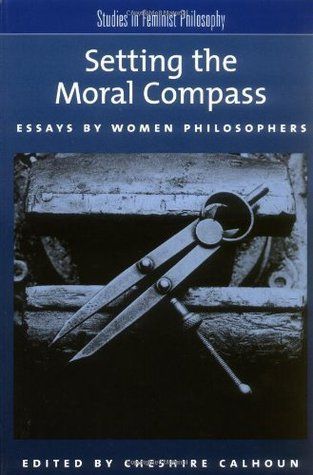
Setting the Moral Compass brings together the (largely unpublished) work of nineteen women moral philosophers whose powerful and innovative work has contributed to the “re-setting of the compass” of moral philosophy over the past two decades. The contributors, who include many of the top names in this field, tackle several wide-ranging projects: they develop an ethics for ordinary life and vulnerable persons; they examine the question of what we ought to do for each other; they highlight the moral significance of inhabiting a shared social world; they reveal the complexities of moral negotiations; and finally they show us the place of emotion in moral life.
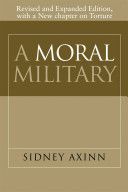
In this new edition of the classic book on the moral conduct of war, Sidney Axinn provides a full-length treatment of the military conventions from a philosophical point of view. Axinn considers these basic ethical questions within the context of the laws of warfare: Should a good soldier ever disobey a direct military order? Are there restrictions on how we fight a war? What is meant by “military honour,” and does it really affect the contemporary soldier? Is human dignity possible under battlefield conditions?Axinn answers “yes” to these questions. His objective inA Moral Militaryis to establish a basic framework for moral military action and to assist in analyzing military professional ethics. He argues for the seriousness of the concept of military honour but limits honourable military activity by a strict interpretation of the notion of war crime.With revisions and expansions throughout, including a new chapter on torture,A Moral Militaryis an essential guide on the nature of war during a time when the limits of acceptable behaviour are being stretched in new directions.
ما از اخلاق چه انتظاری داریم؟ این سوال شاید تاحدودی برای عموم مردم و یا متخصصان این رشته قابل پاسخ باشد؛ اینکه خوب بودن را به ما بیاموزد و در تنظیم روابط فردی م...

جشن کتاب تهران به ایستگاه سی و یکم رسیده است. حال و احوال نشر کتاب خوب نیست و باید فرهنگدوستان را به خرید و هدیه دادن کتاب ترغیب نمود. خانه اخلاقپژوهان جوان ب...

بنیاد کتابهای اخلاق اسلامی عمدتا پالایش جان از آلودگیها و آراستن آن به زیباییها است. اندیشه محوری این قبیل کتابها آن است که انسان فعلی آنی نیست که باید باشد...

-
0 Comments