Notice: تابع WP_Block_Type_Registry::register به طورنادرست فراخوانی شد. نامهای نوع بلوک نباید حروف بزرگ داشته باشند. لطفاً برای اطلاعات بیشتر، اشکال زدایی در وردپرس را مشاهده کنید. (این پیام در نگارش 5.0.0 افزوده شده است.) in /home/ethicsho/public_html/wp-includes/functions.php on line 5313
Warning: Use of undefined constant TDC_PATH_LEGACY - assumed 'TDC_PATH_LEGACY' (this will throw an Error in a future version of PHP) in /home/ethicsho/public_html/wp-content/plugins/td-composer/td-composer.php on line 109
Warning: Use of undefined constant TDSP_THEME_PATH - assumed 'TDSP_THEME_PATH' (this will throw an Error in a future version of PHP) in /home/ethicsho/public_html/wp-content/plugins/td-composer/td-composer.php on line 113 بایگانیهای 9781137275448 - خانه اخلاق پژوهان جوان Notice: Trying to access array offset on value of type bool in /home/ethicsho/public_html/wp-content/plugins/wp-ulike/inc/general-functions.php on line 807
Self love is an inescapable problem for ethics, yet much of contemporary ethics is reluctant to offer any normative moral anthropologies. Instead, secular ethics and contemporary culture promote a norm of self-realization which is subjective and uncritical. Christian ethics also fails to address this problem directly, because it tends to investigate self love within the context of conflicts between the self’s interests and those of her neighbors. Self Love and Christian Ethics argues for right self love as the solution of proper self-relation that intersects with love for God and love for neighbor. Darlene Fozard Weaver explains that right self love entails a true self-understanding that is embodied in the person’s concrete acts and relations. In making this argument, she calls upon ethicists to revisit ontological accounts of the self and to devote more attention to particular moral acts.
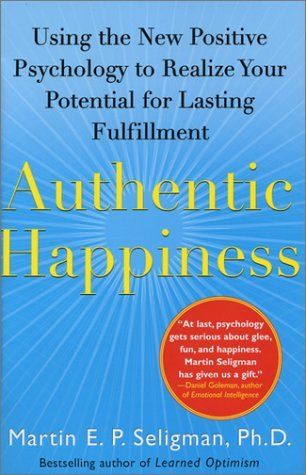
In this national bestseller — Martin Seligman’s most stimulating, persuasive book to date — the acclaimed author of Learned Optimism introduces yet another revolutionary idea. Drawing on groundbreaking scientific research, Seligman shows how Positive Psychology is shifting the profession’s paradigm away from its narrow-minded focus on pathology, victimology, and mental illness to positive emotion and mental health. Happiness, studies show, is not the result of good genes or luck. It can be cultivated by identifying and nurturing traits that we already possess — including kindness, originality, humor, optimism, and generosity.Seligman provides the tools you need in order to ascertain your most positive traits or strengths. Then he explains how, by frequently calling upon these “signature strengths” in all the crucial realms of life — health, relationships, career — you will not only develop natural buffers against misfortune and negative emotion, but also achieve new and sustainable levels of authentic contentment, gratification, and meaning.
Both scholarly and practical, this text with readings provides a clear, well-organized overview of theoretical ethics. With a contemporary tone and framework, it aims to significantly improve students’ ability to make real-life moral decisions. Multicultural coverage and attention to college students’ moral development help readers relate the material to their own experience and their own moral growth.
This book takes a new approach to ethics by focusing on the kinds of dilemmas that confront people almost daily on the job. The author’s unique contribution is to meld philosophy with everyday decisionmaking, offering the reader a common sense approach to making ethical decisions. Mary Guy introduces ten core values which surround ethical dilemmas, demonstrating the way in which personnel can sensitize themselves to the values involved in a problem and reach a solution which maximizes the important values. Real-life case examples illustrate ethical dilemmas that involve personnel practices, organizing strategies, reporting functions, supervisory practices, whistleblowing, and more. Throughout, the author emphasizes the kinds of concerns which confront the vast majority of employees–from ambitious entry-level personnel to top executives. Realistic in tone, the discussion acknowledges the inevitable need to make compromises, showing how to optimize ethical values situations that arise on the job and for which no formal rules exist. In her introductory chapter, Guy defines ethics, clarifies the relationship between ethical behavior and morality, and presents the ten guiding values that serve as the foundation for ethical decisions. Turning to a focus on decisionmaking, she explores such issues as the theoretical framework for rational decisionmaking, rational decisionmaking in real life, the application of ethical analysis to decisionmaking, and the definition of ethical decisionmaking. The four subsequent chapters present case studies of problems that personnel commonly encounter. In each case, Guy examines the ethical issues involved, applies various scenarios for reaching an ethical decision, and demonstrates the tension that exists among ethical decisionmaking, coping with daily exigencies, and accommodating the preferences of stakeholders. The concluding chapter summarizes the relationship between ethics and decisionmaking and offers a prescription for ensuring ethical decisionmaking throughout the organization. Must reading for managers in business, government, and not-for-profit organizations, this book is also an excellent supplemental text for advanced undergraduate and graduate level courses in business and public administration.
ما از اخلاق چه انتظاری داریم؟ این سوال شاید تاحدودی برای عموم مردم و یا متخصصان این رشته قابل پاسخ باشد؛ اینکه خوب بودن را به ما بیاموزد و در تنظیم روابط فردی م...

جشن کتاب تهران به ایستگاه سی و یکم رسیده است. حال و احوال نشر کتاب خوب نیست و باید فرهنگدوستان را به خرید و هدیه دادن کتاب ترغیب نمود. خانه اخلاقپژوهان جوان ب...

بنیاد کتابهای اخلاق اسلامی عمدتا پالایش جان از آلودگیها و آراستن آن به زیباییها است. اندیشه محوری این قبیل کتابها آن است که انسان فعلی آنی نیست که باید باشد...

-
0 Comments