Notice: تابع WP_Block_Type_Registry::register به طورنادرست فراخوانی شد. نامهای نوع بلوک نباید حروف بزرگ داشته باشند. لطفاً برای اطلاعات بیشتر، اشکال زدایی در وردپرس را مشاهده کنید. (این پیام در نگارش 5.0.0 افزوده شده است.) in /home/ethicsho/public_html/wp-includes/functions.php on line 5313
Warning: Use of undefined constant TDC_PATH_LEGACY - assumed 'TDC_PATH_LEGACY' (this will throw an Error in a future version of PHP) in /home/ethicsho/public_html/wp-content/plugins/td-composer/td-composer.php on line 109
Warning: Use of undefined constant TDSP_THEME_PATH - assumed 'TDSP_THEME_PATH' (this will throw an Error in a future version of PHP) in /home/ethicsho/public_html/wp-content/plugins/td-composer/td-composer.php on line 113 بایگانیهای 9781107176454 - خانه اخلاق پژوهان جوان Notice: Trying to access array offset on value of type bool in /home/ethicsho/public_html/wp-content/plugins/wp-ulike/inc/general-functions.php on line 807
Containing material from hundreds of highly distinguished contributors representing the world’s top universities and institutions, the second edition has a truly global perspective. It contains more than 2,100 entries — including more than 450 new articles. Among the many topics covered are African, Islamic, Jewish, Russian, Chinese, and Buddhist philosophies; bioethics and biomedical ethics; art and aesthetics; epistemology; metaphysics; peace and war; social and political philosophy; the Holocaust; feminist thought; and much more. Additionally, the second edition also features 1,000 biographical entries on major figures in philosophical thought throughout history.
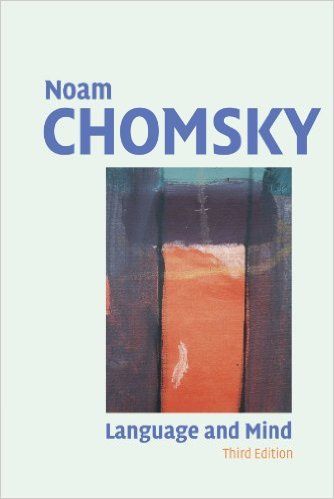
This is the long-awaited third edition of Chomsky’s outstanding collection of essays on language and mind. The first six chapters, originally published in the 1960s, made a groundbreaking contribution to linguistic theory. This new edition complements them with an additional chapter and a new preface, bringing Chomsky’s influential approach into the twenty-first century. Chapters 1-6 present Chomsky’s early work on the nature and acquisition of language as a genetically endowed, biological system (Universal Grammar), through the rules and principles of which we acquire an internalized knowledge (I-language). Over the past fifty years, this framework has sparked an explosion of inquiry into a wide range of languages, and has yielded some major theoretical questions. The final chapter revisits the key issues, reviewing the ‘biolinguistic’ approach that has guided Chomsky’s work from its origins to the present day, and raising some novel and exciting challenges for the study of language and mind.
In Minds and Bodies, Colin McGinn offers proof that contemporary philosophy, in the hands of a consummate reviewer, can be the occasion not only sharp critical assessment, but also writing so clear and engaging that readers with no special background in the subject but simply a taste for challenging idea can feel welcome. Gathering nearly forty review-essays printed mainly in nonspecialist publications over the past twenty years, McGinn, a distinguished philosopher and teacher, measures the best of recent Anglo-American philosophical writing, considering books by Thomas Nagel, John Searle, and Daniel Dennett, among others, and navigating with energy and wit important new work in ethics, philosophy of language, and philosophy of mind. Opening with a section on philosophical lives–books written on or by Ludwig Wittgenstein, Bertrand Russell, Charles Peirce, and A. J. Ayer– McGinn moves to the question of consciousness, offering readers two dozen crisp and provocative pieces on work seeking to define and illuminate the mind, its activity, and its relation to the world of physical objects. Closing with a section on ethics, McGinn brings a bold and sharply original perspective to argument in such controversial areas as animal rights and feminist moral theory. A bracing collection of masterfully written reviews that together form an accessible picture of philosophy as it is practiced today, Minds and Bodies makes permanent the critical reflections of a gifted philosopher and writer and is destined to find an appreciative audience both within the philosophical community and in the wider culture of intellectually curious readers.
A Companion to the Philosophy of Education is a comprehensive guide to philosophical thinking about education. Offers a state-of-the-art account of current and controversial issues in education, including issues pertaining to multiculturalism, special education, sex education, and academic freedom. Written by an international team of leading experts, who are directly engaged with these profound and complex educational problems. Serves as an indispensable guide to the field of philosophy of education.
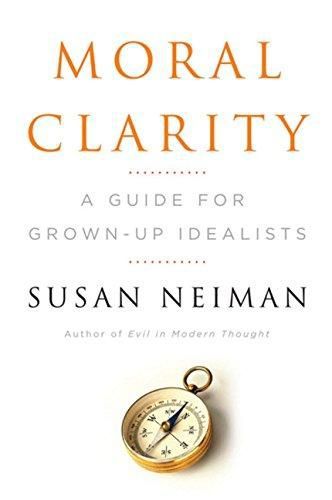
Susan Neiman is a moral philosopher committed to making the tools of her trade relevant to real life. In Moral Clarity, she shows how resurrecting a moral vocabulary good and evil, heroism and nobility can steer us clear of the dogmas of the right and the helpless pragmatism of the left. In search of a framework for forming clear opinions and taking responsible action on today’s urgent political and social questions, Neiman reaches back to the eighteenth century, retrieving a set of virtues happiness, reason, reverence, and hope that were held high by every Enlightenment thinker. She shows that the pursuit of moral clarity is not a matter of religious faith but is open to all who are committed to these ideals, believers and nonbelievers alike. And she draws on literature, evolutionary theory, and other contemporary research to show why, by keeping before us the distinction between the real and the possible, these ideals continue to guide and inspire.
ما از اخلاق چه انتظاری داریم؟ این سوال شاید تاحدودی برای عموم مردم و یا متخصصان این رشته قابل پاسخ باشد؛ اینکه خوب بودن را به ما بیاموزد و در تنظیم روابط فردی م...

جشن کتاب تهران به ایستگاه سی و یکم رسیده است. حال و احوال نشر کتاب خوب نیست و باید فرهنگدوستان را به خرید و هدیه دادن کتاب ترغیب نمود. خانه اخلاقپژوهان جوان ب...

بنیاد کتابهای اخلاق اسلامی عمدتا پالایش جان از آلودگیها و آراستن آن به زیباییها است. اندیشه محوری این قبیل کتابها آن است که انسان فعلی آنی نیست که باید باشد...

-
0 Comments