Notice: تابع WP_Block_Type_Registry::register به طورنادرست فراخوانی شد. نامهای نوع بلوک نباید حروف بزرگ داشته باشند. لطفاً برای اطلاعات بیشتر، اشکال زدایی در وردپرس را مشاهده کنید. (این پیام در نگارش 5.0.0 افزوده شده است.) in /home/ethicsho/public_html/wp-includes/functions.php on line 5313
Warning: Use of undefined constant TDC_PATH_LEGACY - assumed 'TDC_PATH_LEGACY' (this will throw an Error in a future version of PHP) in /home/ethicsho/public_html/wp-content/plugins/td-composer/td-composer.php on line 109
Warning: Use of undefined constant TDSP_THEME_PATH - assumed 'TDSP_THEME_PATH' (this will throw an Error in a future version of PHP) in /home/ethicsho/public_html/wp-content/plugins/td-composer/td-composer.php on line 113 بایگانیهای 9780899304182 - خانه اخلاق پژوهان جوان Notice: Trying to access array offset on value of type bool in /home/ethicsho/public_html/wp-content/plugins/wp-ulike/inc/general-functions.php on line 807
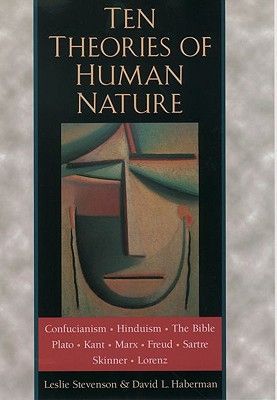
Ten Theories of Human Nature compresses into a small space the essence of such thinkers as Plato, Karl Marx, Sigmund Freud, Jean-Paul Sartre, B.F. Skinner, and Konrad Lorenz. Moreover, the authors juxtapose the ideas of these and other thinkers in a way that helps us to understand how humanity has struggled to comprehend its nature.
This book introduces the reader to ethics by examining a current and important debate. During the last fifty years the orthodox position in ethics has been a broadly non-cognitivist one: since there are no moral facts, moral remarks are best understood, not as attempting to describe the world, but as having some other function – such as expressing the attitudes or preferences of the speaker. In recent years this position has been increasingly challenged by moral realists who maintain that there are moral facts; there is a truth of the matter in ethics, which is independent of our views, and which we seek to discover. Unfortunately much of this interesting debate found in the work of McDowell, Wiggins, Putnam, Blackburn and others is not easily accessible to undergraduates. McNaughton presents many of the major issues in ethics by way of a clear exposition of both sides of this argument and assumes no prior knowledge of philosophy. Topics discussed include: moral observation, moral motivation, amoralism and wickedness, moral weakness, cultural relativism and utilitarianism. The book concludes that a convincing case can be made out for a radical form of moral realism in which moral virtue is found, not in the following of correct moral principles, but rather in the development of moral sensitivity. Moral Vision is a clear and engaged introduction to an important, and often troubling, debate.
These astute essays describe the way ordinary people value human relationships and reason through the commonplace contradictions of their local way of life in a global age, rather than measure the actions of their subjects as evidence of either universal rationality or shared cultural beliefs. Each contributor conveys the ways in which people challenge the ascribed moral standards of custom, religious belief, bureaucratic policies through passionate words such as anecdotes, joke, rumors, and gossip. By evaluating moral reasoning at a local level, contributors work to answer the question, what is a good life?
In Rationality and Logic, Robert Hanna argues that logic is intrinsically psychological and that human psychology is intrinsically logical. He claims that logic is cognitively constructed by rational animals (including humans) and that rational animals are essentially logical animals. In order to do so, he defends the broadly Kantian thesis that all (and only) rational animals possess an innate cognitive “logic faculty.” Hanna’s claims challenge the conventional philosophical wisdom that sees logic as a fully formal or “topic-neutral” science irreconcilably separate from the species- or individual-specific focus of empirical psychology. Logic and psychology went their separate ways after attacks by Frege and Husserl on logical psychologism—the explanatory reduction of logic to empirical psychology. Hanna argues, however, that—despite the fact that logical psychologism is false—there is an essential link between logic and psychology. Rational human animals constitute the basic class of cognizers or thinkers studied by cognitive psychology; given the connection between rationality and logic that Hanna claims, it follows that the nature of logic is significantly revealed to us by cognitive psychology. Hanna’s proposed “logical cognitivism” has two important consequences: the recognition by logically oriented philosophers that psychologists are their colleagues in the metadiscipline of cognitive science; and radical changes in cognitive science itself. Cognitive science, Hanna argues, is not at bottom a natural science; it is both an objective or truth-oriented science and a normative human science, as is logic itself.
ما از اخلاق چه انتظاری داریم؟ این سوال شاید تاحدودی برای عموم مردم و یا متخصصان این رشته قابل پاسخ باشد؛ اینکه خوب بودن را به ما بیاموزد و در تنظیم روابط فردی م...

جشن کتاب تهران به ایستگاه سی و یکم رسیده است. حال و احوال نشر کتاب خوب نیست و باید فرهنگدوستان را به خرید و هدیه دادن کتاب ترغیب نمود. خانه اخلاقپژوهان جوان ب...

بنیاد کتابهای اخلاق اسلامی عمدتا پالایش جان از آلودگیها و آراستن آن به زیباییها است. اندیشه محوری این قبیل کتابها آن است که انسان فعلی آنی نیست که باید باشد...

-
0 Comments