Notice: تابع WP_Block_Type_Registry::register به طورنادرست فراخوانی شد. نامهای نوع بلوک نباید حروف بزرگ داشته باشند. لطفاً برای اطلاعات بیشتر، اشکال زدایی در وردپرس را مشاهده کنید. (این پیام در نگارش 5.0.0 افزوده شده است.) in /home/ethicsho/public_html/wp-includes/functions.php on line 5313
Warning: Use of undefined constant TDC_PATH_LEGACY - assumed 'TDC_PATH_LEGACY' (this will throw an Error in a future version of PHP) in /home/ethicsho/public_html/wp-content/plugins/td-composer/td-composer.php on line 109
Warning: Use of undefined constant TDSP_THEME_PATH - assumed 'TDSP_THEME_PATH' (this will throw an Error in a future version of PHP) in /home/ethicsho/public_html/wp-content/plugins/td-composer/td-composer.php on line 113 بایگانیهای 9780872200265 - خانه اخلاق پژوهان جوان Notice: Trying to access array offset on value of type bool in /home/ethicsho/public_html/wp-content/plugins/wp-ulike/inc/general-functions.php on line 807
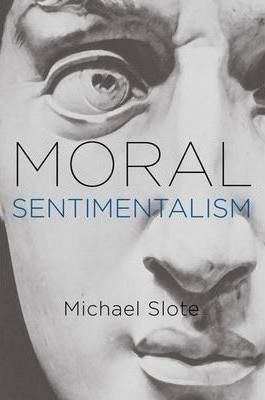
There has recently been a good deal of interest in moral sentimentalism, but most of that interest has been exclusively either in meta-ethical questions about the meaning of moral terms or in normative issues about benevolence and/or caring and their place in morality. In Moral Sentimentalism Michael Slote attempts to deal with both sorts of issues and to do so, primarily, in terms of the notion or phenomenon of empathy. Hume sought to do something like this over two centuries ago, though he didn’t have the term “empathy” and used “sympathy” instead. Slote therefore attempts to give moral sentimentalism a second wind. By relying so systematically on empathy in its account of normative morality and in what it has to say about the meaning of moral vocabulary, Slote offers a unified overall ethical picture that can then be tested against ethical rationalism. Rationalism has recently dominated the scene in ethics, but by showing how sentimentalism can make coherent and intuitive sense of such preferred rationalist notions as autonomy, respect, and justice-and by showing how a sentimentalism based in empathy can deal with ethically significant aspects of the moral life that rationalism tends to ignore or skimp on-Slote hopes a wider and more active debate between rationalism and sentimentalism can be set in motion. There are signs that sentimentalist modes of thought are gaining new footholds on the way ethics is done, and this new book is very hopeful about these possibilities.
Freedom of the sort implicated in acting freely or with free will is important to the truth of different sorts of moral judgment, such as judgments of moral responsibility and those of moral obligation. Little thought, however, has been invested into whether appraisals of good or evil presuppose free will. This important topic has not commanded the attention it deserves owing to what is perhaps a prevalent assumption that freedom leaves judgments concerning good and evil largely unaffected. The central aim of this book is to dispute this assumption by arguing for the relevance of free will to the truth of two sorts of such judgment: welfare-ranking judgments or judgments of personal well-being (when is one’s life intrinsically good for the one who lives it?), and world-ranking judgments (when is a possible world intrinsically better than another?). The book also examines free will’s impact on the truth of such judgments for central issues in moral obligation and in the free will debate. This book should be of interest to those working on intrinsic value, personal well-being, moral obligation, and free will.
Malice that cannot speak its name, cold-blooded but secret hostility, impotent desire, hidden rancor and spite–all cluster at the center of envy. Envy clouds thought, writes Joseph Epstein, clobbers generosity, precludes any hope of serenity, and ends in shriveling the heart. Of the seven deadly sins, he concludes, only envy is no fun at all. Writing in a conversational, erudite, self-deprecating style that wears its learning lightly, Epstein takes us on a stimulating tour of the many faces of envy. He considers what great thinkers–such as John Rawls, Schopenhauer, and Nietzsche–have written about envy; distinguishes between envy, yearning, jealousy, resentment, and schadenfreude (“a hardy perennial in the weedy garden of sour emotions”); and catalogs the many things that are enviable, including wealth, beauty, power, talent, knowledge and wisdom, extraordinary good luck, and youth (or as the title of Epstein’s chapter on youth has it, “The Young, God Damn Them”). He looks at resentment in academia, where envy is mixed with snobbery, stirred by impotence, and played out against a background of cosmic injustice; and he offers a brilliant reading of Othello as a play more driven by Iago’s envy than Othello’s jealousy. He reveals that envy has a strong touch of malice behind it–the envious want to destroy the happiness of others. He suggests that envy of the astonishing success of Jews in Germany and Austria may have lurked behind the virulent anti-Semitism of the Nazis. As he proved in his best-selling Snobbery, Joseph Epstein has an unmatched ability to highlight our failings in a way that is thoughtful, provocative, and entertaining. If envy is no fun, Epstein’s Envy is truly a joy to read.
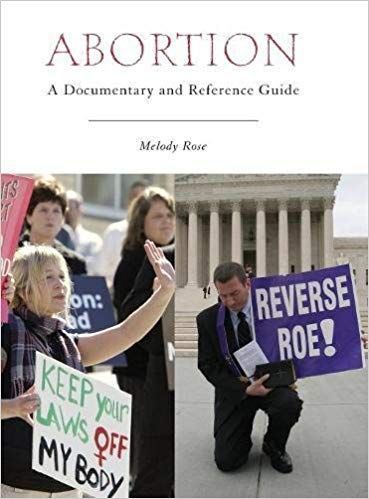
Today abortion is America’s most contentious political and religious rallying point. Yet 150 years ago it was a virtual non-issue, quietly performed for centuries by women and mid-wives. What changed? This thought-provoking reference work explores the evolution of America’s abortion debate in a balanced selection of over 40 primary documents by doctors, feminists, religious leaders, politicians, extremists, and judges from the 19th century to the present day. This guide not only examines the key laws and court cases, like Roe v. Wade and the Partial Birth Abortion Ban, that have determined abortion policy, but offers insight into America’s changing attitudes towards women, race, the medical field, and the role of government in its citizens’ personal lives. Memoirs of early abortion providers, excerpts from popular women’s self-help books, the complete text of Pope Paul VI’s Humanae Vitae, and personal writings from key liberal and conservative figures on both sides of the debate provide a more complete picture of an issue that is deeply personal, deeply divisive, and anything but clear-cut. A straightforward and accessible book, ideal for both students and general readers looking to expand their understanding of one of the most complicated, and still unresolved, issues of our day. Documents are presented in easy-to-use chronological order, divided into 7 chapters exploring the various eras of the abortion debate. Chapter 1: (19th century) The state’s minimal role in abortions, the nascent women’s movement, and a medical movement to restrict abortion provision. Chapter 2: (1905 – 1960) America’s strictest era of abortion policy. The ideology of motherhood vs. post-suffrage women’s desire to control their fertility. Chapter 3: (1965-1971). Voices for decreased abortion restrictions and tragic consequences of illegal abortions. Chapter 4: (1973 – 983) Results of and immediate academic responses to the movement to liberalize abortion policy. Chapter 5: (1984 -1989) The growing role of political parties in abortion politics. Chapter 6: (1991-1996) The movement to protect the fetus. Chapter 7: (2001-2005) Impact of the fetal rights movement and successes in restricting abortion access. Each excerpt is preceded by a brief explanation of its significance and followed by author analysis to help readers understand its implications and the historical context in which is it was written. Readers gain direct access to America’s most important legal papers and transcripts on abortion, complimented by a well rounded view of the public beliefs and sentiments that have fueled abortion debates. Suggestions for further reading conclude each chapter, perfect for research or to guide interested readers in their search for material. The front matter includes a Timeline of major events in abortion history, and the back matter, offers a Bibliography of 50 titles on abortion and over 30 Web links.
ما از اخلاق چه انتظاری داریم؟ این سوال شاید تاحدودی برای عموم مردم و یا متخصصان این رشته قابل پاسخ باشد؛ اینکه خوب بودن را به ما بیاموزد و در تنظیم روابط فردی م...

جشن کتاب تهران به ایستگاه سی و یکم رسیده است. حال و احوال نشر کتاب خوب نیست و باید فرهنگدوستان را به خرید و هدیه دادن کتاب ترغیب نمود. خانه اخلاقپژوهان جوان ب...

بنیاد کتابهای اخلاق اسلامی عمدتا پالایش جان از آلودگیها و آراستن آن به زیباییها است. اندیشه محوری این قبیل کتابها آن است که انسان فعلی آنی نیست که باید باشد...

-
0 Comments