Notice: تابع WP_Block_Type_Registry::register به طورنادرست فراخوانی شد. نامهای نوع بلوک نباید حروف بزرگ داشته باشند. لطفاً برای اطلاعات بیشتر، اشکال زدایی در وردپرس را مشاهده کنید. (این پیام در نگارش 5.0.0 افزوده شده است.) in /home/ethicsho/public_html/wp-includes/functions.php on line 5313
Warning: Use of undefined constant TDC_PATH_LEGACY - assumed 'TDC_PATH_LEGACY' (this will throw an Error in a future version of PHP) in /home/ethicsho/public_html/wp-content/plugins/td-composer/td-composer.php on line 109
Warning: Use of undefined constant TDSP_THEME_PATH - assumed 'TDSP_THEME_PATH' (this will throw an Error in a future version of PHP) in /home/ethicsho/public_html/wp-content/plugins/td-composer/td-composer.php on line 113 بایگانیهای 9780814407813 - خانه اخلاق پژوهان جوان Notice: Trying to access array offset on value of type bool in /home/ethicsho/public_html/wp-content/plugins/wp-ulike/inc/general-functions.php on line 807
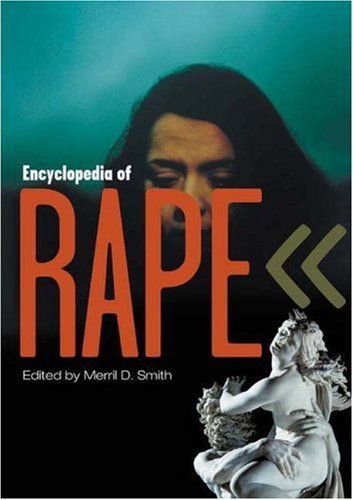
Rape has been perpetrated throughout history and worldwide, and today ours has been called a rape culture, because sexual violence, mainly against women and children, is prevalent and tolerated to some extent. The Encyclopedia of Rape offers 185 entries in an A-to-Z essay format covering the historical scope and magnitude of the issue in the United States and globally. Written by a host of scholars from diverse fields, it provides informed perspectives on the key dimensions of the topic, from concepts, social movements, offenders, high-profile cases, legislation, influential activists, landmark texts, and victimology to representations in literature and art. This solid, accessible ready-reference will allow students and the general reader to contextualize current events and reading and viewing in history, literature and the Bible, film, art history, gender studies, psychology, criminology, popular culture, and more. Rape is a topic of perpetual relevance and remains deeply controversial, as it involves the sexual act. Although women are the primary targets of rape and thus the focus of discussion of it, the rape of men, children, and animals is also considered in the encyclopedia. Up to date, it contains insight on the manifestations of rape today, including as a tool of ethnic cleansing in Bosnia and genocide in Rwanda, the Catholic Church priest scandals, and drug-facilitated date rape. Added value comes from an abundance of statistics, suggested reading for further research per entry, chronology, resource guide, and appendix listing entries by topic.
Virtue epistemology is an exciting, new movement receiving an enormous amount of attention from top epistemologists and ethicists; this pioneering volume reflects the best work in that vein. Featuring superb writing from contemporary American philosophers, it includes thirteen never before published essays that focus on the place of the concept of virtue in epistemology. In recent years, philosophers have been debating how this concept functions in definitions of knowledge. They question the extent to which knowledge is both normative (i.e., with a moral component) and non-normative, and many of them dispute the focus on justification, which has proven to be too restrictive. Epistemologists are searching for a way to combine the traditional concepts of ethical theory with epistemic concepts; the result is a new approach called virtue epistemology–one that has established itself as a particularly favorable alternative. Containing the fruits of recent study on virtue epistemology, this volume offers a superb selection of contributors–including Robert Audi, Simon Blackburn, Richard Foley, Alvin Goldman, Hilary Kornblith, Keith Lehrer, Ernest Sosa, and Linda Zagzebski–whose work brings epistemology into dialogue with everyday issues.
The fundamental question of the ethics of belief is “What ought one to believe?” According to the traditional view of evidentialism, the strength of one’s beliefs should be proportionate to the evidence. Conventional ways of defending and challenging evidentialism rely on the idea that what one ought to believe is a matter of what it is rational, prudent, ethical, or personally fulfilling to believe. Common to all these approaches is that they look outside of belief itself to determine what one ought to believe. In this book Jonathan Adler offers a strengthened version of evidentialism, arguing that the ethics of belief should be rooted in the concept of belief—that evidentialism is belief’s own ethics. A key observation is that it is not merely that one ought not, but that one cannot, believe, for example, that the number of stars is even. The “cannot” represents a conceptual barrier, not just an inability. Therefore belief in defiance of one’s evidence (or evidentialism) is impossible. Adler addresses such questions as irrational beliefs, reasonableness, control over beliefs, and whether justifying beliefs requires a foundation. Although he treats the ethics of belief as a central topic in epistemology, his ideas also bear on rationality, argument and pragmatics, philosophy of religion, ethics, and social cognitive psychology.
ما از اخلاق چه انتظاری داریم؟ این سوال شاید تاحدودی برای عموم مردم و یا متخصصان این رشته قابل پاسخ باشد؛ اینکه خوب بودن را به ما بیاموزد و در تنظیم روابط فردی م...

جشن کتاب تهران به ایستگاه سی و یکم رسیده است. حال و احوال نشر کتاب خوب نیست و باید فرهنگدوستان را به خرید و هدیه دادن کتاب ترغیب نمود. خانه اخلاقپژوهان جوان ب...

بنیاد کتابهای اخلاق اسلامی عمدتا پالایش جان از آلودگیها و آراستن آن به زیباییها است. اندیشه محوری این قبیل کتابها آن است که انسان فعلی آنی نیست که باید باشد...

-
0 Comments