Notice: تابع WP_Block_Type_Registry::register به طورنادرست فراخوانی شد. نامهای نوع بلوک نباید حروف بزرگ داشته باشند. لطفاً برای اطلاعات بیشتر، اشکال زدایی در وردپرس را مشاهده کنید. (این پیام در نگارش 5.0.0 افزوده شده است.) in /home/ethicsho/public_html/wp-includes/functions.php on line 5313
Warning: Use of undefined constant TDC_PATH_LEGACY - assumed 'TDC_PATH_LEGACY' (this will throw an Error in a future version of PHP) in /home/ethicsho/public_html/wp-content/plugins/td-composer/td-composer.php on line 109
Warning: Use of undefined constant TDSP_THEME_PATH - assumed 'TDSP_THEME_PATH' (this will throw an Error in a future version of PHP) in /home/ethicsho/public_html/wp-content/plugins/td-composer/td-composer.php on line 113 بایگانیهای 9780809139897 - خانه اخلاق پژوهان جوان Notice: Trying to access array offset on value of type bool in /home/ethicsho/public_html/wp-content/plugins/wp-ulike/inc/general-functions.php on line 807
Close-up insights on how experts in the field are re-interpreting ethical principles to create workable policies for today and tomorrow, from the creators of the 2007 APS Code of Ethics First cooperative project between Wiley-Blackwell and the APS Offers a close-up view of how enduring ethical principles are reinvented to ensure lasting relevance in times of modernisation and professional change Will be an accredited option for APS Professional Development – the book will be built into PD workshops and also available for PD credits outside that context Essential reading for those involved in healthcare ethics internationally
The Blackwell Guide to Aristotle’s Nicomachean Ethics illuminates Aristotle’s ethics for both academics and students new to the work, with sixteen newly commissioned essays by distinguished international scholars. The structure of the book mirrors the organization of the Nichomachean Ethics itself.Discusses the human good, the general nature of virtue, the distinctive characteristics of particular virtues, voluntariness, self-control, and pleasure.
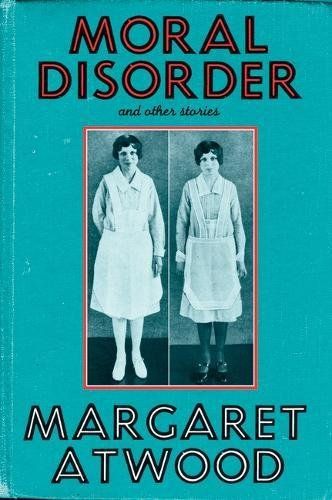
Margaret Atwood has frequently been cited as one of the foremost writers of our time. Moral Disorder, her new work of fiction, could be seen as a collection of ten stories that is almost a novel … or a novel broken up into ten stories. It resembles a photograph album – a series of clearly observed moments that trace the course of a life, and the lives intertwined with it – those of parents, siblings, children, friends, enemies, teachers and even animals. And as in a photograph album, times change; every decade is here, from the 1930s through the 50s, 60s and 70s to the present day. The settings are equally varied: large cities, suburbs, farms, northern forests. The first story, ‘The Bad News,’ is set in the present, as a couple no longer young situate themselves in a larger world no longer safe. Then the narrative switches time, as the central character moves through childhood and adolescence, in ‘The Art of Cooking and Serving’, ‘The Headless Horseman’ and ‘My Last Duchess’. We follow her into young adulthood in ‘The Other Place’, and then through a complex relationship, traced in three of the stories – ‘Monopoly’, ‘Moral Disorder’ and ‘The Entities’. The last two stories, ‘The Labrador Fiasco’ and ‘The Boys at the Lab’, deal with the heartbreaking old age of parents, but circle back to childhood again, to complete the cycle. By turns funny, moving, lyrical, incisive, tragic, earthy, shocking and deeply personal, Moral Disorder displays Atwood’s celebrated storytelling gifts and inimitable style to their best advantage. As the New York Times has said, ‘Atwood has complete access to her people’s emotional histories, complete understanding of their hearts and imaginations.’
C. Stephen Evans explains and defends Kierkegaard’s account of moral obligations as rooted in God’s commands, the fundamental command being `You shall love your neighbour as yourself’. The work will be of interest not only to those interested in Kierkegaard, but also to those interested in the relation between ethics and religion, especially questions about whether morality can or must have a religious foundation. As well as providing a comprehensive reading of Kierkegaard as an ethical thinker, Evans puts him into conversation with contemporary moral theorists. Kierkegaard’s divine command theory is shown to be an account that safeguards human flourishing, as well as protecting the proper relations between religion and state in a pluralistic society.
ما از اخلاق چه انتظاری داریم؟ این سوال شاید تاحدودی برای عموم مردم و یا متخصصان این رشته قابل پاسخ باشد؛ اینکه خوب بودن را به ما بیاموزد و در تنظیم روابط فردی م...

جشن کتاب تهران به ایستگاه سی و یکم رسیده است. حال و احوال نشر کتاب خوب نیست و باید فرهنگدوستان را به خرید و هدیه دادن کتاب ترغیب نمود. خانه اخلاقپژوهان جوان ب...

بنیاد کتابهای اخلاق اسلامی عمدتا پالایش جان از آلودگیها و آراستن آن به زیباییها است. اندیشه محوری این قبیل کتابها آن است که انسان فعلی آنی نیست که باید باشد...

-
0 Comments