Notice: تابع WP_Block_Type_Registry::register به طورنادرست فراخوانی شد. نامهای نوع بلوک نباید حروف بزرگ داشته باشند. لطفاً برای اطلاعات بیشتر، اشکال زدایی در وردپرس را مشاهده کنید. (این پیام در نگارش 5.0.0 افزوده شده است.) in /home/ethicsho/public_html/wp-includes/functions.php on line 5313
Warning: Use of undefined constant TDC_PATH_LEGACY - assumed 'TDC_PATH_LEGACY' (this will throw an Error in a future version of PHP) in /home/ethicsho/public_html/wp-content/plugins/td-composer/td-composer.php on line 109
Warning: Use of undefined constant TDSP_THEME_PATH - assumed 'TDSP_THEME_PATH' (this will throw an Error in a future version of PHP) in /home/ethicsho/public_html/wp-content/plugins/td-composer/td-composer.php on line 113 بایگانیهای 9780761913450 - خانه اخلاق پژوهان جوان Notice: Trying to access array offset on value of type bool in /home/ethicsho/public_html/wp-content/plugins/wp-ulike/inc/general-functions.php on line 807
What distinguishes evils from ordinary wrongs? Is hatred a necessarily evil? Are some evils unforgivable? Are there evils we should tolerate? What can make evils hard to recognize? Are evils inevitable? How can we best respond to and live with evils? Claudia Card offers a secular theory of evil that responds to these questions and more. Evils, according to her theory, have two fundamental components. One component is reasonably foreseeable intolerable harm — harm that makes a life indecent and impossible or that makes a death indecent. Theother component is culpable wrongdoing. Atrocities, such as genocides, slavery, war rape, torture, and severe child abuse, are Card’s paradigms because in them these key elements are writ large. Atrocities deserve more attention than secular philosophers have so far paid them. They are distinguishedfrom ordinary wrongs not by the psychological states of evildoers but by the seriousness of the harm that is done. Evildoers need not be sadistic: they may simply be negligent or unscrupulous in pursuing their goals. Card’s theory represents a compromise between classic utilitarian and stoic alternatives (including Kant’s theory of radical evil). Utilitarians tend to reduce evils to their harms; Stoics tend to reduce evils to the wickedness of perpetrators: Card accepts neither reduction. She also responds toNietzsche’s challenges about the worth of the concept of evil, and she uses her theory to argue that evils are more important than merely unjust inequalities. She applies the theory in explorations of war rape and violence against intimates. She also takes up what Primo Levi called “the gray zone”,where victims become complicit in perpetrating on others evils that threaten to engulf themselves. While most past accounts of evil have focused on perpetrators, Card begins instead from the position of the victims, but then considers more generally how to respond to — and live with — evils, asvictims, as perpetrators, and as those who have become both.
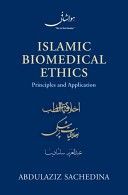
Biomedical ethics is a burgeoning academic field with complex and far-reaching consequences. Whereas in Western secular bioethics this subject falls within larger ethical theories and applications (utilitarianism, deontology, teleology, and the like), Islamic biomedical ethics has yet to find its natural academic home in Islamic studies. In this pioneering work, Abdulaziz Sachedina – a scholar with life-long academic training in Islamic law – relates classic Muslim religious values to the new ethical challenges that arise from medical research and practice. He depends on Muslim legal theory, but then looks deeper than juridical practice to search for the underlying reasons that determine the rightness or wrongness of a particular action. Drawing on the work of diverse Muslim theologians, he outlines a form of moral reasoning that can derive and produce decisions that underscore the spirit of the Shari’a. These decisions, he argues, still leave room to revisit earlier decisions and formulate new ones, which in turn need not be understood as absolute or final. After laying out this methodology, he applies it to a series of ethical questions surrounding the human life-cycle from birth to death, including such issues as abortion, euthanasia, and organ donation. The implications of Sachedina’s work are broad. His writing is unique in that it aims at conversing with Jewish and Christian ethics, moving beyond the Islamic fatwa literature to search for a common language of moral justification and legitimization among the followers of the Abrahamic traditions. He argues that Islamic theological ethics be organically connected with the legal tradition of Islam to enable it to sit in dialogue with secular and scripture-based bioethics in other faith communities. A breakthrough in Islamic bioethical studies, this volume is welcome and long-overdue reading for anyone interested in facing the difficult questions posed by modern medicine not only to the Muslim faithful but to the ethically-minded at large.
Jesse Prinz argues that recent work in philosophy, neuroscience, and anthropology supports two radical hypotheses about the nature of morality: moral values are based on emotional responses, and these emotional responses are inculcated by culture, not hard-wired through natural selection. In the first half of the book, Jesse Prinz defends the hypothesis that morality has an emotional foundation. Evidence from brain imaging, social psychology, and psychopathology suggest that, when we judge something to be right or wrong, we are merely expressing our emotions. Prinz argues that these emotions do not track objective features of reality; rather, the rightness and wrongness of an act consists in the fact that people are disposed to have certain emotions towards it. In the second half of the book, he turns to a defense of moral relativism. Moral facts depend on emotional responses, and emotional responses vary from culture to culture. Prinz surveys the anthropological record to establish moral variation, and he draws on cultural history to show how attitudes toward practices such as cannibalism and marriage change over time. He also criticizes evidence from animal behavior and child development that has been taken to support the claim that moral attitudes are hard-wired by natural selection. Prinz concludes that there is no single true morality, but he also argues that some moral values are better than others; moral progress is possible. Throughout the book, Prinz relates his views to contemporary and historical work in philosophical ethics. His views echo themes in the writings of David Hume and Friedrich Nietzsche, but Prinz supports, extends, and revises these classic theories using the resources of cutting-edge cognitive science. The Emotional Construction of Morals will stimulate and challenge anyone who is curious about the nature and origin of moral values.
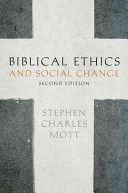
This scholarly synthesis of biblical studies and Christian social ethics is designed to provide a biblical argument for intentional institutional change on behalf of social justice. Stephen Charles Mott provides a biblical and ethical guide on ways to implement that change.The first part of the book, providing the biblical theology of intentional social change, deals with the central concepts in biblical and theological ethics: grace, evil, love, justice, and the Reign of God. Christian social change must be rooted not only in justice, but in the grace received through the death and resurrection of Christ. The second part evaluates ethical and theological methods for carrying out that intentional social change. It offers a study of evangelism, counter community, civil disobedience, armed revolution, and political reform. It shows the contribution of each as well as the strong limitations of each used in isolation.A recurring theme of the book is the scriptural insistence on the priority of justice as taking upon oneself the cause of the oppressed. Justice is understood on bringing back into the community those who are near to falling out of it. Political authority has a vital role in social change for justice. It is essential that a Christian use all available and legitimate means of meeting basic needs by providing for all what is essential for inclusion in society.In this revised edition, Mott updates the contemporary illustrations and includes his own further reflections in the last thirty years on this topic.
ما از اخلاق چه انتظاری داریم؟ این سوال شاید تاحدودی برای عموم مردم و یا متخصصان این رشته قابل پاسخ باشد؛ اینکه خوب بودن را به ما بیاموزد و در تنظیم روابط فردی م...

جشن کتاب تهران به ایستگاه سی و یکم رسیده است. حال و احوال نشر کتاب خوب نیست و باید فرهنگدوستان را به خرید و هدیه دادن کتاب ترغیب نمود. خانه اخلاقپژوهان جوان ب...

بنیاد کتابهای اخلاق اسلامی عمدتا پالایش جان از آلودگیها و آراستن آن به زیباییها است. اندیشه محوری این قبیل کتابها آن است که انسان فعلی آنی نیست که باید باشد...

-
0 Comments