Notice: تابع WP_Block_Type_Registry::register به طورنادرست فراخوانی شد. نامهای نوع بلوک نباید حروف بزرگ داشته باشند. لطفاً برای اطلاعات بیشتر، اشکال زدایی در وردپرس را مشاهده کنید. (این پیام در نگارش 5.0.0 افزوده شده است.) in /home/ethicsho/public_html/wp-includes/functions.php on line 5313
Warning: Use of undefined constant TDC_PATH_LEGACY - assumed 'TDC_PATH_LEGACY' (this will throw an Error in a future version of PHP) in /home/ethicsho/public_html/wp-content/plugins/td-composer/td-composer.php on line 109
Warning: Use of undefined constant TDSP_THEME_PATH - assumed 'TDSP_THEME_PATH' (this will throw an Error in a future version of PHP) in /home/ethicsho/public_html/wp-content/plugins/td-composer/td-composer.php on line 113 بایگانیهای 9780754658740 - خانه اخلاق پژوهان جوان Notice: Trying to access array offset on value of type bool in /home/ethicsho/public_html/wp-content/plugins/wp-ulike/inc/general-functions.php on line 807
Postmodernism has had a significant and divisive impact on late-Twentieth Century thought. Proponents of the postmodernist critique of absolute knowledge have felt it necessary to jettison the Enlightenment concepts of truth, reason and the self. Opponents of postmodernism have seized on this abandonment of rational standards only to ignore the very real problems raised by the postmodernists. Michael Luntley provides a lively introduction to debate and offers a clear and careful exposition of how rational debate can survive even if the main postmodernist critique of the Enlightenment is accepted.Reason, Truth and Selfcovers many of the key questions of our age: the rationality of science; the availability of rational but non-scientific ways of understanding ourselves and our world; the nature of mind and of knowledge; the nature of moral judgement and the scope for accounts of the self that do justice to our situatedness in real historical circumstances.
This lecture is MacIntyre’s most explicit defense of his approach to Thomistic metaphysics. This lecture follows MacIntyre’s argument in After Virtue that modern philosophy has very literally lost its way, and the problems it faces are insoluble. The difficulties are twofold, and stem from the Cartesian turn to the self in the XVith century. Modern philosophy cannot reestablish contact with the outside world when our starting point is self-knowledge, and modern philosophy also cannot accept that any principle could be ‘first’ in any absolute sense of the word, because final causality has been rejected. MacIntyre claims that Thomism does not suffer these defects, but he cautions against a premature victory, because Thomism has been decisively rejected by modern philosophy and modern science, so that there is no chance of effective dialogue between Thomism and other traditions. The very vocabulary of Thomism is a stumbling block. However, modern philosophy has not been able to completely eliminate the Aristotelian roots of all philosophy and science, and so keeps returning to themes that it cannot adequately address. Thus MacIntyre proposes to use the tools of modern philosophies, such as the genealogical narrative, to help reconnect modern philosophy and Thomism. A historical approach might make the rejection, and the reasons for it, evident, and allow fruitful dialogue by allowing for the fruits of modern philosophy to be discussed in a context that will allow them to finally flourish. Essentially, the goal is to enable contemporary philosophy to become more itself by freeing it from the tension created by the premises that cast doubt upon the philosophical enterprise.
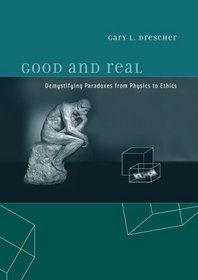
In Good and Real, Gary Drescher examines a series of provocative paradoxes about consciousness, choice, ethics, quantum mechanics, and other topics, in an effort to reconcile a purely mechanical view of the universe with key aspects of our subjective impressions of our own existence.Many scientists suspect that the universe can ultimately be described by a simple (perhaps even deterministic) formalism; all that is real unfolds mechanically according to that formalism. But how, then, is it possible for us to be conscious, or to make genuine choices? And how can there be an ethical dimension to such choices? Drescher sketches computational models of consciousness, choice, and subjunctive reasoning—what would happen if this or that were to occur?—to show how such phenomena are compatible with a mechanical, even deterministic universe. Analyses of Newcomb’s Problem (a paradox about choice) and the Prisoner’s Dilemma (a paradox about self-interest vs. altruism, arguably reducible to Newcomb’s Problem) help bring the problems and proposed solutions into focus. Regarding quantum mechanics, Drescher builds on Everett’s relative-state formulation—but presenting a simplified formalism, accessible to laypersons—to argue that, contrary to some popular impressions, quantum mechanics is compatible with an objective, deterministic physical reality, and that there is no special connection between quantum phenomena and consciousness.In each of several disparate but intertwined topics ranging from physics to ethics, Drescher argues that a missing technical linchpin can make the quest for objectivity seem impossible, until the elusive technical fix is at hand.
ما از اخلاق چه انتظاری داریم؟ این سوال شاید تاحدودی برای عموم مردم و یا متخصصان این رشته قابل پاسخ باشد؛ اینکه خوب بودن را به ما بیاموزد و در تنظیم روابط فردی م...

جشن کتاب تهران به ایستگاه سی و یکم رسیده است. حال و احوال نشر کتاب خوب نیست و باید فرهنگدوستان را به خرید و هدیه دادن کتاب ترغیب نمود. خانه اخلاقپژوهان جوان ب...

بنیاد کتابهای اخلاق اسلامی عمدتا پالایش جان از آلودگیها و آراستن آن به زیباییها است. اندیشه محوری این قبیل کتابها آن است که انسان فعلی آنی نیست که باید باشد...

-
0 Comments