Notice: تابع WP_Block_Type_Registry::register به طورنادرست فراخوانی شد. نامهای نوع بلوک نباید حروف بزرگ داشته باشند. لطفاً برای اطلاعات بیشتر، اشکال زدایی در وردپرس را مشاهده کنید. (این پیام در نگارش 5.0.0 افزوده شده است.) in /home/ethicsho/public_html/wp-includes/functions.php on line 5313
Warning: Use of undefined constant TDC_PATH_LEGACY - assumed 'TDC_PATH_LEGACY' (this will throw an Error in a future version of PHP) in /home/ethicsho/public_html/wp-content/plugins/td-composer/td-composer.php on line 109
Warning: Use of undefined constant TDSP_THEME_PATH - assumed 'TDSP_THEME_PATH' (this will throw an Error in a future version of PHP) in /home/ethicsho/public_html/wp-content/plugins/td-composer/td-composer.php on line 113 بایگانیهای 9780691153650 - خانه اخلاق پژوهان جوان Notice: Trying to access array offset on value of type bool in /home/ethicsho/public_html/wp-content/plugins/wp-ulike/inc/general-functions.php on line 807
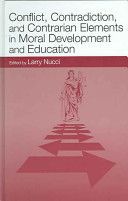
Publisher description: The premise of this book is that individuals and societies have an inexorable urge to morally develop by challenging the assumptions of the previous generation in terms of what is right and wrong. The focus is on the nature and functional value of conflicts and challenges to the dominant moral and social values framework. Through this analysis, individuals develop moral character through conflict with their local authority figures, including parents. The moral structure of societies evolves through intergenerational challenges to and contradictions with the dominant social order. The book is divided into three parts to help frame this discussion. Part I directly takes up the issue of resistance as it occurs at a cultural level, andthe implications of such resistance for moral education and socialization. Part II explores the normative forms of adolescent resistance and contrarian behavior that vex parents and teachers alike. Part III brings back the issue of societal structure andculture to illustrate how negative features of society–such as racial discrimination and economic disparity–can feed into the construction of negative moral identity in youth posing challenges to moral education.
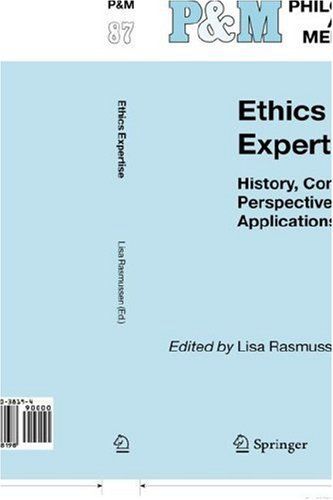
Section I examines historical philosophical understandings of expertise in order to situate the current institution of bioethics. Section II focuses on philosophical analyses of the concept of expertise, asking, among other things, how it should be understood, how it can be acquired, and what such expertise warrants. Finally, section III addresses topics in bioethics and how ethics expertise should or should not be brought to bear in these areas, including expertise in the court room, in the hospital room, in the media, and in making policy. 2. A GUIDED HISTORICAL TOUR As Scott LaBarge points out, Plato’s dialogues can be viewed as an extended treatment of the concept of moral expertise, so it is fitting to begin the volume with an examination of “Socrates and Moral Expertise”. Given Socrates’ protestations (the Oracle at Delphi notwithstanding) that he knows nothing, LaBarge observes that it would be interesting to determine both what a Socratic theory of moral expertise might be and whether Socrates qualified as such an expert. Plato’s model of moral expertise is what LaBarge calls “demonstrable expertise”, which is concerned mainly with the ability to attain a goal and to explain how one did it. The problem with this account is that when one tries to solve the various problems in the model – for example, allowing that moral expertise is not an all-or-nothing skill – then one is immediately faced with the “credentials problem”. As LaBarge puts it, “. . .
How should we respond when some of our basic beliefs are put into question? What makes a human body distinctively human? Why is truth an important good? These are among the questions explored in this collection of essays by Alasdair MacIntyre, one of the most creative and influential philosophers working today. Ten of MacIntyre’s most influential essays written over almost thirty years are collected together here for the first time. They range over such topics as the issues raised by different types of relativism, what it is about human beings that cannot be understood by the natural sciences, the relationship between the ends of life and the ends of philosophical writing, and the relationship of moral philosophy to contemporary social practice. They will appeal to a wide range of readers across philosophy and especially in moral philosophy, political philosophy, and theology.
This is the only environmental casebook of its kind, presenting current and classic cases with the detail required for students to experience serious and complex issues. The authors present cases of immediate interest to students in a balanced and impartial manner.
ما از اخلاق چه انتظاری داریم؟ این سوال شاید تاحدودی برای عموم مردم و یا متخصصان این رشته قابل پاسخ باشد؛ اینکه خوب بودن را به ما بیاموزد و در تنظیم روابط فردی م...

جشن کتاب تهران به ایستگاه سی و یکم رسیده است. حال و احوال نشر کتاب خوب نیست و باید فرهنگدوستان را به خرید و هدیه دادن کتاب ترغیب نمود. خانه اخلاقپژوهان جوان ب...

بنیاد کتابهای اخلاق اسلامی عمدتا پالایش جان از آلودگیها و آراستن آن به زیباییها است. اندیشه محوری این قبیل کتابها آن است که انسان فعلی آنی نیست که باید باشد...

-
0 Comments