Notice: تابع WP_Block_Type_Registry::register به طورنادرست فراخوانی شد. نامهای نوع بلوک نباید حروف بزرگ داشته باشند. لطفاً برای اطلاعات بیشتر، اشکال زدایی در وردپرس را مشاهده کنید. (این پیام در نگارش 5.0.0 افزوده شده است.) in /home/ethicsho/public_html/wp-includes/functions.php on line 5313
Warning: Use of undefined constant TDC_PATH_LEGACY - assumed 'TDC_PATH_LEGACY' (this will throw an Error in a future version of PHP) in /home/ethicsho/public_html/wp-content/plugins/td-composer/td-composer.php on line 109
Warning: Use of undefined constant TDSP_THEME_PATH - assumed 'TDSP_THEME_PATH' (this will throw an Error in a future version of PHP) in /home/ethicsho/public_html/wp-content/plugins/td-composer/td-composer.php on line 113 بایگانیهای 9780691102528 - خانه اخلاق پژوهان جوان Notice: Trying to access array offset on value of type bool in /home/ethicsho/public_html/wp-content/plugins/wp-ulike/inc/general-functions.php on line 807
This book is an investigation into the descriptive task of moral philosophy. Nora Hèamèalèainen explores the challenge of providing rich and accurate pictures of the moral conditions, values, virtues, and norms under which people live and have lived, along with relevant knowledge about the human animal and human nature. While modern moral philosophy has focused its energies on normative and metaethical theory, the task of describing, uncovering, and inquiring into moral frameworks and moral practices has mainly been left to social scientists and historians. Nora Hèamèalèainen argues that this division of labour has detrimental consequences for moral philosophy and that a reorientation toward descriptive work is needed in moral philosophy. She traces resources for a descriptive philosophical ethics in the work of four prominent philosophers of the twentieth century: John Dewey, Ludwig Wittgenstein, Michel Foucault, and Charles Taylor, while also calling on thinkers inspired by them. Nora Hèamèalèainen is Associate Professor (docent) in philosophy at the University of Helsinki, Finland. She is the author ofLiterature and Moral Theory and has co-edited the volume Language, Ethics and Animal Life — Wittgenstein and Beyond (with Niklas Forsberg and Mikel Burley).
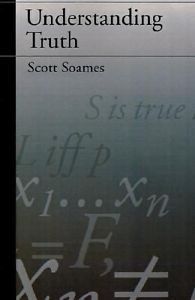
In this book, Scott Soames illuminates the notion of truth and the role it plays in our ordinary thought as well as in our logical, philosophical, and scientific theories. Soames aims to integrate and deepen the most significant insights on truth from a variety of sources. He powerfully brings together the best technical work and the most important philosophical reflection on truth and shows how each can illuminate the other. Investigating such questions as whether we need a truth predicate at all, what theoretical tasks it allows us to accomplish, and how we are to understand the content of any predicate capable of accomplishing these tasks, Soames organizes his discussion into three parts. Part I addresses crucial foundational issues as it identifies the bearers of truth, provides a basis for distinguishing truth from other notions (like certainty, with which it is often confused), and formulates positive responses to well-known forms of truth-skepticism. Part II explicates the formal theories of Alfred Tarski and Saul Kripke and evaluates the philosophical significance of their work. It discusses their treatments of the Liar paradox, the relationship between truth and proof, the notion of a partially defined predicate, the concepts of logical truth and logical consequence, and the connection between truth and meaning. Part III extends important lessons drawn from Tarski and Kripke into new domains: vague predicates, the Sorites paradox, and the development of a larger, deflationary perspective on truth. Throughout the book, Soames examines a wide range of deflationary theories of truth, and attempts to separate what is correct and worth preserving in them from what is not. In doing so, he seeks to clear up many of the most significant philosophical doubts about truth. Written for a general audience while offering engaging material to the specialist, this rich study will be profitably read by both.
An original study of the philosophical problems associated with inductive reasoning. Like most of the main questions in epistemology, the classical problem of induction arises from doubts about a mode of inference used to justify some of our most familiar and pervasive beliefs. The experience of each individual is limited and fragmentary, yet the scope of our beliefs is much wider; and it is the relation between belief and experience, in particular the belief that the future will in some respects resemble the past and the unobserved the observed, which forms the subject of this book. Dr Blackburn’s first aim is to state the problem of induction properly, to show that there does exist a genuine problem immune to the solutions in vogue at present, yet no tin principle insoluble. He gives an extended and original account of the concept of a reason and goes on to discuss prediction. In the end Dr Blackburn produces a rationale for belief in certain short-term predictions based on his reinterpretation of the classical principle of indifference. He claims that a justification for induction can be found along the lines he has suggested and must indeed be found there if anywhere.
ما از اخلاق چه انتظاری داریم؟ این سوال شاید تاحدودی برای عموم مردم و یا متخصصان این رشته قابل پاسخ باشد؛ اینکه خوب بودن را به ما بیاموزد و در تنظیم روابط فردی م...

جشن کتاب تهران به ایستگاه سی و یکم رسیده است. حال و احوال نشر کتاب خوب نیست و باید فرهنگدوستان را به خرید و هدیه دادن کتاب ترغیب نمود. خانه اخلاقپژوهان جوان ب...

بنیاد کتابهای اخلاق اسلامی عمدتا پالایش جان از آلودگیها و آراستن آن به زیباییها است. اندیشه محوری این قبیل کتابها آن است که انسان فعلی آنی نیست که باید باشد...

-
0 Comments