Notice: تابع WP_Block_Type_Registry::register به طورنادرست فراخوانی شد. نامهای نوع بلوک نباید حروف بزرگ داشته باشند. لطفاً برای اطلاعات بیشتر، اشکال زدایی در وردپرس را مشاهده کنید. (این پیام در نگارش 5.0.0 افزوده شده است.) in /home/ethicsho/public_html/wp-includes/functions.php on line 5313
Warning: Use of undefined constant TDC_PATH_LEGACY - assumed 'TDC_PATH_LEGACY' (this will throw an Error in a future version of PHP) in /home/ethicsho/public_html/wp-content/plugins/td-composer/td-composer.php on line 109
Warning: Use of undefined constant TDSP_THEME_PATH - assumed 'TDSP_THEME_PATH' (this will throw an Error in a future version of PHP) in /home/ethicsho/public_html/wp-content/plugins/td-composer/td-composer.php on line 113 بایگانیهای 9780691086736 - خانه اخلاق پژوهان جوان Notice: Trying to access array offset on value of type bool in /home/ethicsho/public_html/wp-content/plugins/wp-ulike/inc/general-functions.php on line 807
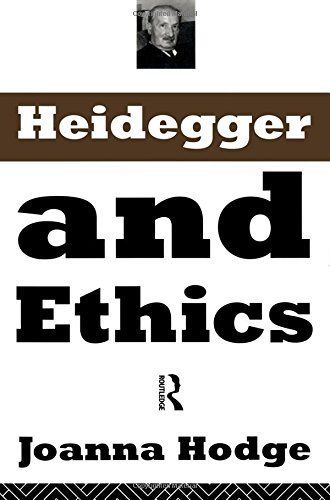
Heidegger and ethics is a contentious conjunction of terms. Martin Heidegger himself rejected the notion of ethics, while his endorsement of Nazism is widely seen as unethical. This major study examines the complex and controversial issues involved in bringing Heidegger and ethics together. Working backwards through his work, from his 1964 claim that philosophy has been completed to his first major book,Being and Time,Joanna Hodge questions Heidegger’s denial that his inquiries were concerned with ethics. She discovers a form of ethics in Heidegger’s thinking which elucidates his important distinction between metaphysics and philosophy. Opposing many contemporary views, Hodge proposes that ethics can be retrieved and questions the relation between ethics and metaphysics that Heidegger made so pervasive.
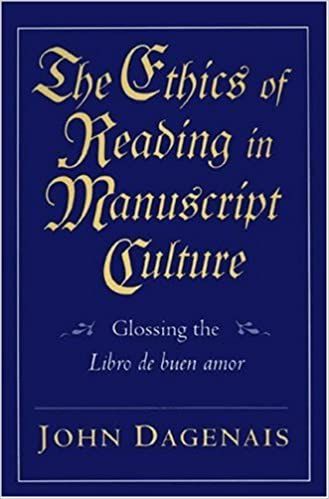
Taking the controversial fourteenth-century Libro de buen amor as his point of departure, John Dagenais maintains that many interpretive difficulties with this text have arisen simply because concepts such as “work” and “text,” which medievalists have tended to consider unproblematic, simply do not function in the medieval manuscript context.
Offers an extensive and probing ethical analysis of economic globalisation. This innovative and highly informative book on globalisation and business ethics will set the tone for the debate on this important issue in the coming years, and will be an invaluable source of information for everyone committed to the global economic responsibilities of businesses and governments. Ron Jeurissen, Professor of business ethics, Nyenrode Business Universiteit/ European Institute for Business Ethics, The Netherlands This volume takes an interdisciplinary approach to provide a theoretical overview of how business ethics deals with the phenomenon of globalization. The authors first examine the origins and development of globalization and its interaction with business ethics, before discussing the impact on and role of national and multinational corporations. The book goes on to examine the relationship between industrialized and developing countries, and explores the place of ethics in globalized markets. Contents: Introduction; Part I Globalisation: Concepts and Problems: Globalisation from a business ethics point of view, Karl Homann; Concepts of globalisation: the institutional prerequisites for the integration of world markets, Michael Ehret, Michaela Haase and Martin Kaluza; Diagnoses of our time: theoretical approaches to the globalised age, Manfred Prisching; Globalisation as a gendered process: a differentiated survey on feminist and postcolonial perspectives, Silvia Bauer and Tatjana Schönwälder- Kuntze. Part II Globalisation, Business and Corporate Governance: Globalisation of corporate governance, Klaus J. Hopt; Business ethics in globalised financial markets, Peter Koslowki; Transparency and integrity: contrary concepts?, Frits Schipper; Tangible ethics: commitments in business organisations, Eberhard Schnebel and Margo A. Bienert. Part III Global Justice: A theory of global justice focussing on absolute poverty, Elke Mack; Just relations between North and South in international financial markets, Bernhard Emunds; Access to essential medicines: global justice beyond equality, Georg Marckmann and Matthis Synofzik. Part IV Globalisation, Philosophy and Culture: Social glue under conditions of globalisation: philosophers on essential normative resources, Christopher Lütge; Sovereignty of interpretation: a dubious model of cultural globalisation, Michael Neuner; Index. About the Author: Karl Homann is Professor and Chair for Philosophy and Economics at the University of Munich, Germany. Peter Koslowski is Professor of Philosophy, especially Philosophy of Management and Organizations and History of Philosophy, at the Free University Amsterdam, The Netherlands. Christoph Luetge is Assistant Professor in the Department of Philosophy, and Chair for Philosophy and Economics at the University of Munich, Germany.
For the first time in history, eradicating world poverty is within our reach. Yet around the world, a billion people struggle to live each day on less than many of us pay for bottled water. In The Life You Can Save, Peter Singer uses ethical arguments, illuminating examples, and case studies of charitable giving to show that our current response to world poverty is not only insufficient but morally indefensible. The Life You Can Save teaches us to be a part of the solution, helping others as we help ourselves.
ما از اخلاق چه انتظاری داریم؟ این سوال شاید تاحدودی برای عموم مردم و یا متخصصان این رشته قابل پاسخ باشد؛ اینکه خوب بودن را به ما بیاموزد و در تنظیم روابط فردی م...

جشن کتاب تهران به ایستگاه سی و یکم رسیده است. حال و احوال نشر کتاب خوب نیست و باید فرهنگدوستان را به خرید و هدیه دادن کتاب ترغیب نمود. خانه اخلاقپژوهان جوان ب...

بنیاد کتابهای اخلاق اسلامی عمدتا پالایش جان از آلودگیها و آراستن آن به زیباییها است. اندیشه محوری این قبیل کتابها آن است که انسان فعلی آنی نیست که باید باشد...

-
0 Comments