Notice: تابع WP_Block_Type_Registry::register به طورنادرست فراخوانی شد. نامهای نوع بلوک نباید حروف بزرگ داشته باشند. لطفاً برای اطلاعات بیشتر، اشکال زدایی در وردپرس را مشاهده کنید. (این پیام در نگارش 5.0.0 افزوده شده است.) in /home/ethicsho/public_html/wp-includes/functions.php on line 5313
Warning: Use of undefined constant TDC_PATH_LEGACY - assumed 'TDC_PATH_LEGACY' (this will throw an Error in a future version of PHP) in /home/ethicsho/public_html/wp-content/plugins/td-composer/td-composer.php on line 109
Warning: Use of undefined constant TDSP_THEME_PATH - assumed 'TDSP_THEME_PATH' (this will throw an Error in a future version of PHP) in /home/ethicsho/public_html/wp-content/plugins/td-composer/td-composer.php on line 113 بایگانیهای 9780674005112 - خانه اخلاق پژوهان جوان Notice: Trying to access array offset on value of type bool in /home/ethicsho/public_html/wp-content/plugins/wp-ulike/inc/general-functions.php on line 807
If globalization is to be a benefit and not a burden to humankind, it must be governed by global institutions that are perceived by all people to be democratic and just. But before we can create such institutions, we must imagine them, and that requires a rethinking and extension of normative political theory. Global Justice and Transnational Politics encourages and advances that work.The book’s first part, “Weak Universalism,” contains essays by Amartya Sen and Leif Wenar that offer constructive developments of John Rawls’s statement of the principles a liberal polity might reasonably propose to govern its relations with other peoples. The second part, “Strong Universalism and Transnational Commitments,” contains essays by Jurgen Habermas, David Luban, Martha Nussbaum, and Thomas Pogge examining the normative sources and possible types of cross-border commitments. In the third part, “Transnational Politics and National Identities,” Habermas discusses the possibility of a democratic political order developing within the institutional framework of the European Union; Thomas McCarthy draws on Kant to show how cosmopolitanism might be reconciled with the legacy of nationalism; and Craig Calhoun tries to retrieve a positive aspect of the tradition of nationalism, namely that it provides large populations with a powerful way of imagining political community across space and time.
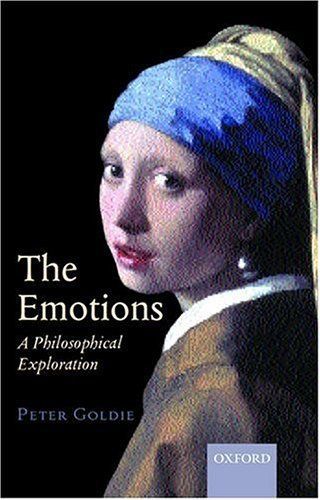
Peter Goldie opens the path to a deeper understanding of our emotional lives through a lucid philosophical exploration of this surprisingly neglected topic. He illuminates the phenomena of emotion by drawing not only on philosophy but also on literature and science. He considers the roles of culture and evolution in the development of our emotional capabilities. He examines the links between emotion, mood, and character, and places the emotions in the context of such related phenomena as consciousness, thought, feeling, and imagination. He explains how it is that we are able to make sense of our own and other people’s emotions, and how we can explain the very human things which emotions lead us to do. A key theme of The Emotions is the idea of a personal perspective or point of view, contrasted with the impersonal stance of the empirical sciences. Goldie argues that it is only from the personal point of view that thoughts, reasons, feelings, and actions come into view. He suggests that there is a tendency for philosophers to over-intellectualize the emotions, and investigates how far it is possible to explain emotions in terms of rationality. Over-intellectualizing can also involve neglecting the centrality of feelings, and Goldie shows how to put them where they belong, as part of the intentionality of emotional experience, directed towards the world from a point of view. Goldie argues that the various elements of emotional experience—including thought, feeling, bodily change, and expression—are tied together in a narrative structure. To make sense of one’s emotional life one has to see it as part of a larger unfolding narrative. The narrative is not simply an interpretative framework of a life: it is what that life is. Goldie concludes by applying these ideas in a close study of one particular emotion: jealousy. This fascinating book gives an accessible but penetrating exploration of a subject that is important but mysterious to all of us. Any reader interested in emotion, and its role in our understanding of our lives, will find much to think about here.
Earth is imperiled. Human activities are adversely affecting the land, water, air, and myriad forms of biological life that comprise the ecosystems of our planet. Indicators of global warming and holes in the ozone layer inhibit functions vital to the biosphere. Environmental damage to the planet becomes damaging to human health and well-being now and into the future?and too often that damage affects those who are least able to protect themselves. Can religion make a positive contribution to preventing further destruction of biological diversity and ecosystems and threats to our earth? Jame Schaefer thinks that it can, and she examines the thought of Christian Church fathers and medieval theologians to reveal and retrieve insights that may speak to our current plight. By reconstructing the teachings of Augustine, Thomas Aquinas, and other classic thinkers to reflect our current scientific understanding of the world, Schaefer shows how to “green” the Catholic faith: to value the goodness of creation, to appreciate the beauty of creation, to respect creation’s praise for God, to acknowledge the kinship of all creatures, to use creation with gratitude and restraint, and to live virtuously within the earth community.
ما از اخلاق چه انتظاری داریم؟ این سوال شاید تاحدودی برای عموم مردم و یا متخصصان این رشته قابل پاسخ باشد؛ اینکه خوب بودن را به ما بیاموزد و در تنظیم روابط فردی م...

جشن کتاب تهران به ایستگاه سی و یکم رسیده است. حال و احوال نشر کتاب خوب نیست و باید فرهنگدوستان را به خرید و هدیه دادن کتاب ترغیب نمود. خانه اخلاقپژوهان جوان ب...

بنیاد کتابهای اخلاق اسلامی عمدتا پالایش جان از آلودگیها و آراستن آن به زیباییها است. اندیشه محوری این قبیل کتابها آن است که انسان فعلی آنی نیست که باید باشد...

-
0 Comments