Notice: تابع WP_Block_Type_Registry::register به طورنادرست فراخوانی شد. نامهای نوع بلوک نباید حروف بزرگ داشته باشند. لطفاً برای اطلاعات بیشتر، اشکال زدایی در وردپرس را مشاهده کنید. (این پیام در نگارش 5.0.0 افزوده شده است.) in /home/ethicsho/public_html/wp-includes/functions.php on line 5313
Warning: Use of undefined constant TDC_PATH_LEGACY - assumed 'TDC_PATH_LEGACY' (this will throw an Error in a future version of PHP) in /home/ethicsho/public_html/wp-content/plugins/td-composer/td-composer.php on line 109
Warning: Use of undefined constant TDSP_THEME_PATH - assumed 'TDSP_THEME_PATH' (this will throw an Error in a future version of PHP) in /home/ethicsho/public_html/wp-content/plugins/td-composer/td-composer.php on line 113 بایگانیهای 9780631212171 - خانه اخلاق پژوهان جوان Notice: Trying to access array offset on value of type bool in /home/ethicsho/public_html/wp-content/plugins/wp-ulike/inc/general-functions.php on line 807
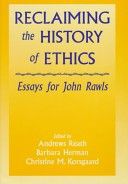
The essays in this volume offer an approach to the history of moral and political philosophy that takes its inspiration from John Rawls. The distinctive feature of this approach is to address substantive normative questions in moral and political philosophy through an analysis of the texts and theories of major figures in the history of the subject: Aristotle, Hobbes, Hume, Rousseau, Kant, and Marx. By reconstructing the core of these theories in a way that is informed by contemporary theoretical concerns, the contributors show how the history of the subject is a resource for understanding present and perennial problems in moral and political philosophy.
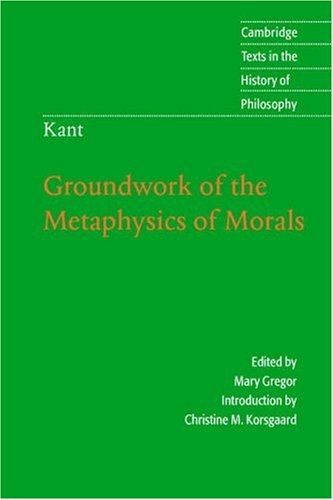
Immanuel Kant’s Groundwork of the Metaphysics of Morals of 1785 is one of the most profound and important works in the history of practical philosophy. In this introduction to the Groundwork, Sally Sedgwick provides a guide to Kant’s text that follows the course of his discussion virtually paragraph by paragraph. Her aim is to convey Kant’s ideas and arguments as clearly and simply as possible, without getting lost in scholarly controversies. Her introductory chapter offers a useful overview of Kant’s general approach to practical philosophy, and she also explores and clarifies some of the main assumptions which Kant relies on in his Groundwork but defends in his Critique of Pure Reason. The book will be a valuable guide for all who are interested in Kant’s practical philosophy.
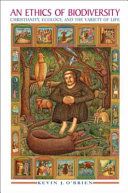
Life on earth is wildly diverse, but the future of that diversity is now in question. Through environmentally destructive farming practices, ever-expanding energy use, and the development and homogenization of land, human beings are responsible for unprecedented reductions in the variety of life forms around us. Estimates suggest that species extinctions caused by humans occur at up to 1,000 times the natural rate, and that one of every twenty species on the planet could be eradicated by 2060. An Ethics of Biodiversity argues that these facts should inspire careful reflection and action in Christian churches, which must learn from earth’s vast diversity in order to help conserve the natural and social diversity of our planet. Bringing scientific data into conversation with theological tradition, the book shows that biodiversity is a point of intersection between faith and ethics, social justice and environmentalism, science and politics, global problems and local solutions. An Ethics of Biodiversity offers a set of tools for students, environmentalists, and people of faith to think critically about how human beings can live with and as part of the variety of life in God’s creation.
This major work of academic reference provides a comprehensive overview of the development of political thought from the late nineteenth to the end of the twentieth century. Written by a distinguished team of international contributors, this Cambridge History covers the rise of the welfare state and subsequent reactions to it, the fascist and communist critiques of and attempted alternatives to liberal democracy, the novel forms of political organization occasioned by the rise of the mass electorate and new social movements, the various intellectual traditions from positivism to post-modernism that have shaped the study of politics, the interaction between western and non-western traditions of political thought, and the challenge possed to the state by globalization. Every major theme in twentieth-century political thought is covered in a series of chapters at once scholarly and accessible, of interest and relevance to students and scholars of politics at all levels from beginning undergraduate upwards.
Wide-ranging and ambitious, Justice combines moral philosophy and Christian ethics to develop an important theory of rights and of justice as grounded in rights. Nicholas Wolterstorff discusses what it is to have a right, and he locates rights in the respect due the worth of the rights-holder. After contending that socially-conferred rights require the existence of natural rights, he argues that no secular account of natural human rights is successful; he offers instead a theistic account. Wolterstorff prefaces his systematic account of justice as grounded in rights with an exploration of the common claim that rights-talk is inherently individualistic and possessive. He demonstrates that the idea of natural rights originated neither in the Enlightenment nor in the individualistic philosophy of the late Middle Ages, but was already employed by the canon lawyers of the twelfth century. He traces our intuitions about rights and justice back even further, to Hebrew and Christian scriptures. After extensively discussing justice in the Old Testament and the New, he goes on to show why ancient Greek and Roman philosophy could not serve as a framework for a theory of rights. Connecting rights and wrongs to God’s relationship with humankind, Justice not only offers a rich and compelling philosophical account of justice, but also makes an important contribution to overcoming the present-day divide between religious discourse and human rights.
ما از اخلاق چه انتظاری داریم؟ این سوال شاید تاحدودی برای عموم مردم و یا متخصصان این رشته قابل پاسخ باشد؛ اینکه خوب بودن را به ما بیاموزد و در تنظیم روابط فردی م...

جشن کتاب تهران به ایستگاه سی و یکم رسیده است. حال و احوال نشر کتاب خوب نیست و باید فرهنگدوستان را به خرید و هدیه دادن کتاب ترغیب نمود. خانه اخلاقپژوهان جوان ب...

بنیاد کتابهای اخلاق اسلامی عمدتا پالایش جان از آلودگیها و آراستن آن به زیباییها است. اندیشه محوری این قبیل کتابها آن است که انسان فعلی آنی نیست که باید باشد...

-
0 Comments