Notice: تابع WP_Block_Type_Registry::register به طورنادرست فراخوانی شد. نامهای نوع بلوک نباید حروف بزرگ داشته باشند. لطفاً برای اطلاعات بیشتر، اشکال زدایی در وردپرس را مشاهده کنید. (این پیام در نگارش 5.0.0 افزوده شده است.) in /home/ethicsho/public_html/wp-includes/functions.php on line 5313
Warning: Use of undefined constant TDC_PATH_LEGACY - assumed 'TDC_PATH_LEGACY' (this will throw an Error in a future version of PHP) in /home/ethicsho/public_html/wp-content/plugins/td-composer/td-composer.php on line 109
Warning: Use of undefined constant TDSP_THEME_PATH - assumed 'TDSP_THEME_PATH' (this will throw an Error in a future version of PHP) in /home/ethicsho/public_html/wp-content/plugins/td-composer/td-composer.php on line 113 بایگانیهای 9780521862820 - خانه اخلاق پژوهان جوان Notice: Trying to access array offset on value of type bool in /home/ethicsho/public_html/wp-content/plugins/wp-ulike/inc/general-functions.php on line 807
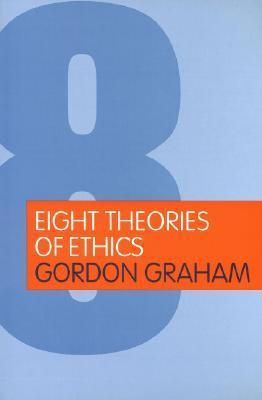
Eight Theories of Ethicsis a comprehensive introduction to the fundamental theories of ethics . Gordon Graham begins by introducing fundamental issues that underpin the concept of ethics, such as relativism and objectivity, before introducing eight major theories: * Egoism * Hedonism * Naturalism and Virtue Theory * Existentialism * Kantianism * Utilitarianism * Contractualism * Religion The author brings often abstract issues to life by drawing on examples from the great moral philosophers, including Plato, Aristotle, Hume, Mill, Nietzsche, Kant and Sartre. Contemporary examples, such as Darwinism, debates over human nature, the environment and citizenship are given.
Sam Harris’s first book,The End of Faith,ignited a worldwide debate about the validity of religion. In the aftermath, Harris discovered that most peoplefrom religious fundamentalists to nonbelieving scientistsagree on one point: science has nothing to say on the subject of human values. Indeed, our failure to address questions of meaning and morality through science has now become the most common justification for religious faith. It is also the primary reason why so many secularists and religious moderates feel obligated to “respect” the hardened superstitions of their more devout neighbors.In this explosive new book, Sam Harris tears down the wall between scientific facts and human values, arguing that most people are simply mistaken about the relationship between morality and the rest of human knowledge. Harris urges us to think about morality in terms of human and animal well-being, viewing the experiences of conscious creatures as peaks and valleys on a “moral landscape.” Because there are definite facts to be known about where we fall on this landscape, Harris foresees a time when science will no longer limit itself to merely describing what people do in the name of “morality”; in principle, science should be able to tell us what weoughtto do to live the best lives possible. Bringing a fresh perspective to age-old questions of right and wrong and good and evil, Harris demonstrates that we already know enough about the human brain and its relationship to events in the world to say that there are right and wrong answers to the most pressing questions of human life. Because such answers exist, moral relativism is simply falseand comes at increasing cost to humanity. And the intrusions of religion into the sphere of human values can be finally repelled: for just as there is no such thing as Christian physics or Muslim algebra, there can be no Christian or Muslim morality.Using his expertise in philosophy and neuroscience, along with his experience on the front lines of our “culture wars,” Harris delivers a game-changing book about the future of science and about the real basis of human cooperation.
Conservative columnist David Brooks explores the four commitments that define a life of meaning and purpose: to a spouse and family, to a vocation, to a philosophy or faith, and to a community. Our personal fulfillment depends on how well we choose and execute these commitments. Brooks looks at a range of people who have lived joyous, committed lives, and who have embraced the necessity and beauty of dependence. He gathers their wisdom on how to choose a partner, how to pick a vocation, how to live out a philosophy, and how we can begin to integrate our commitments into one overriding purpose.
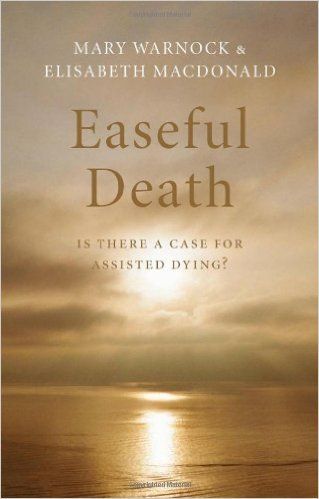
For decades assisted dying and euthanasia have sparked fierce public debate. The recent case of Terri Schiavo, and the firestorm of controversy it provoked, placed the issue in dramatic fashion before the American people once again, raising a host of complex legal, medical-ethical, religious, and individual liberties questions. Now, in Easeful Death, Mary Warnock and Elisabeth Macdonald offer a clearly reasoned, even-handed assessment of arguments both for and against the legalization of assisted suicide and euthanasia. The authors take as their starting point the attempts in Britain and other countries to bring compassion into the rules governing the end of a patient’s life. Drawing on the experience of the Netherlands, Belgium, and the state of Oregon in the US, where either assisted dying or euthanasia have been legalized, the authors explore the philosophical and ethical views on both sides of the debate, and examine how different legislative proposals would affect different members of society, from the very young to the very old. They describe the practical, medical processes of palliative care, self-denial of food and water, assisted dying and euthanasia, and ultimately conclude that the public is ready to embrace a more compassionate approach to assisted dying and that the dying themselves deserve a greater say in the timing and manner of their deaths. Written with sensitivity, grace, and level-headed authority, Easeful Death is essential reading for caregivers, doctors, medical ethicists, and anyone concerned with their own or a loved one’s end of life decisions. It argues persuasively that whatever the results of the legislative debate, compassion must be the guiding principle in the way we treat people who are dying or want to die.
Epistemology has for a long time focused on the concept of knowledge and tried to answer questions such as whether knowledge is possible and how much of it there is. Often missing from this inquiry, however, is a discussion on the value of knowledge. In The Value of Knowledge and the Pursuit of Understanding Jonathan Kvanvig argues that epistemology properly conceived cannot ignore the question of the value of knowledge. He also questions one of the most fundamental assumptions in epistemology, namely that knowledge is always more valuable than the value of its subparts. Taking Platos’ Meno as a starting point of his discussion, Kvanvig tackles the different arguments about the value of knowledge and comes to the conclusion that knowledge is less valuable than generally assumed. Clearly written and well argued, the book will appeal to students and professionals in epistemology.
ما از اخلاق چه انتظاری داریم؟ این سوال شاید تاحدودی برای عموم مردم و یا متخصصان این رشته قابل پاسخ باشد؛ اینکه خوب بودن را به ما بیاموزد و در تنظیم روابط فردی م...

جشن کتاب تهران به ایستگاه سی و یکم رسیده است. حال و احوال نشر کتاب خوب نیست و باید فرهنگدوستان را به خرید و هدیه دادن کتاب ترغیب نمود. خانه اخلاقپژوهان جوان ب...

بنیاد کتابهای اخلاق اسلامی عمدتا پالایش جان از آلودگیها و آراستن آن به زیباییها است. اندیشه محوری این قبیل کتابها آن است که انسان فعلی آنی نیست که باید باشد...

-
0 Comments