Notice: تابع WP_Block_Type_Registry::register به طورنادرست فراخوانی شد. نامهای نوع بلوک نباید حروف بزرگ داشته باشند. لطفاً برای اطلاعات بیشتر، اشکال زدایی در وردپرس را مشاهده کنید. (این پیام در نگارش 5.0.0 افزوده شده است.) in /home/ethicsho/public_html/wp-includes/functions.php on line 5313
Warning: Use of undefined constant TDC_PATH_LEGACY - assumed 'TDC_PATH_LEGACY' (this will throw an Error in a future version of PHP) in /home/ethicsho/public_html/wp-content/plugins/td-composer/td-composer.php on line 109
Warning: Use of undefined constant TDSP_THEME_PATH - assumed 'TDSP_THEME_PATH' (this will throw an Error in a future version of PHP) in /home/ethicsho/public_html/wp-content/plugins/td-composer/td-composer.php on line 113 بایگانیهای 9780521834339 - خانه اخلاق پژوهان جوان Notice: Trying to access array offset on value of type bool in /home/ethicsho/public_html/wp-content/plugins/wp-ulike/inc/general-functions.php on line 807
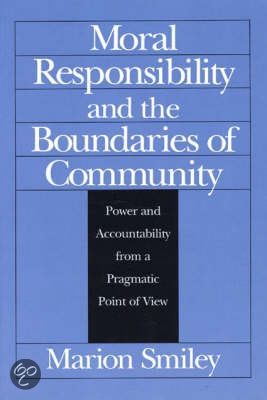
The question of responsibility plays a critical role not only in our attempts to resolve social and political problems, but in our very conceptions of what those problems are. Who, for example, is to blame for apartheid in South Africa? Is the South African government responsible? What about multinational corporations that do business there? Will uncovering the “true facts of the matter” lead us to the right answer? In an argument both compelling and provocative, Marion Smiley demonstrates how attributions of blame–far from being based on an objective process of factual discovery–are instead judgments that we ourselves make on the basis of our own political and social points of view. She argues that our conception of responsibility is a singularly modern one that locates the source of blameworthiness in an individual’s free will. After exploring the flaws inherent in this conception, she shows how our judgments of blame evolve out of our configuration of social roles, our conception of communal boundaries, and the distribution of power upon which both are based. The great strength of Smiley’s study lies in the way in which it brings together both rigorous philosophical analysis and an appreciation of the dynamics of social and political practice. By developing a pragmatic conception of moral responsibility, this work illustrates both how moral philosophy can enhance our understanding of social and political practices and why reflection on these practices is necessary to the reconstruction of our moral concepts.
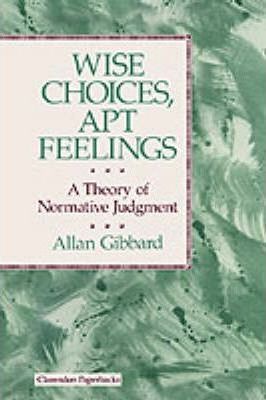
‘Choices can be wise or foolish, and feelings can be apt or off the mark.’ Since this is how we judge, it would be good to know what content these normative judgements carry. Gibbard offers an answer, and elaborates it. His theory explores what is at issue in narrowly moral questions, and in questions of rational thought and conduct in general. It helps to explain why normative thought and talk so pervade human life, and why our highly social species might have evolved to be gripped by these questions. Gibbard asks how, if his theory is right, we can interpret our normative puzzles, and thus proceed toward finding answers to them. Not available from OUP in the USA, Canada, Japan or the Phillippines.
Between the Civil War and the early decades of the eighteenth century, English poets of the first rank devoted more of their time and creative energies to translating than they had ever done before or have ever done since. Paul Davis’s Translation and the Poet’s Life is the first study to range across the entirety of this golden age of poetic translation in England, taking as its organizing principle and object of inquiry the significances of translating itself as a distinctive mode of imaginative conduct. Composed of case studies of the five leading poet-translators of the age – John Denham, Henry Vaughan, Abraham Cowley, John Dryden, and Alexander Pope – it explores the part translation played in their lives as poets and thence in modelling ‘the poet’s life’ during what was a period of transition between early-modern and modern constructions of it. The argumentative method of the book is metaphorical. Each chapter explores the impact on the theory and practice of the poet at issue of a metaphor or group of metaphors broadly current in contemporary translation discourse: in particular, figurations of the translator as an exile, as a child, as a code-breaker, and as a slave; and comparisons of translation to friendship, sexual congress, metamorphosis and trade. The majority of these metaphors were wholly or potentially pejorative: translation remained a controversial practice throughout this period, widely depreciated and stigmatized. Turning translator accordingly forced the five major poets considered in Translation and the Poet’s Life to undertake strenuous efforts of self-inquiry and self-presentation; to find new answers to questions integral to their understandings of themselves and their standing in their culture: questions about vocation and career, fame and happiness, responsibility and freedom. Translation and the Poet’s Life tells the stories of these personal and public remakings.
This book explores recent developments in ethics of virtue. While acknowledging the Aristotelian roots of modern virtue ethics – with its emphasis on the moral importance of character – this collection recognizes that more recent accounts of virtue have been shaped by many other influences, such as Aquinas, Hume, Nietzsche, Hegel and Marx, Confucius and Lao-tzu. The authors also examine the bearing of virtue ethics on other disciplines such as psychology, sociology and theology, as well as attending to some wider public, professional and educational implications of the ethics of virtue. This pioneering book will be invaluable to researchers and students concerned with the many contemporary varieties and applications of virtue ethics. .
ما از اخلاق چه انتظاری داریم؟ این سوال شاید تاحدودی برای عموم مردم و یا متخصصان این رشته قابل پاسخ باشد؛ اینکه خوب بودن را به ما بیاموزد و در تنظیم روابط فردی م...

جشن کتاب تهران به ایستگاه سی و یکم رسیده است. حال و احوال نشر کتاب خوب نیست و باید فرهنگدوستان را به خرید و هدیه دادن کتاب ترغیب نمود. خانه اخلاقپژوهان جوان ب...

بنیاد کتابهای اخلاق اسلامی عمدتا پالایش جان از آلودگیها و آراستن آن به زیباییها است. اندیشه محوری این قبیل کتابها آن است که انسان فعلی آنی نیست که باید باشد...

-
0 Comments