Notice: تابع WP_Block_Type_Registry::register به طورنادرست فراخوانی شد. نامهای نوع بلوک نباید حروف بزرگ داشته باشند. لطفاً برای اطلاعات بیشتر، اشکال زدایی در وردپرس را مشاهده کنید. (این پیام در نگارش 5.0.0 افزوده شده است.) in /home/ethicsho/public_html/wp-includes/functions.php on line 5313
Warning: Use of undefined constant TDC_PATH_LEGACY - assumed 'TDC_PATH_LEGACY' (this will throw an Error in a future version of PHP) in /home/ethicsho/public_html/wp-content/plugins/td-composer/td-composer.php on line 109
Warning: Use of undefined constant TDSP_THEME_PATH - assumed 'TDSP_THEME_PATH' (this will throw an Error in a future version of PHP) in /home/ethicsho/public_html/wp-content/plugins/td-composer/td-composer.php on line 113 بایگانیهای 9780521790451 - خانه اخلاق پژوهان جوان Notice: Trying to access array offset on value of type bool in /home/ethicsho/public_html/wp-content/plugins/wp-ulike/inc/general-functions.php on line 807
Kant’s third Critique, the Critique of Judgement,is regarded as one of the most influential books in the history of aesthetics. This book is designed as a reader’s guide for students trying to work their way, step-by-step, through Kant’s text. This is one of the first comprehensive introductions to Kant’s Critique of Judgement.Not only does it include a detailed and full account of Kant’s aesthetic theory, it incorporates an extended discussion of the “Critique of Teleological Judgement,” a treatment of Kant’s overall conception of the text, and its place in the wider critical system. Designed as an introduction, suitable for undergraduate and first-year postgraduate use, the book assumes no prior knowledge of Kant or any other particular philosophy. The choice of text is the Pluhar translation in the Hackett edition. However, throughout, Douglas Burnham provides alternative translations of key terms and phrases, making the book independent of any particular translation of Kant’s text.
This unique introduction to comparative philosophy brings together Chinese, Indian, and Western philosophers of roughly the same sort, of comparable stature, on the same philosophical topics and issues. Discussions are arranged in traditional clusters — logic, epistemology, metaphysics, ethics, and social and political philosophy. Compares equals to equals — logicians with logicians, metaphysicians with metaphysicians, ethicists with ethicists — e.g., compares Indian, Chinese and Western empiricists, utilitarians, hedonists, egoists, atheists, theists, monists, pluralists, idealists, materialists, dualists, skeptics, relativists, political realists, etc. Treats the strictly philosophical arguments as roughly similar across cultures, but presents the larger cultural contexts in which they occur as considerably different. For anyone interested in comparative philosophy.
We remember the admonition of our mothers: “Treat others as you want them to treat you.” But what if being nice was something we were inclined by nature to do anyway? Renowned neuroscientist Donald Pfaff upends our entire understanding of ethics and social contracts with an intriguing proposition: the Golden Rule is hardwired into the human brain.Pfaff, the researcher who first discovered the connections between specific brain circuits and certain behaviors, contends that the basic ethics governing our everyday lives can be traced directly to brain circuitry. Writing with popular science journalist Sandra J. Ackerman, he explains in this clear and concise account how specific brain signals induce us to consider our actions as if they were directed at ourselves—and subsequently lead us to treat others as we wish to be treated. Brain hormones are a part of this complicated process, and The Neuroscience of Fair Play discusses how brain hormones can catalyze behaviors with moral implications in such areas as self-sacrifice, parental love, friendship, and violent aggression. Drawing on his own research and other recent studies in brain science, Pfaff offers a thought-provoking hypothesis for why certain ethical codes and ideas have remained constant across human societies and cultures throughout the world and over the centuries of history. An unprecedented and provocative investigation, The Neuroscience of Fair Play offers a new perspective on the increasingly important intersection of neuroscience and ethics.
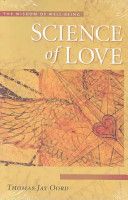
Science of Love: The Wisdom of Well-Being examines the varied dimensions of love, and illuminates the new field of scholarship, the love-science symbiosis, for both scholars and general readers. It looks at religious, ethical, and philosophical issues, such as virtue, creation ex nihilo, progress, divine action, agape, values, religious practices, pacifism, sexuality, friendship, freedom, and marriage. It examines how these issues affect the ways in which people understand God, each other, and the world in which we live. Exploring these connections inspires creative hypotheses for how we might better comprehend both the sacred and the scientific.
A member of the Energy Therapies family – which includes, acupuncture, acupressure and shiatsu – Emotional Freedom Technique is a simple and increasingly popular self- development therapy used to treat a wide range of physical and emotional issues. Popularised by figures including Paul McKenna, EFT is based on the theory that negative emotions are caused by disturbances in the body’s energy. Often referred to as acupuncture without needles, EFT involves locating and tapping on meridian points in the body while thinking of a negative emotion and using positive suggestion and thoughts to alter the body’s energy flow, restore balance and reprogram thought processes. This no-nonsense guide introduces readers to the theories and methods behind the technique and shows them how to use it to reduce the physical and emotional impact of a wide range of issues including, depression, fears, phobias, anger, addictions, sleeplessness and pain. It’s simple, safe, anyone can practice it at home and with EFT For Dummies readers can banish bad habits for good. Includes information on: The path to emotional freedom – explaining EFT Understanding your emotions Basic EFT tapping routines Improving emotional health with EFT Practising EFT on yourself and others Helena Fone is a registered EFT practitioner and trainer and an advanced hypnotherapist. She has a diploma in advanced holistic hypnotherapy and practices CBT and NLP. Find out more about Helena at www.EFTRegister.com
ما از اخلاق چه انتظاری داریم؟ این سوال شاید تاحدودی برای عموم مردم و یا متخصصان این رشته قابل پاسخ باشد؛ اینکه خوب بودن را به ما بیاموزد و در تنظیم روابط فردی م...

جشن کتاب تهران به ایستگاه سی و یکم رسیده است. حال و احوال نشر کتاب خوب نیست و باید فرهنگدوستان را به خرید و هدیه دادن کتاب ترغیب نمود. خانه اخلاقپژوهان جوان ب...

بنیاد کتابهای اخلاق اسلامی عمدتا پالایش جان از آلودگیها و آراستن آن به زیباییها است. اندیشه محوری این قبیل کتابها آن است که انسان فعلی آنی نیست که باید باشد...

-
0 Comments