Notice: تابع WP_Block_Type_Registry::register به طورنادرست فراخوانی شد. نامهای نوع بلوک نباید حروف بزرگ داشته باشند. لطفاً برای اطلاعات بیشتر، اشکال زدایی در وردپرس را مشاهده کنید. (این پیام در نگارش 5.0.0 افزوده شده است.) in /home/ethicsho/public_html/wp-includes/functions.php on line 5313
Warning: Use of undefined constant TDC_PATH_LEGACY - assumed 'TDC_PATH_LEGACY' (this will throw an Error in a future version of PHP) in /home/ethicsho/public_html/wp-content/plugins/td-composer/td-composer.php on line 109
Warning: Use of undefined constant TDSP_THEME_PATH - assumed 'TDSP_THEME_PATH' (this will throw an Error in a future version of PHP) in /home/ethicsho/public_html/wp-content/plugins/td-composer/td-composer.php on line 113 بایگانیهای 9780521762045 - خانه اخلاق پژوهان جوان Notice: Trying to access array offset on value of type bool in /home/ethicsho/public_html/wp-content/plugins/wp-ulike/inc/general-functions.php on line 807
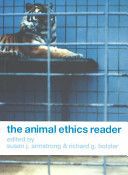
The Animal Ethics Readeris the first comprehensive, state-of-the-art anthology of readings on this substantial area of study and interest. A subject that regularly captures the headlines, the book is designed to appeal to anyone interested in tracing the history of the subject, as well as providing a powerful insight into the debate as it has developed. The recent wealth of material published in this area has not, until now, been collected in one volume. Readings are arranged thematically, carefully presenting a balanced representation of the subject as it stands. It will be essential reading for students taking a course in the subject as well as being of considerable interest to the general reader. Articles are arranged under the following headings: Theories of Animal Ethics; Animal Capacities; Animals for Food; Animal Experimentation; Genetic Engineering of Animals; Ethics and Wildlife; Zoos, Aquaria, and Animals in Entertainment; Companion Animals; Legal Rights for Animals. Readings from leading experts in the field including Peter Singer, Mary Midgley and Bernard Rollin are featured as well as selections from Donald Griffin, Mark Bekoff, Jane Goodall, Raymond Frey, Barbara Orlans, Tom Regan, and Baird Callicott. There is an emphasis on balancing classic and contemporary readings with a view to presenting debates as they stand at this point in time. Each chapter is introduced by the editors and study questions feature at the end. The foreword has been written by Bernard Rollin.
Oxford Studies in Ancient Philosophy is a volume of original articles on all aspects of ancient philosophy. The articles may be of substantial length, and include critical notices of major books. OSAP is now published twice yearly, in both hardback and paperback. This volume covers a wide chronological range of ancient philosophy, from the Presocratics, Heraclitus and Anaxagoras, to Galen and Aspasius in the second century AD. At the core of the volume are five articles on Aristotle.
Richard Brandt is one of the most eminent and influential of contemporary moral philosophers. His work has been concerned with how to justify what is good or right not by reliance on intuitions or theories about what moral words mean but by the explanation of moral psychology and the description of what it is to value something, or to think it immoral. His approach thus stands in marked contrast to the influential theories of John Rawls. The essays reprinted in this collection span a period of almost 30 years and include many classic pieces in metaethical and normative ethical theory. The collection is aimed at both those moral philosophers familiar with Brandt’s work and at those philosophers who may be largely unfamiliar with his work. The latter group will be struck by the lucid unpretentious style and the cumulative weight of Brandt’s contributions to topics that remain at the forefront of moral philosophy.
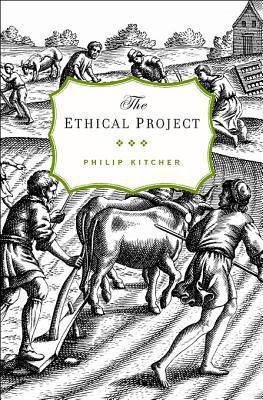
Principles of right and wrong guide the lives of almost all human beings, but we often see them as external to ourselves, outside our own control. In a revolutionary approach to the problems of moral philosophy, Philip Kitcher makes a provocative proposal: Instead of conceiving ethical commands as divine revelations or as the discoveries of brilliant thinkers, we should see our ethical practices as evolving over tens of thousands of years, as members of our species have worked out how to live together and prosper. Elaborating this radical new vision, Kitcher shows how the limited altruistic tendencies of our ancestors enabled a fragile social life, how our forebears learned to regulate their interactions with one another, and how human societies eventually grew into forms of previously unimaginable complexity. The most successful of the many millennia-old experiments in how to live, he contends, survive in our values today.Drawing on natural science, social science, and philosophy to develop an approach he calls “pragmatic naturalism,” Kitcher reveals the power of an evolving ethics built around a few core principles—including justice and cooperation—but leaving room for a diversity of communities and modes of self-expression. Ethics emerges as a beautifully human phenomenon—permanently unfinished, collectively refined and distorted generation by generation. Our human values, Kitcher shows, can be understood not as a final system but as a project—the ethical project—in which our species has engaged for most of its history, and which has been central to who we are.
Liberalism, the founding philosophy of many constitutional democracies, has been criticized in recent years from both the left and the right for placing too much faith in individual rights and distributive justice. David Johnston argues for a reinterpretation of liberal principles he contends will restore liberalism to a position of intellectual leadership from which it can guide political and social reforms. He begins by surveying the three major contemporary schools of liberal political thought–rights-based, perfectionist, and political liberalism– and, by weeding out their weaknesses, sketches a new approach he calls humanist liberalism. Valuable not only for its contribution to academic scholarship but also as a means of introducing liberal political thought to serious undergraduate students.–Choice Raises … a tremendous number of criticisms of the standard accounts of liberal politics. The book is novel, built on solid foundations, [and] very powerful, clever, well thought out.–Alan Ryan, Princeton University This clear and useful new work moves through a swift yet thorough critique of three leading liberal philosophies to reach a sketch of a new, improved theory.–Virginia Quarterly Review
ما از اخلاق چه انتظاری داریم؟ این سوال شاید تاحدودی برای عموم مردم و یا متخصصان این رشته قابل پاسخ باشد؛ اینکه خوب بودن را به ما بیاموزد و در تنظیم روابط فردی م...

جشن کتاب تهران به ایستگاه سی و یکم رسیده است. حال و احوال نشر کتاب خوب نیست و باید فرهنگدوستان را به خرید و هدیه دادن کتاب ترغیب نمود. خانه اخلاقپژوهان جوان ب...

بنیاد کتابهای اخلاق اسلامی عمدتا پالایش جان از آلودگیها و آراستن آن به زیباییها است. اندیشه محوری این قبیل کتابها آن است که انسان فعلی آنی نیست که باید باشد...

-
0 Comments