Notice: تابع WP_Block_Type_Registry::register به طورنادرست فراخوانی شد. نامهای نوع بلوک نباید حروف بزرگ داشته باشند. لطفاً برای اطلاعات بیشتر، اشکال زدایی در وردپرس را مشاهده کنید. (این پیام در نگارش 5.0.0 افزوده شده است.) in /home/ethicsho/public_html/wp-includes/functions.php on line 5313
Warning: Use of undefined constant TDC_PATH_LEGACY - assumed 'TDC_PATH_LEGACY' (this will throw an Error in a future version of PHP) in /home/ethicsho/public_html/wp-content/plugins/td-composer/td-composer.php on line 109
Warning: Use of undefined constant TDSP_THEME_PATH - assumed 'TDSP_THEME_PATH' (this will throw an Error in a future version of PHP) in /home/ethicsho/public_html/wp-content/plugins/td-composer/td-composer.php on line 113 بایگانیهای 9780521530200 - خانه اخلاق پژوهان جوان Notice: Trying to access array offset on value of type bool in /home/ethicsho/public_html/wp-content/plugins/wp-ulike/inc/general-functions.php on line 807
This book reads Milton’s Paradise Lostas a poem that seeks to educate its readers by narrating the education of its main characters. Many of Milton’s characters enter the action in late adolescence, newly independent and eager to test themselves, to discover who they are and their place in the world. The poem charts their progress into moral adulthood. Taking as its premise that attention to the moral development of the poem’s main characters will open the poem to most undergraduate readers, this book explores both the pedagogical activity within Paradise Lostand the pedagogical activity that the poem encourages.
Antirealist views about morality claim that moral facts or truths do not exist. Does this imply that other types of normative facts, such as epistemic facts, do not exist? The Normative Web develops a positive answer to this question. Terence Cuneo argues that moral and epistemic facts are sufficiently similar so that, if moral facts do not exist, then epistemic facts do not exist. But epistemic facts do exist: to deny their existence would commit us to an extreme version of epistemological scepticism. Therefore, Cuneo concludes, moral facts do exist. And if moral facts exist, then moral realism is true. It is sometimes said that moral realists rarely offer arguments for their position, settling instead for mere defenses of a view they find intuitively plausible. By contrast, The Normative Web provides not merely a defense of robust realism in ethics, but a positive argument for this position. In so doing, it engages with a range of antirealist positions in epistemology such as error theories, expressivist views, and reductionist views of epistemic reasons. These positions, Cuneo claims, come at a prohibitively high theoretical cost. Given this cost, it follows that realism about both epistemic and moral facts is a position that we should find highly attractive.
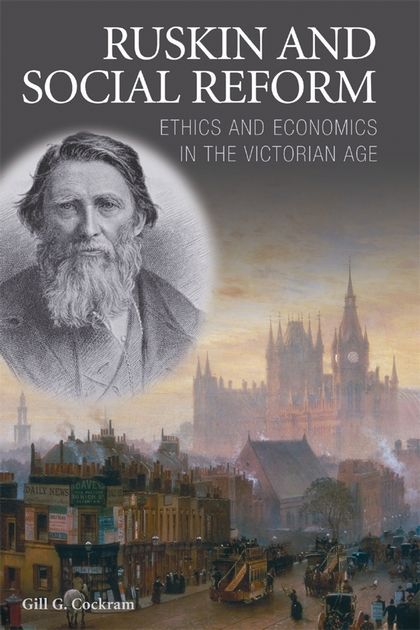
In the first book to analyze the form and influence of Ruskin’s social theory, Gill Cockram looks at Ruskin’s significant contribution to social and intellectual thought in the late 19th and early 20th centuries. In a field often overlooked by 19th century historians, ‘Ruskin and Social Reform’ clarifies for the first time how Ruskin’s social theory was disseminated to a much wider readership than was evident in the mid-nineteenth century and how it was that Ruskin achieved great prominence as a social philosopher. Cockram examines the chronological development of Ruskin’s thought and establishes the extent of his influence among the nascent labour movement. It was the support of a thinker as original and as unconventional as Ruskin that helped to challenge the laissez-faire conformities of classical economics and launched the quest to find a more ethical and humane basis for social policy-making.
This book is the first systematic treatment of ‘responsibilist’ or character-based virtue epistemology, an approach to epistemology that focuses on intellectual character virtues like open-mindedness, fair-mindedness, inquisitiveness, and intellectual courage, rigor, and carefulness. Baehr distinguishes four main varieties of character-based virtue epistemology and develops a comprehensive assessment of each. For students and professional philosophers looking for an introduction to this important and exciting new field, Baehr provides a brief history of virtue epistemology, an overview of contemporary research in the field, and an introduction to the intellectual virtues that distinguishes them from intellectual talents, temperaments, faculties, and skills. For specialists in epistemology, the book offers the most in depth examination to date of the role that the concept of intellectual virtue should play in a philosophical account of knowledge. Baehr also argues for expanding the borders of epistemology proper to include a more immediate concern with intellectual virtues and their role in a good intellectual life. For virtue theorists and moral psychologists, Baehr defends a ‘personal worth’ account of the nature and structure of an intellectual virtue, situating this account vis-à-vis several related accounts of moral and intellectual virtue in the literature. The book also contains chapter-length analyses of two individual character virtues (open-mindedness and intellectual courage) and an appendix on the relation between intellectual virtues and moral virtues. Overall, the book is a comprehensive and groundbreaking treatment of an important topic in philosophy.
ما از اخلاق چه انتظاری داریم؟ این سوال شاید تاحدودی برای عموم مردم و یا متخصصان این رشته قابل پاسخ باشد؛ اینکه خوب بودن را به ما بیاموزد و در تنظیم روابط فردی م...

جشن کتاب تهران به ایستگاه سی و یکم رسیده است. حال و احوال نشر کتاب خوب نیست و باید فرهنگدوستان را به خرید و هدیه دادن کتاب ترغیب نمود. خانه اخلاقپژوهان جوان ب...

بنیاد کتابهای اخلاق اسلامی عمدتا پالایش جان از آلودگیها و آراستن آن به زیباییها است. اندیشه محوری این قبیل کتابها آن است که انسان فعلی آنی نیست که باید باشد...

-
0 Comments