Notice: تابع WP_Block_Type_Registry::register به طورنادرست فراخوانی شد. نامهای نوع بلوک نباید حروف بزرگ داشته باشند. لطفاً برای اطلاعات بیشتر، اشکال زدایی در وردپرس را مشاهده کنید. (این پیام در نگارش 5.0.0 افزوده شده است.) in /home/ethicsho/public_html/wp-includes/functions.php on line 5313
Warning: Use of undefined constant TDC_PATH_LEGACY - assumed 'TDC_PATH_LEGACY' (this will throw an Error in a future version of PHP) in /home/ethicsho/public_html/wp-content/plugins/td-composer/td-composer.php on line 109
Warning: Use of undefined constant TDSP_THEME_PATH - assumed 'TDSP_THEME_PATH' (this will throw an Error in a future version of PHP) in /home/ethicsho/public_html/wp-content/plugins/td-composer/td-composer.php on line 113 بایگانیهای 9780486202501 - خانه اخلاق پژوهان جوان Notice: Trying to access array offset on value of type bool in /home/ethicsho/public_html/wp-content/plugins/wp-ulike/inc/general-functions.php on line 807
This book provides a novel formulation and defence of moral error theory. It also provides a novel solution to the so-called now what question; viz., the question what we should do with our moral thought and talk after moral error theory. The novel formulation of moral error theory uses pragmatic presupposition rather than conceptual entailment to argue that moral judgments carry a non-negotiable commitment to categorical moral reasons. The new answer to the now what question is pragmatic presupposition substitutionism: we should substitute our current moral judgments, which pragmatically presuppose the existence of categorical moral reasons with ‘schmoral’ judgments that pragmatically presuppose the existence of a specific class of prudential reasons. These are prudential reasons that, when we act on them, contribute to the satisfaction of what the author calls ‘the fundamental desire’; namely, the desire to live in a world with mutually beneficial cooperation.
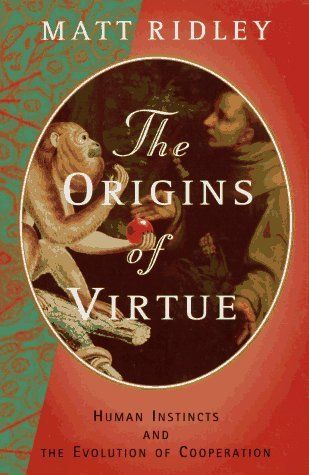
If evolution by natural selection relentlessly favors self-interest, why do human beings live in complex societies and show so much cooperative spirit? In The Origins of Virtue, Matt Ridley, a zoologist and former American editor of the Economist, shows that recent research in a number of fields has suggested a resolution of the apparent contradiction between self-interest and mutual aid.
An award-winning psychologist skillfully combines two genres-philosophical wisdom and scientific research-delighting the reader with surprising insights
The main aim of International Marketing, is to provide solid foundations that are useful for explanation, prediction and control of international business activities. The authors have developed a strong conceptual and theoretical framework to help to understand international marketing problems and guide marketing decisions. The book combines both marketing applications and theoretical foundations, thus providing a good balance between theory and practice. Rather than just merely descriptive the approach is analytical and managerial.
Emile Durkheim is best known in this country as a great sociologist and methodologist. Yet it was Durkheim’s reflections on morality and society that spoke most deeply of his vital concerns. In his informative introduction to this work, Robert N. Bellah describes Durkheim as moralist, philosopher, theologian, and prophet, as well as sociologist, and the selections in this volume are representative of these aspects of Durkheim’s many-faceted scholarship. The first two selections of the volume set the context for the development of Durkheim’s sociology of morality. Section I, “The French Tradition of Social Thought,” gives Durkheim’s picture of how his sociology is to be situated relative to the general French tradition. Section II, “Sociology and Social Action,” shows Durkheim grappling with moral and political issues in his society and indicates the immediate social context of his thinking. The remaining selections indicate some of the major substantive areas of Durkheim’s sociology of morality. Section III, taken from The Division of Labor in Society, demonstrates his basically evolutionary approach to the development of moral norms in society. Section IV, “The Learning of Morality,” gives examples of Durkheim’s work on socialization. Section V, “Social Creativity,” deals with the important question of how new moral norms arise in society.
ما از اخلاق چه انتظاری داریم؟ این سوال شاید تاحدودی برای عموم مردم و یا متخصصان این رشته قابل پاسخ باشد؛ اینکه خوب بودن را به ما بیاموزد و در تنظیم روابط فردی م...

جشن کتاب تهران به ایستگاه سی و یکم رسیده است. حال و احوال نشر کتاب خوب نیست و باید فرهنگدوستان را به خرید و هدیه دادن کتاب ترغیب نمود. خانه اخلاقپژوهان جوان ب...

بنیاد کتابهای اخلاق اسلامی عمدتا پالایش جان از آلودگیها و آراستن آن به زیباییها است. اندیشه محوری این قبیل کتابها آن است که انسان فعلی آنی نیست که باید باشد...

-
0 Comments