Notice: تابع WP_Block_Type_Registry::register به طورنادرست فراخوانی شد. نامهای نوع بلوک نباید حروف بزرگ داشته باشند. لطفاً برای اطلاعات بیشتر، اشکال زدایی در وردپرس را مشاهده کنید. (این پیام در نگارش 5.0.0 افزوده شده است.) in /home/ethicsho/public_html/wp-includes/functions.php on line 5313
Warning: Use of undefined constant TDC_PATH_LEGACY - assumed 'TDC_PATH_LEGACY' (this will throw an Error in a future version of PHP) in /home/ethicsho/public_html/wp-content/plugins/td-composer/td-composer.php on line 109
Warning: Use of undefined constant TDSP_THEME_PATH - assumed 'TDSP_THEME_PATH' (this will throw an Error in a future version of PHP) in /home/ethicsho/public_html/wp-content/plugins/td-composer/td-composer.php on line 113 بایگانیهای 9780415212427 - خانه اخلاق پژوهان جوان Notice: Trying to access array offset on value of type bool in /home/ethicsho/public_html/wp-content/plugins/wp-ulike/inc/general-functions.php on line 807
We have been taught that forgiveness is the only healthy, morally sound response to violation, and that it must be granted without conditions, even when the person who hurt us is unremorseful — even when that person is dead. In her long-awaited second book, the gifted therapist and bestselling author of After the Affair debunks these myths. Drawing on twenty-nine years as a clinical psychologist, Dr. Spring proposes a radically new, life-affirming alternative that lets us overcome the corrosive effects of hate and get on with our lives — without forgiving. She also offers a powerful and unconventional model for genuine forgiveness — one that asks as much of the offender as it asks of us. Forgiveness is no gratuitous gift, she argues. We can heal ourselves, but forgiveness must be earned. How Can I Forgive You? answers such crucial questions as: How do I forgive someone who can’t or won’t apologize for hurting me? How do I reconcile with an unrepentant offender and maintain my self-respect? If I can’t forgive, how do I put the injury behind me? Is forgiveness my job alone, requiring nothing in return? When is forgiveness cheap, and when is it genuine? What can the offender do to earn forgiveness? How can I encourage the offender to seek my forgiveness? What is self-forgiveness? How do we achieve it? This bold and healing book offers concrete, step-by-step instructions that help us to make peace with our partner, parent, sibling, child, in-law, or friend — and with ourselves. Penetrating and beautifully written, How Can I Forgive You? is bound to change forever the way we think about forgiveness and how we recover from intimate wounds.
A renowned radio psychologist and a respected Rabbi bring the Bible’s Ten Commandments into the twentieth century with an honest yet often witty look at their relevance and significance in today’s world. 300,000 first printing. $250,000 ad/promo.
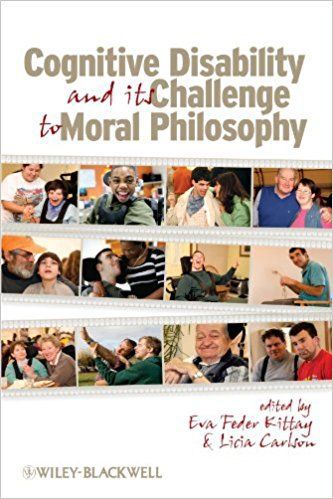
We have been taught that all humans share intrinsic qualities that lend them a common dignity. Philosophers conceive of a certain level of cognitive capacity as the very mark of humanity, and extend the mantle of equal moral fellowship to these “persons.” But what of individuals with diminished cognitive abilities? Cognitive disability poses significant challenges to these fundamental philosophical concepts, prompting a variety of difficult questions. Should those with cognitive disabilities be excluded from the protections and responsibilities we routinely assign to “persons”? Are we forced to reconsider the very concept of “personhood”? How should the interests of people with cognitive disabilities and their caregivers be represented politically? Who is responsible for guaranteeing their care? And to what extent ought they to be granted autonomy?Cognitive Disability and Its Challenge to Moral Philosophy addresses these concerns in a series of thought-provoking Chapters contributed by some of the most prominent moral philosophers of our time, as well as clinicians and medical historians. Collectively, the Chapters represent an important milestone in contemporary thinking about ethical considerations relating to people with cognitive disabilities.Eva Feder Kittay is Distinguished Professor of Philosophy, Women’s Studies Affiliate, and Senior Fellow of the Center for Medical Humanities, Bioethics and Compassionate Care at Stony Brook University, New York. Her published works include Love’s Labor: Essays on Women, Equality, and Dependency (1998); The Blackwell Guide to Feminist Philosophy (co-edited with Linda Martin Alcoff, Wiley-Blackwell, 2006); The Subject of Care: Feminist Perspectives on Dependency (with Ellen K. Feder, 2003); and Metaphor: Its Cognitive Force and Linguistic Structure (1990). She is also the mother of a cognitively disabled woman.Licia Carlson is an assistant professor of philosophy at Providence College. Her research interests include twentieth-century French philosophy, ethics, feminist theory, philosophy and disability, and the philosophy of music. She has published articles on bioethics, feminist theory, disability, and the works of Michel Foucault, and is the author of The Faces of Intellectual Disability: Philosophical Reflections (2010).
Adam Smith is best known as the founder of scientific economics and as an early proponent of the modern market economy. Political economy, however, was only one part of Smith’s comprehensive intellectual system. Consisting of a theory of mind and its functions in language, arts, science, and social intercourse, Smith’s system was a towering contribution to the Scottish Enlightenment. His ideas on social intercourse also served as the basis for a moral theory that provided both historical and theoretical accounts of law, politics, and economics. This Companion volume provides an examination of all aspects of Smith’s thought. Collectively, the essays take into account Smith’s multiple contexts – Scottish, British, European, Atlantic; biographical, institutional, political, philosophical – and they draw on all of his works, including student notes from his lectures. Pluralistic in approach, the volume provides a contextualist history of Smith, as well as direct philosophical engagement with his ideas.
ما از اخلاق چه انتظاری داریم؟ این سوال شاید تاحدودی برای عموم مردم و یا متخصصان این رشته قابل پاسخ باشد؛ اینکه خوب بودن را به ما بیاموزد و در تنظیم روابط فردی م...

جشن کتاب تهران به ایستگاه سی و یکم رسیده است. حال و احوال نشر کتاب خوب نیست و باید فرهنگدوستان را به خرید و هدیه دادن کتاب ترغیب نمود. خانه اخلاقپژوهان جوان ب...

بنیاد کتابهای اخلاق اسلامی عمدتا پالایش جان از آلودگیها و آراستن آن به زیباییها است. اندیشه محوری این قبیل کتابها آن است که انسان فعلی آنی نیست که باید باشد...

-
0 Comments