Notice: تابع WP_Block_Type_Registry::register به طورنادرست فراخوانی شد. نامهای نوع بلوک نباید حروف بزرگ داشته باشند. لطفاً برای اطلاعات بیشتر، اشکال زدایی در وردپرس را مشاهده کنید. (این پیام در نگارش 5.0.0 افزوده شده است.) in /home/ethicsho/public_html/wp-includes/functions.php on line 5313
Warning: Use of undefined constant TDC_PATH_LEGACY - assumed 'TDC_PATH_LEGACY' (this will throw an Error in a future version of PHP) in /home/ethicsho/public_html/wp-content/plugins/td-composer/td-composer.php on line 109
Warning: Use of undefined constant TDSP_THEME_PATH - assumed 'TDSP_THEME_PATH' (this will throw an Error in a future version of PHP) in /home/ethicsho/public_html/wp-content/plugins/td-composer/td-composer.php on line 113 بایگانیهای 9780415184472 - خانه اخلاق پژوهان جوان Notice: Trying to access array offset on value of type bool in /home/ethicsho/public_html/wp-content/plugins/wp-ulike/inc/general-functions.php on line 807
In The Concealed Art of the Soul, Jonardon Ganeri presents a variety of perspectives on the nature of the self as seen by major schools of classical Indian philosophy. For Indian thinkers, a philosophical treatise about the self should not only reveal the truth about the nature of the soul, but should also engage the reader in a process of study and contemplation that will eventually lead to self-transformation. By combining careful attention to philosophical content and sensitivity to literary form, Ganeri deepens our understanding of some of the greatest works in Indian literary history. His magisterial survey includes the Upanisads, the Buddha’s discourses, the epic Mahabharata, and the writings of Candrakirti, whose work was later to provide the foundation for Tibetan Buddhism. Ganeri argues that many Western theories of selfhood are not only present in, but are developed to high degree of sophistication in these writings, and that there are other ideas about the self found in the work of classical Indian thinkers which present-day analytic philosophers have not yet begun to explore. Scholars and students of philosophy and religious studies, particularly those with an interest in Indian and Western conceptions of the self, will find this book fascinating reading.
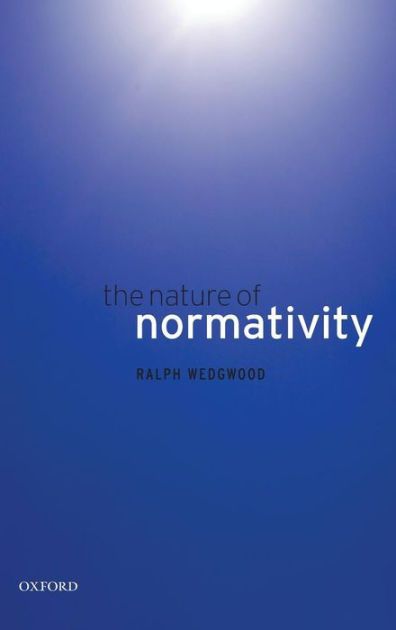
The Nature of Normativity presents a complete theory about the nature of normative thought –that is, the sort of thought that is concerned with what ought to be the case, or what we ought to do or think. Ralph Wedgwood defends a kind of realism about the normative, according to which normative truths or facts are genuinely part of reality. Anti-realists often complain that realism gives rise to demands for explanation that it cannot adequately meet. What is the nature of these normative facts? How could we ever know them or even refer to them in language or thought? Wedgwood accepts that any adequate version of realism must answer these explanatory demands. However, he seeks to show that these demands can be met — in large part by relying on a version of the idea, which has been much discussed in recent work in the philosophy of mind, that the intentional is normative — that is, that there is no way of explaining the nature of the various sorts of mental states that have intentional or representational content (such as beliefs, judgments, desires, decisions, and so on), without stating normative facts. On the basis of this idea, Wedgwood provides a detailed systematic theory that deals with the following three areas: the meaning of statements about what ought to be; the nature of the facts stated by these statements; and what justifies us in holding beliefs about what ought to be.
The concept of altruism, or disinterested concern for another’s welfare, has been discussed by everyone from theologians to psychologists to biologists. In this book, evolutionary, neurological, developmental, psychological, social, cultural, and religious aspects of altruistic behavior are examined. It is a collaborative examination of one of humanity’s essential and defining characteristics by renowned researchers from various disciplines. Their integrative dialogue illustrates that altruistic behavior is a significant mode of expression that can be studied by various scholarly methods and understood from a variety of perspectives in both the humanities and the sciences. Altruism and Altruistic Love establishes a framework for scholarship on altruism by presenting definitions, a historical overview, a review of contemporary research, and debates in various disciplines, as well as a discussion of directions for future work.
Investigates a complex structure of morality, the demands such morality places on individuals, and the behavioral consequences of the system of right and wrong
ما از اخلاق چه انتظاری داریم؟ این سوال شاید تاحدودی برای عموم مردم و یا متخصصان این رشته قابل پاسخ باشد؛ اینکه خوب بودن را به ما بیاموزد و در تنظیم روابط فردی م...

جشن کتاب تهران به ایستگاه سی و یکم رسیده است. حال و احوال نشر کتاب خوب نیست و باید فرهنگدوستان را به خرید و هدیه دادن کتاب ترغیب نمود. خانه اخلاقپژوهان جوان ب...

بنیاد کتابهای اخلاق اسلامی عمدتا پالایش جان از آلودگیها و آراستن آن به زیباییها است. اندیشه محوری این قبیل کتابها آن است که انسان فعلی آنی نیست که باید باشد...

-
0 Comments