Notice: تابع WP_Block_Type_Registry::register به طورنادرست فراخوانی شد. نامهای نوع بلوک نباید حروف بزرگ داشته باشند. لطفاً برای اطلاعات بیشتر، اشکال زدایی در وردپرس را مشاهده کنید. (این پیام در نگارش 5.0.0 افزوده شده است.) in /home/ethicsho/public_html/wp-includes/functions.php on line 5313
Warning: Use of undefined constant TDC_PATH_LEGACY - assumed 'TDC_PATH_LEGACY' (this will throw an Error in a future version of PHP) in /home/ethicsho/public_html/wp-content/plugins/td-composer/td-composer.php on line 109
Warning: Use of undefined constant TDSP_THEME_PATH - assumed 'TDSP_THEME_PATH' (this will throw an Error in a future version of PHP) in /home/ethicsho/public_html/wp-content/plugins/td-composer/td-composer.php on line 113 بایگانیهای 9780415141857 - خانه اخلاق پژوهان جوان Notice: Trying to access array offset on value of type bool in /home/ethicsho/public_html/wp-content/plugins/wp-ulike/inc/general-functions.php on line 807
In THE CRITIQUE OF JUDGMENT (1790), Immanuel Kant (1724-1804) seeks to establish the a priori principles underlying the faculty of judgement, just as he did in his previous critiques of pure and practical reason. The first part deals with the subject of our aesthetic sensibility; we respond to certain natural phenomena as beautiful, says Kant, when we recognise in nature a harmonious order that satisfies the mind’s own need for order. The second half of the critique concentrates on the apparent teleology in nature’s design of organisms. Kant argues that our minds are inclined to see purpose and order in nature and this is the main principle underlying all of our judgements. Although this might imply a super sensible Designer, Kant insists that we cannot prove a supernatural dimension or the existence of God. Such considerations are beyond reason and are solely the province of faith.
Covering an important theme in Humean studies, this book focuses on Humes hugely influential account of the relation between reason and morality, found in book three of his Treatise of Human Nature. Arguing that this account includes a fundamental contradiction that has gone unnoticed in modern debate, this fascinating volume contains a refreshing combination of historical-scholarly work and contemporary analysis that seeks to expose this contradiction and therefore provide a significant contribution to current scholarship in the area. Beginning by pointing out a contradiction in the intermediary premise concerning whether reason can influence action, or is wholly powerless, the book then moves on to draw out the consequences for recent meta-ethics of the failure to acknowledge this contradiction. Finally, Botros highlights the root of the arguments power in an article of naturalistic dogma. A significant and thought-provoking addition to this popular field of study, Hume,Reason and Morality is undoubtedly an important resource for moral philosophers interested in meta-ethics and practical reason, as well as Humean scholars.
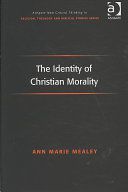
This book argues that moral theology has yet to embrace the recommendations of the Second Vatican Council concerning the ways in which moral theology is to be renewed. There is little or no consensus between theologians regarding the nature, content and uniqueness of Christian morality. After highlighting the strengths and weaknesses of the so-called autonomy and faith ethic schools of thought, Mealey argues that there is little dividing them and that, in some instances, both schools are simply defending one aspect of a hermeneutical dialectic.In an attempt to move away from the divisions between proponents of the faith-ethic and autonomy positions, Mealey enlists the help of the hermeneutical theory of Paul Ricoeur, arguing that the debate on the uniqueness of Christian morality can be mediated if scholars look to the possibilities opened up by Ricoeur’s hermeneutics of interpretation. Mealey also argues that the uniqueness of Christian morality is more adequately explained in terms of a specific identity (self) that is constantly subject to change and revision in light of many, often conflicting, moral sources. She advocates a move away from attempts to explain the uniqueness of Christian morality in terms of one specific, unchanging context, motivation, norm or divine command or value. By embracing the possibilities opened up by Ricoeurian hermeneutics, Mealey explains how concepts such as revelation, tradition, orthodoxy and moral conscience may be understood in a hermeneutical way without being deemed sectarian or unorthodox.
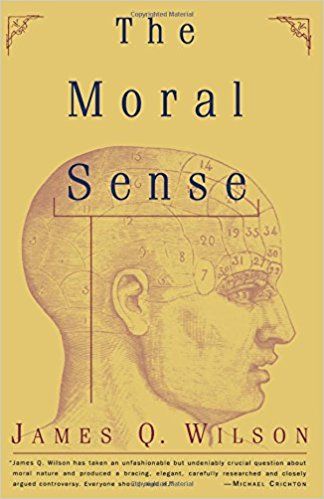
Uses data gathered from diverse scientific disciplines to argue that the origin and development of moral reasoning do have a biological basis. By the author of Thinking about Crime. 30,000 first printing.
The adversary professions — law, business, and government among others — typically claim a moral permission to violate persons in ways that if not for the professional role, would be morally wrong. Lawyers advance bad ends and deceive, business managers exploit and despoil, public officials enforce unjust laws, and doctors keep confidences that, if disclosed, would prevent harm. Ethics for Adversaries is a philosophical inquiry into arguments that are offered to defend seemingly wrongful actions performed by those who occupy what Montaigne called “necessary offices”. Applbaum concludes that these arguments are weaker than supposed.
ما از اخلاق چه انتظاری داریم؟ این سوال شاید تاحدودی برای عموم مردم و یا متخصصان این رشته قابل پاسخ باشد؛ اینکه خوب بودن را به ما بیاموزد و در تنظیم روابط فردی م...

جشن کتاب تهران به ایستگاه سی و یکم رسیده است. حال و احوال نشر کتاب خوب نیست و باید فرهنگدوستان را به خرید و هدیه دادن کتاب ترغیب نمود. خانه اخلاقپژوهان جوان ب...

بنیاد کتابهای اخلاق اسلامی عمدتا پالایش جان از آلودگیها و آراستن آن به زیباییها است. اندیشه محوری این قبیل کتابها آن است که انسان فعلی آنی نیست که باید باشد...

-
0 Comments