Notice: تابع WP_Block_Type_Registry::register به طورنادرست فراخوانی شد. نامهای نوع بلوک نباید حروف بزرگ داشته باشند. لطفاً برای اطلاعات بیشتر، اشکال زدایی در وردپرس را مشاهده کنید. (این پیام در نگارش 5.0.0 افزوده شده است.) in /home/ethicsho/public_html/wp-includes/functions.php on line 5313
Warning: Use of undefined constant TDC_PATH_LEGACY - assumed 'TDC_PATH_LEGACY' (this will throw an Error in a future version of PHP) in /home/ethicsho/public_html/wp-content/plugins/td-composer/td-composer.php on line 109
Warning: Use of undefined constant TDSP_THEME_PATH - assumed 'TDSP_THEME_PATH' (this will throw an Error in a future version of PHP) in /home/ethicsho/public_html/wp-content/plugins/td-composer/td-composer.php on line 113 بایگانیهای 9780404148065 - خانه اخلاق پژوهان جوان Notice: Trying to access array offset on value of type bool in /home/ethicsho/public_html/wp-content/plugins/wp-ulike/inc/general-functions.php on line 807
“Relativism is one of philosophy’s oldest — and most polarizing — concepts. It has captivated thinkers since the days of Protagoras (who supported the notion) and Plato (who did not). Relativism is assailed by popes as leading people away from absolute religious truths, and blamed by social commentators for many of society’s ills. With a few notable exceptions, 20th-century philosophers grew to dismiss relativism as an obviously mistaken or even self-refuting concept. But in the past decade, even its staunchest philosophical critics have come to realize that relativism is a legitimate option for explaining a variety of phenomena, including faultless disagreement, the utility of alternative logics, varieties of cross-cultural moralities, and differing ontological conceptual schemes. Reflecting this overdue reappraisal, A Companion to Relativism presents the latest thinking on the role of relativism in the philosophy of language, epistemology, ethics, philosophy of science, logic, and metaphysics. Original contributions to this volume feature cutting edge thinking from a variety of eminent scholars who approach relativism from various perspectives and philosophical subfields”–
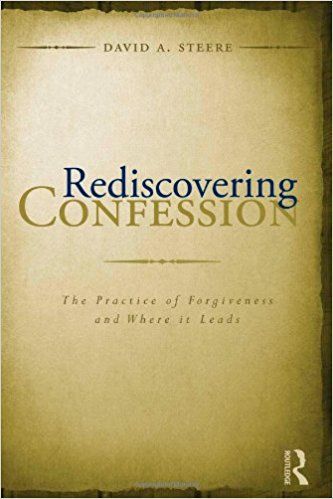
Rediscovering Confession is about recovering the experience of confession, in danger now of becoming a lost art. It identifies four elements present in psychotherapy and confession: a state of heightened self-awareness, a growing realization that our predicament points in some meaningful direction beyond itself, the necessity to make a relevant response to our situation, and a potential for spiritual encounter that accompanies the process. Each chapter contains a section devoted to Practice with exercises for individual contemplation and experimentation, guidelines for forming a confessional partnership, directions for conducting discussions in a study goup, and ways to organize a small confessional group.
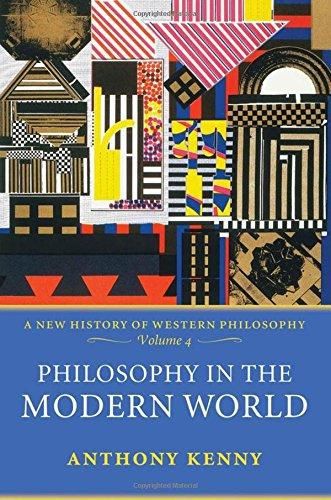
Here is the concluding volume of Sir Anthony Kenny’s monumental four-volume history of philosophy, the first major single-author narrative history to appear for several decades. In this volume, Kenny tells the fascinating story of the development of philosophy in the modern world, from the early nineteenth century to the end of the millennium. Alongside (and intertwined with) extraordinary scientific advances, cultural changes, and political upheavals, the last two centuries have seen some of the most intriguing and original developments in philosophical thinking, which have transformed our understanding of ourselves and our world. In the first part of the book, Kenny offers a lively narrative introducing the major thinkers in their historical context. Among those we meet are the great figures of continental European philosophy, from Schopenhauer, Kierkegaard, and Nietzsche to Heidegger, Sartre, and Derrida; the Pragmatists such as C.S. Pierce and William James, who first developed a distinctively American philosophical tradition; Marx, Darwin, and Freud, the non-philosophers whose influence on philosophy was immense; and Wittgenstein and Russell, friends and colleagues who set the agenda for analytic philosophy in the twentieth century. Kenny then proceeds to guide the reader lucidly through the nine main areas of philosophical work in the period, offering a serious engagement with ideas and arguments about logic, language, epistemology, metaphysics, ethics, aesthetics, politics, and the existence of God. Graced with many beautiful illustrations, Philosophy in the Modern World concludes Kenny’s stimulating history of the intellectual development of Western civilization, allowing readers to trace the birth and growth of philosophy from antiquity to the present day.
ما از اخلاق چه انتظاری داریم؟ این سوال شاید تاحدودی برای عموم مردم و یا متخصصان این رشته قابل پاسخ باشد؛ اینکه خوب بودن را به ما بیاموزد و در تنظیم روابط فردی م...

جشن کتاب تهران به ایستگاه سی و یکم رسیده است. حال و احوال نشر کتاب خوب نیست و باید فرهنگدوستان را به خرید و هدیه دادن کتاب ترغیب نمود. خانه اخلاقپژوهان جوان ب...

بنیاد کتابهای اخلاق اسلامی عمدتا پالایش جان از آلودگیها و آراستن آن به زیباییها است. اندیشه محوری این قبیل کتابها آن است که انسان فعلی آنی نیست که باید باشد...

-
0 Comments