Notice: تابع WP_Block_Type_Registry::register به طورنادرست فراخوانی شد. نامهای نوع بلوک نباید حروف بزرگ داشته باشند. لطفاً برای اطلاعات بیشتر، اشکال زدایی در وردپرس را مشاهده کنید. (این پیام در نگارش 5.0.0 افزوده شده است.) in /home/ethicsho/public_html/wp-includes/functions.php on line 5313
Warning: Use of undefined constant TDC_PATH_LEGACY - assumed 'TDC_PATH_LEGACY' (this will throw an Error in a future version of PHP) in /home/ethicsho/public_html/wp-content/plugins/td-composer/td-composer.php on line 109
Warning: Use of undefined constant TDSP_THEME_PATH - assumed 'TDSP_THEME_PATH' (this will throw an Error in a future version of PHP) in /home/ethicsho/public_html/wp-content/plugins/td-composer/td-composer.php on line 113 بایگانیهای 9780300128154 - خانه اخلاق پژوهان جوان Notice: Trying to access array offset on value of type bool in /home/ethicsho/public_html/wp-content/plugins/wp-ulike/inc/general-functions.php on line 807
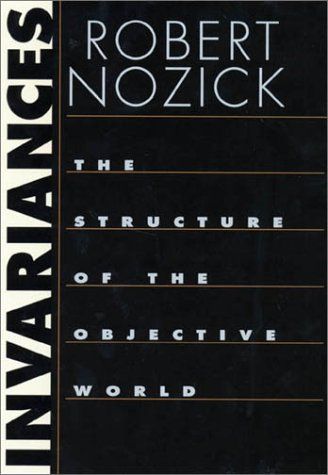
Excerpts from Robert Nozick’s “Invariances” Necessary truths are invariant across all possible worlds, contingent ones across only some. No wonder necessity lures philosophers. It is the flame, the philosopher the moth. Our intuitions that certain statements are necessary do not powerfully support this claim when natural selection would produce strong intuitions of their self-evidence, even were these statements (only) contingently true. Contemporary philosophers who give great weight to intuitions need to offer some account of why such intuitions are reliable and are to be trusted. Of course, if the purpose of such philosophy is merely to codify and systematize the intuitions that (for whatever reason) are held, then a philosophy built upon intuitions will need no further basis. And it will have no further validity. You might think that an insight into metaphysical impossibility could save the physicists much useless work by thereby excluding something as physically possible. Things seem to have worked in the opposite direction, though. Driven by a need to explain strange data, physicists formulate theories that countenance what previously was held to be metaphysically impossible. . . The physical tail wags the metaphysical dog. Why is there an objective world? Within evolutionary cosmology scientific laws might be viewed as the heritable structure of a universe, akin to what in biology would be an organism’s genetic endowment. . . Suppose that the reproductive process of a universe produces transformed offspring universes that differ from their parent. The greater the transformations that a law is invariant under, and the wider their number, the greater is that law’s heritability. The vast majority of the universes that exist through the processes of evolutionary cosmology, therefore, will exhibit laws that are invariant under a wide range of significant transformations. Such invariance, we have seen, is exactly what constitutes objectiveness. Evolutionary cosmology gives us objective worlds.
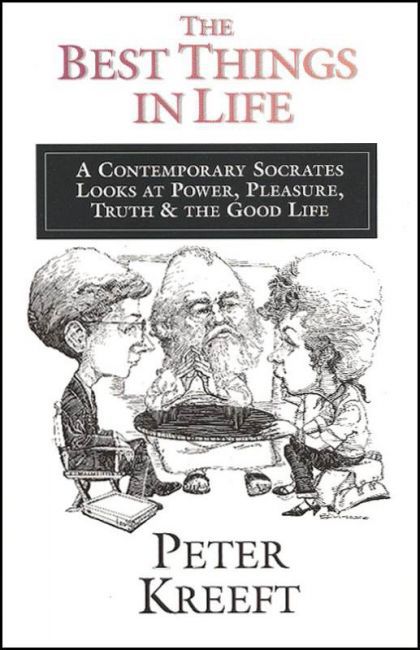
What are the best things in life? Questions like that may boggle your mind. But they don’t boggle Socrates. The indomitable old Greek brings his unending questions to Desperate State University. With him come the same mind-opening and spirit-stretching challenge that disrupted ancient Athens. What is the purpose of education? Why do we make love?What good is money? Can computers think like people? Is there a difference between Capitalism and Communism? What is the greatest good? Is belief in God like belief in Santa Claus?
In twelve short, Socratic dialogues Peter Kreeft explodes contemporary values like success, power and pleasure. And he bursts the modern bubbles of agnosticism and subjectivism. He leaves you richer, wiser and more able to discern what the best things in life actually are.
Marc A. Rodwin draws on his own experience as a health lawyer–and his research in health ethics, law, and policy–to reveal how financial conflicts of interest can and do negatively affect the quality of patient care. He shows that the problem has become worse over the last century and provides many actual examples of how doctors’ decisions are influenced by financial considerations. We learn how two California physicians, for example, resumed referrals to Pasadena General Hospital only after the hospital started paying $70 per patient (their referrals grew from 14 in one month to 82 in the next). As Rodwin writes, incentives such as this can inhibit a doctor from taking action when a hospital fails to provide proper service, and may also lead to the unnecessary hospitalization of patients. We also learn of a Wyeth-Ayerst Labs promotion in which physicians who started patients on INDERAL (a drug for high blood pressure, angina, and migraines) received 1000 mileage points on American Airlines for each patient (studies show that promotions such as this have a direct effect on a doctor’s choice of drug). Rodwin reveals why the medical community has failed to regulate conflicts of interest: peer review has little authority, state licensing boards are usually ignorant of abuses, and the AMA code of ethics has historically been recommended rather than required. He examines what can be learned from the way society has coped with the conflicts of interest of other professionals –lawyers, government officials, and businessmen–all of which are held to higher standards of accountability than doctors. And he recommends that efforts be made to prohibit and regulate certain kinds of activity (such as kickbacks and self-referrals), to monitor and regulate conduct, and to provide penalties for improper conduct. Our failure to face physicians’ conflicts of interest has distorted the way medicine is practiced, compromised the loyalty of doctors to patients, and harmed society, the integrity of the medical profession, and patients. For those concerned with the quality of health care or medical ethics, Medicine, Money and Morals is a provocative look into the current health care crisis and a powerful prescription for change.
ما از اخلاق چه انتظاری داریم؟ این سوال شاید تاحدودی برای عموم مردم و یا متخصصان این رشته قابل پاسخ باشد؛ اینکه خوب بودن را به ما بیاموزد و در تنظیم روابط فردی م...

جشن کتاب تهران به ایستگاه سی و یکم رسیده است. حال و احوال نشر کتاب خوب نیست و باید فرهنگدوستان را به خرید و هدیه دادن کتاب ترغیب نمود. خانه اخلاقپژوهان جوان ب...

بنیاد کتابهای اخلاق اسلامی عمدتا پالایش جان از آلودگیها و آراستن آن به زیباییها است. اندیشه محوری این قبیل کتابها آن است که انسان فعلی آنی نیست که باید باشد...

-
0 Comments