Notice: تابع WP_Block_Type_Registry::register به طورنادرست فراخوانی شد. نامهای نوع بلوک نباید حروف بزرگ داشته باشند. لطفاً برای اطلاعات بیشتر، اشکال زدایی در وردپرس را مشاهده کنید. (این پیام در نگارش 5.0.0 افزوده شده است.) in /home/ethicsho/public_html/wp-includes/functions.php on line 5313
Warning: Use of undefined constant TDC_PATH_LEGACY - assumed 'TDC_PATH_LEGACY' (this will throw an Error in a future version of PHP) in /home/ethicsho/public_html/wp-content/plugins/td-composer/td-composer.php on line 109
Warning: Use of undefined constant TDSP_THEME_PATH - assumed 'TDSP_THEME_PATH' (this will throw an Error in a future version of PHP) in /home/ethicsho/public_html/wp-content/plugins/td-composer/td-composer.php on line 113 بایگانیهای 9780268016661 - خانه اخلاق پژوهان جوان Notice: Trying to access array offset on value of type bool in /home/ethicsho/public_html/wp-content/plugins/wp-ulike/inc/general-functions.php on line 807
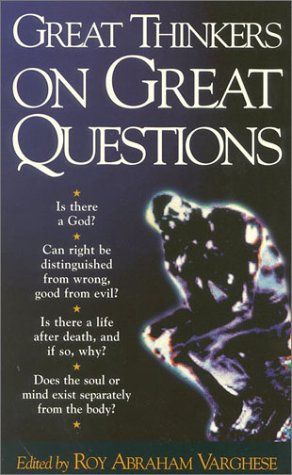
Great minds of the 20th century, including such distinguished names asichard Swinburne, Alvin Platinga and Keith Ward, offers answers to some ofife’s key questions.
Information and Communication Technologies (ICTs) have profoundly changed many aspects of life, including the nature of entertainment, work, communication, education, healthcare, industrial production and business, social relations and conflicts. They have had a radical and widespread impact on our moral lives and hence on contemporary ethical debates. The Cambridge Handbook of Information and Computer Ethics provides an ambitious and authoritative introduction to the field, with discussions of a range of topics including privacy, ownership, freedom of speech, responsibility, technological determinism, the digital divide, cyber warfare, and online pornography. It offers an accessible and thoughtful survey of the transformations brought about by ICTs and their implications for the future of human life and society, for the evaluation of behaviour, and for the evolution of moral values and rights. It will be a valuable book for all who are interested in the ethical aspects of the information society in which we live.
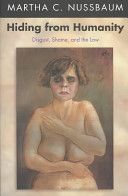
Should laws about sex and pornography be based on social conventions about what is disgusting? Should felons be required to display bumper stickers or wear T-shirts that announce their crimes? This powerful and elegantly written book, by one of America’s most influential philosophers, presents a critique of the role that shame and disgust play in our individual and social lives and, in particular, in the law. Martha Nussbaum argues that we should be wary of these emotions because they are associated in troubling ways with a desire to hide from our humanity, embodying an unrealistic and sometimes pathological wish to be invulnerable. Nussbaum argues that the thought-content of disgust embodies “magical ideas of contamination, and impossible aspirations to purity that are just not in line with human life as we know it.” She argues that disgust should never be the basis for criminalizing an act, or play either the aggravating or the mitigating role in criminal law it currently does. She writes that we should be similarly suspicious of what she calls “primitive shame,” a shame “at the very fact of human imperfection,” and she is harshly critical of the role that such shame plays in certain punishments. Drawing on an extraordinarily rich variety of philosophical, psychological, and historical references–from Aristotle and Freud to Nazi ideas about purity–and on legal examples as diverse as the trials of Oscar Wilde and the Martha Stewart insider trading case, this is a major work of legal and moral philosophy.
In this multi-faceted volume, Christian and other religiously committed theorists find themselves at an uneasy point in history — between premodernity, modernity, and postmodernity — where disciplines and methods, cultural and linguistic traditions, and religious commitments tangle and cross. Here, leading theorists explore the state of the art of the contemporary hermeneutical terrain. As they address the work of Gadamer, Ricoeur, and Derrida, the essays collected in this wide-ranging work engage key themes in philosophical hermeneutics, hermeneutics and religion, hermeneutics and the other arts, hermeneutics and literature, and hermeneutics and ethics. Readers will find lively exchanges and reflections that meet the intellectual and philosophical challenges posed by hermeneutics at the crossroads.Contributors are Bruce Ellis Benson, Christina Bieber Lake, John D. Caputo, Eduardo J. Echeverria, Benne Faber, Norman Lillegard, Roger Lundin, Brian McCrea, James K. A. Smith, Michael VanderWeele, Kevin Vanhoozer, and Nicholas Wolterstorff.
ما از اخلاق چه انتظاری داریم؟ این سوال شاید تاحدودی برای عموم مردم و یا متخصصان این رشته قابل پاسخ باشد؛ اینکه خوب بودن را به ما بیاموزد و در تنظیم روابط فردی م...

جشن کتاب تهران به ایستگاه سی و یکم رسیده است. حال و احوال نشر کتاب خوب نیست و باید فرهنگدوستان را به خرید و هدیه دادن کتاب ترغیب نمود. خانه اخلاقپژوهان جوان ب...

بنیاد کتابهای اخلاق اسلامی عمدتا پالایش جان از آلودگیها و آراستن آن به زیباییها است. اندیشه محوری این قبیل کتابها آن است که انسان فعلی آنی نیست که باید باشد...

-
0 Comments