Notice: تابع WP_Block_Type_Registry::register به طورنادرست فراخوانی شد. نامهای نوع بلوک نباید حروف بزرگ داشته باشند. لطفاً برای اطلاعات بیشتر، اشکال زدایی در وردپرس را مشاهده کنید. (این پیام در نگارش 5.0.0 افزوده شده است.) in /home/ethicsho/public_html/wp-includes/functions.php on line 5313
Warning: Use of undefined constant TDC_PATH_LEGACY - assumed 'TDC_PATH_LEGACY' (this will throw an Error in a future version of PHP) in /home/ethicsho/public_html/wp-content/plugins/td-composer/td-composer.php on line 109
Warning: Use of undefined constant TDSP_THEME_PATH - assumed 'TDSP_THEME_PATH' (this will throw an Error in a future version of PHP) in /home/ethicsho/public_html/wp-content/plugins/td-composer/td-composer.php on line 113 بایگانیهای 9780230612648 - خانه اخلاق پژوهان جوان Notice: Trying to access array offset on value of type bool in /home/ethicsho/public_html/wp-content/plugins/wp-ulike/inc/general-functions.php on line 807
Human beings have the unique ability to consciously reflect on the nature of the self. But reflection has its costs. We can ask what the self is, but as David Hume pointed out, the self, once reflected upon, may be nowhere to be found. The favored view is that we are material beings living in the material world. But if so, a host of destabilizing questions surface. If persons are just a sophisticated sort of animal, then what sense is there to the idea that we are free agents who control our own destinies? What makes the life of any animal, even one as sophisticated as Homo sapiens, worth anything? What place is there in a material world for God? And if there is no place for a God, then what hold can morality possibly have on us–why isn’t everything allowed? Flanagan’s collection of essays takes on these questions and more. He continues the old philosophical project of reconciling a scientific view of ourselves with a view of ourselves as agents of free will and meaning-makers. But to this project he brings the latest insights of neuroscience, cognitive science, and psychiatry, exploring topics such as whether the conscious mind can be explained scientifically, whether dreams are self-expressive or just noise, the moral socialization of children, and the nature of psychological phenomena such as multiple personality disorder and false memory syndrome. What emerges from these explorations is a liberating vision which can make sense of the self, agency, character transformation, and the value and worth of human life. Flanagan concludes that nothing about a scientific view of persons must lead to nihilism.
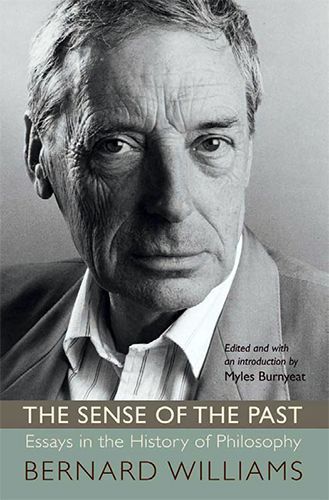
Before his death in 2003, Bernard Williams planned to publish a collection of historical essays, focusing primarily on the ancient world. This posthumous volume brings together a much wider selection, written over some forty years. His legacy lives on in this masterful work, the first collection ever published of Williams’s essays on the history of philosophy. The subjects range from the sixth century B.C. to the twentieth A.D., from Homer to Wittgenstein by way of Socrates, Plato, Aristotle, Descartes, Hume, Sidgwick, Collingwood, and Nietzsche. Often one would be hard put to say which part is history, which philosophy. Both are involved throughout, because this is the history of philosophy written philosophically. Historical exposition goes hand in hand with philosophical scrutiny. Insights into the past counteract blind acceptance of present assumptions. In his touching and illuminating introduction, Myles Burnyeat writes of these essays: “They show a depth of commitment to the history of philosophy seldom to be found nowadays in a thinker so prominent on the contemporary philosophical scene.” The result celebrates the interest and importance to philosophy today of its near and distant past.The Sense of the Past is one of three collections of essays by Bernard Williams published by Princeton University Press since his death. In the Beginning Was the Deed: Realism and Moralism in Political Argument, selected, edited, and with an introduction by Geoffrey Hawthorn, and Philosophy as a Humanistic Discipline, selected, edited, and with an introduction by A. W. Moore, make up the trio.
This important book brings recent findings and theories in biology and psychology to bear on the fundamental question in ethics of what it means to behave morally. By presenting a complete model of moral agency based on contemporary evolutionary theory, developmental biology and psychology, and social cognitive theory, the book offers a unique perspective. It will be read with profit by a broad range of philosophers, as well as psychologists and biologists.
You may be a hacker and not even know it. Being a hacker has nothing to do with cyberterrorism, and it doesn’t even necessarily relate to the open-source movement. Being a hacker has more to do with your underlying assumptions about stress, time management, work, and play. It’s about harmonizing the rhythms of your creative work with the rhythms of the rest of your life so that they amplify each other. It is a fundamentally new work ethic that is revolutionizing the way business is being done around the world.Without hackers there would be no universal access to e-mail, no Internet, no World Wide Web, but the hacker ethic has spread far beyond the world of computers. It is a mind-set, a philosophy, based on the values of play, passion, sharing, and creativity, that has the potential to enhance every individual’s and company’s productivity and competitiveness. Now there is a greater need than ever for entrepreneurial versatility of the sort that has made hackers the most important innovators of our day. Pekka Himanen shows how we all can make use of this ongoing transformation in the way we approach our working lives.
ما از اخلاق چه انتظاری داریم؟ این سوال شاید تاحدودی برای عموم مردم و یا متخصصان این رشته قابل پاسخ باشد؛ اینکه خوب بودن را به ما بیاموزد و در تنظیم روابط فردی م...

جشن کتاب تهران به ایستگاه سی و یکم رسیده است. حال و احوال نشر کتاب خوب نیست و باید فرهنگدوستان را به خرید و هدیه دادن کتاب ترغیب نمود. خانه اخلاقپژوهان جوان ب...

بنیاد کتابهای اخلاق اسلامی عمدتا پالایش جان از آلودگیها و آراستن آن به زیباییها است. اندیشه محوری این قبیل کتابها آن است که انسان فعلی آنی نیست که باید باشد...

-
0 Comments