Notice: تابع WP_Block_Type_Registry::register به طورنادرست فراخوانی شد. نامهای نوع بلوک نباید حروف بزرگ داشته باشند. لطفاً برای اطلاعات بیشتر، اشکال زدایی در وردپرس را مشاهده کنید. (این پیام در نگارش 5.0.0 افزوده شده است.) in /home/ethicsho/public_html/wp-includes/functions.php on line 5313
Warning: Use of undefined constant TDC_PATH_LEGACY - assumed 'TDC_PATH_LEGACY' (this will throw an Error in a future version of PHP) in /home/ethicsho/public_html/wp-content/plugins/td-composer/td-composer.php on line 109
Warning: Use of undefined constant TDSP_THEME_PATH - assumed 'TDSP_THEME_PATH' (this will throw an Error in a future version of PHP) in /home/ethicsho/public_html/wp-content/plugins/td-composer/td-composer.php on line 113 بایگانیهای 9780230250581 - خانه اخلاق پژوهان جوان Notice: Trying to access array offset on value of type bool in /home/ethicsho/public_html/wp-content/plugins/wp-ulike/inc/general-functions.php on line 807
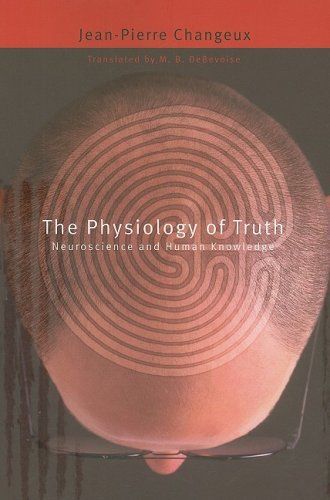
In this wide-ranging book, one of the boldest thinkers in modern neuroscience confronts an ancient philosophical problem: can we know the world as it really is?Drawing on provocative new findings about the psychophysiology of perception and judgment in both human and nonhuman primates, and also on the cultural history of science, Jean-Pierre Changeux makes a powerful case for the reality of scientific progress and argues that it forms the basis for a coherent and universal theory of human rights. On this view, belief in objective knowledge is not a mere ideological slogan or a nave confusion; it is a characteristic feature of human cognition throughout evolution, and the scientific method its most sophisticated embodiment. Seeking to reconcile science and humanism, Changeux holds that the capacity to recognize truths that are independent of subjective personal experience constitutes the foundation of a human civil society.
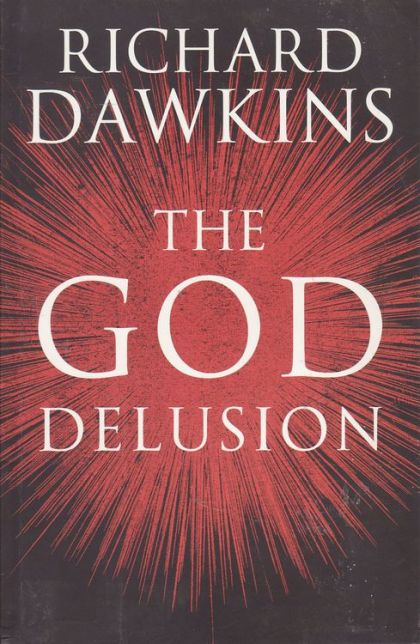
“A preeminent scientist – and the world’s most prominent atheist – asserts the irrationality of belief in God and the grievous harm religion has inflicted on society, from the Crusades to 9/11.”–BOOK JACKET.
“In this book, Jack L. Goldsmith and Eric A. Posner argue that international law does matter but that it is less powerful and less significant than public officials, legal experts, and the media believe. International law, they contend, is simply a product of states pursuing their interests on the international stage. It does not pull states toward compliance contrary to their interests, and the possibilities for what it can achieve are limited. It follows that many global problems are simply unsolvable.”–BOOK JACKET.
The twentieth century was one of the most significant and exciting periods ever witnessed in philosophy, characterised by intellectual change and development on a massive scale. The Routledge Companion to Twentieth Century Philosophy is an outstanding and authoritative survey and assessment of the century as a whole. Twenty-two chapters written by leading international scholars examine and assess the central topics, themes, and philosophers of the twentieth century, presenting a comprehensive picture of the period for the first time:Early Analytic PhilosophyMichael PotterAnalytic Philosophy: Wittgenstein and After Hans-Johann GlockGerman Philosophy since 1900 Karl-Otto ApelFrench Philosophy in the 20th Century Gary GuttingAmerican Philosophy James O’SheaMetaphysics E. J. LoweEpistemology Matthias SteupPhilosophy of Mind Sarah PattersonPhilosophical Logic Mark SainsburyMoral Philosophy Rowland StoutPolitical Philosophy Chandran KukathasPhenomenology Dan ZahaviHegel in the Twentieth Century Terry PinkardCritical Theory Alex HonnethNaturalism Geert KeilFeminism in Philosophy Andrea NyeKant in Twentieth-Century Bob HannaAesthetics Paul GuyerHermeneutics Nick DaveyPhilosophy of Language Jason StanleyPhilosophy of Psychology Stephen StichPhilosophy of Science Stathis PsillosFeaturing annotated further reading and a comprehensive glossary, The Routledge Companion to Twentieth Century Philosophy is indispensable for anyone interested in philosophy over the last one hundred years, suitable for both expert and novice alike.
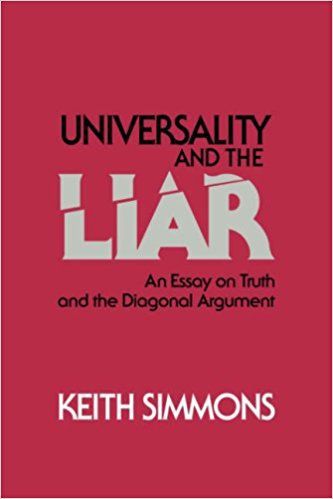
This book is about one of the most baffling of all paradoxes–the famous Liar paradox. Suppose we say: “We are lying now.” Then if we are lying, we are telling the truth; and if we are telling the truth we are lying. This paradox is more than an intriguing puzzle, since it involves the concept of truth. Thus any coherent theory of truth must deal with the Liar. Keith Simmons discusses the solutions proposed by medieval philosophers and offers his own solutions and in the process assesses other contemporary attempts to solve the paradox. Unlike such attempts, Simmons’ “singularity” solution does not abandon classical semantics and does not appeal to the kind of hierarchical view found in Barwise’s and Etchemendy’s The Liar. Moreover, Simmons’ solution resolves the vexing problem of semantic universality–the problem of whether there are semantic concepts beyond the expressive reach of a natural language such as English.
ما از اخلاق چه انتظاری داریم؟ این سوال شاید تاحدودی برای عموم مردم و یا متخصصان این رشته قابل پاسخ باشد؛ اینکه خوب بودن را به ما بیاموزد و در تنظیم روابط فردی م...

جشن کتاب تهران به ایستگاه سی و یکم رسیده است. حال و احوال نشر کتاب خوب نیست و باید فرهنگدوستان را به خرید و هدیه دادن کتاب ترغیب نمود. خانه اخلاقپژوهان جوان ب...

بنیاد کتابهای اخلاق اسلامی عمدتا پالایش جان از آلودگیها و آراستن آن به زیباییها است. اندیشه محوری این قبیل کتابها آن است که انسان فعلی آنی نیست که باید باشد...

-
0 Comments