Notice: تابع WP_Block_Type_Registry::register به طورنادرست فراخوانی شد. نامهای نوع بلوک نباید حروف بزرگ داشته باشند. لطفاً برای اطلاعات بیشتر، اشکال زدایی در وردپرس را مشاهده کنید. (این پیام در نگارش 5.0.0 افزوده شده است.) in /home/ethicsho/public_html/wp-includes/functions.php on line 5313
Warning: Use of undefined constant TDC_PATH_LEGACY - assumed 'TDC_PATH_LEGACY' (this will throw an Error in a future version of PHP) in /home/ethicsho/public_html/wp-content/plugins/td-composer/td-composer.php on line 109
Warning: Use of undefined constant TDSP_THEME_PATH - assumed 'TDSP_THEME_PATH' (this will throw an Error in a future version of PHP) in /home/ethicsho/public_html/wp-content/plugins/td-composer/td-composer.php on line 113 بایگانیهای 9780199552733 - خانه اخلاق پژوهان جوان Notice: Trying to access array offset on value of type bool in /home/ethicsho/public_html/wp-content/plugins/wp-ulike/inc/general-functions.php on line 807
Bioethics, still in its infancy, is routinely called on by the government to provide political cover for controversial public health decisions involving the life and death of Americans. Doomsday or worst-case scenarios are often at the heart of these biopolitical decisions. A central feature of science fiction, these scenarios can impart useful insights. But worst-case scenarios, like Frankenstein’s monster, can also be unpredictably destructive, undermining both preparedness and the very values bioethics seeks to promote. Discovering a new flu strain, for example, leads immediately to visions of the 1918 flu pandemic, the worst in human history. Likewise, a “ticking time bomb” scenario leads to the use of physicians for torture, and he all purpose worst case charge of “socialism” threatens to derail meaningful healthcare reform. In Worst Case Bioethics George Annas employs contemporary disputes involving death and disaster to explore the radical changes underway in public health practice, the application of constitutional law to medicine, and human rights discourse to promote human health and wellbeing. Worst-case scenarios, especially worst-case bioethics scenarios, distort debate, limit options, rationalize human rights abuses, and undermine equality and social justice. It is, nonetheless, possible to temper worst-case scenarios in ways that promote both the development of a meaningful American bioethics, and a life and liberty affirming global health and human rights movement. Written at the intersection of law, bioethics, public health, and human rights, Worst Case Bioethics will interest not only bioethicists but scholars in public health, public policy, and human rights law, as well as members of the public who want to participate in these policy debates. Written at the intersection of law, bioethics, public health, and human rights, Worse Case Bioethics will interest not only bioethicists but scholars in public health, public policy, and human rights law.
Book Summary of Aristotle And Moral RealismThis volume of essays brings together scholars of ancient philosophy and some of today’s most distinguished moral philosophers to discuss Aristotle’s ethics and the problems of moral realism. One of the central and perennial philosophical problems is the question of whether our ethical assertions and beliefs can be justifiably claimed to rest on some objective foundation. As an upholder of the objectivity of ethics and as one of the most important ethical thinkers in the history of philosophy, Aristotle’s writings on these questions are of the greatest interest. Indeed, much of recent moral philosophy has looked directly to Aristotle for inspiration on the problem of moral objectivity. For example, “virtue theorists” were influenced by Aristotle in their proposal that what determines the right thing to do in a particular case is what the virtuous man would do. Similarly, “sensibility theorists” have found support for their view in Aristotle’s remarks about the importance of the conditioning of one’s desires for the development of virtue and knowledge about the human good. One of the central issues addressed by the contributors is whether it is wrong to believe that the justification of a moral claim requires an “external” validation which goes beyond reference to human practices of moral condemnation and approval. Or does moral objectivity require ethical discourse to have an origin and explanatory power similar in important respects to that of an empirical science? The contributors range over many other issues and areas of Aristotle’s philosophy, including his account of tragedy and his theory of justice. It will be welcomed by all philosophers and classicists with an interest in moral philosophy and Greek ethics..
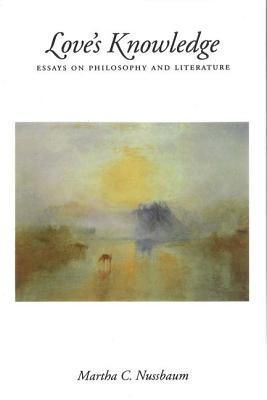
This volume brings together Nussbaum’s published papers on the relationship between literature and philosophy, especially moral philosophy. The papers, many of them previously inaccessible to non-specialist readers, deal with such fundamental issues as the relationship between style and content in the exploration of ethical issues; the nature of ethical attention and ethical knowledge and their relationship to written forms and styles; and the role of the emotions in deliberation and self-knowledge. Nussbaum investigates and defends a conception of ethical understanding which involves emotional as well as intellectual activity, and which gives a certain type of priority to the perception of particular people and situations rather than to abstract rules. She argues that this ethical conception cannot be completely and appropriately stated without turning to forms of writing usually considered literary rather than philosophical. It is consequently necessary to broaden our conception of moral philosophy in order to include these forms. Featuring two new essays and revised versions of several previously published essays, this collection attempts to articulate the relationship, within such a broader ethical inquiry, between literary and more abstractly theoretical elements.
ما از اخلاق چه انتظاری داریم؟ این سوال شاید تاحدودی برای عموم مردم و یا متخصصان این رشته قابل پاسخ باشد؛ اینکه خوب بودن را به ما بیاموزد و در تنظیم روابط فردی م...

جشن کتاب تهران به ایستگاه سی و یکم رسیده است. حال و احوال نشر کتاب خوب نیست و باید فرهنگدوستان را به خرید و هدیه دادن کتاب ترغیب نمود. خانه اخلاقپژوهان جوان ب...

بنیاد کتابهای اخلاق اسلامی عمدتا پالایش جان از آلودگیها و آراستن آن به زیباییها است. اندیشه محوری این قبیل کتابها آن است که انسان فعلی آنی نیست که باید باشد...

-
0 Comments