Notice: تابع WP_Block_Type_Registry::register به طورنادرست فراخوانی شد. نامهای نوع بلوک نباید حروف بزرگ داشته باشند. لطفاً برای اطلاعات بیشتر، اشکال زدایی در وردپرس را مشاهده کنید. (این پیام در نگارش 5.0.0 افزوده شده است.) in /home/ethicsho/public_html/wp-includes/functions.php on line 5313
Warning: Use of undefined constant TDC_PATH_LEGACY - assumed 'TDC_PATH_LEGACY' (this will throw an Error in a future version of PHP) in /home/ethicsho/public_html/wp-content/plugins/td-composer/td-composer.php on line 109
Warning: Use of undefined constant TDSP_THEME_PATH - assumed 'TDSP_THEME_PATH' (this will throw an Error in a future version of PHP) in /home/ethicsho/public_html/wp-content/plugins/td-composer/td-composer.php on line 113 بایگانیهای 9780199253043 - خانه اخلاق پژوهان جوان Notice: Trying to access array offset on value of type bool in /home/ethicsho/public_html/wp-content/plugins/wp-ulike/inc/general-functions.php on line 807
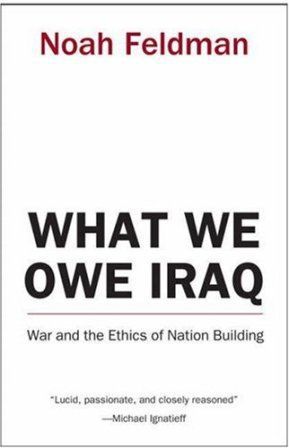
What do we owe Iraq? America is up to its neck in nation building–but the public debate, focused on getting the troops home, devotes little attention to why we are building a new Iraqi nation, what success would look like, or what principles should guide us.What We Owe Iraqsets out to shift the terms of the debate, acknowledging that we are nation building to protect ourselves while demanding that we put the interests of the people being governed–whether in Iraq, Afghanistan, Kosovo, or elsewhere–ahead of our own when we exercise power over them. Noah Feldman argues that to prevent nation building from turning into a paternalistic, colonialist charade, we urgently need a new, humbler approach. Nation builders should focus on providing security, without arrogantly claiming any special expertise in how successful nation-states should be made. Drawing on his personal experiences in Iraq as a constitutional adviser, Feldman offers enduring insights into the power dynamics between the American occupiers and the Iraqis, and tackles issues such as Iraqi elections, the prospect of successful democratization, and the way home. Elections do not end the occupier’s responsibility. Unless asked to leave, we must resist the temptation of a military pullout before a legitimately elected government can maintain order and govern effectively. But elections that create a legitimate democracy are also the only way a nation builder can put itself out of business and–eventually–send its troops home. Feldman’s new afterword brings the Iraq story up-to-date since the book’s original publication in 2004, and asks whether the United States has acted ethically in pushing the political process in Iraq while failing to control the security situation; it also revisits the question of when, and how, to withdraw.
Aristotle’s view of philosophical method and the substantive conclusions he reaches by using his methods are of permanent interest. His views display both development and internal tensions; but his main line of argument is both coherent and philosophically challenging. This book explores Aristotle’s philosophical method, and the merits of his conclusions. Since a proper understanding of Aristotle’s method requires emphasis on the systematic character of his philosophy, Terence Irwin examines questions in several different areas of Aristotle’s philosophy – especially metaphysics, epistemology, philosophy of mind, and ethics – and stresses the connections between doctrines and issues that are often discussed piecemeal.
Aristotle’s teaching on the subject of happiness has been a topic of intense philosophical debate in recent years; it is of vital importance to the question of the relevance of his ethics in the present day. Aristotle’s admirers struggle to read a comprehensive account of the supreme happiness into the Nicomachean Ethics; Kenny argues that those who are prepared to take the neglected Eudemian Ethics seriously preserve their admiration intact without doing violence to any of the relevant texts of the Nicomachean Ethics. Kenny has refined his position on the relation between the two works, offering a fresh examination and interpretation of the Eudemian Ethics on the basis of the 1991 Oxford Classical Text. He combines scholarly discussion of the Greek texts with reflection of the topics covered by Aristotle, taking account of post-Aristotelian treatments of themes such as moral vocation and moral luck.
ما از اخلاق چه انتظاری داریم؟ این سوال شاید تاحدودی برای عموم مردم و یا متخصصان این رشته قابل پاسخ باشد؛ اینکه خوب بودن را به ما بیاموزد و در تنظیم روابط فردی م...

جشن کتاب تهران به ایستگاه سی و یکم رسیده است. حال و احوال نشر کتاب خوب نیست و باید فرهنگدوستان را به خرید و هدیه دادن کتاب ترغیب نمود. خانه اخلاقپژوهان جوان ب...

بنیاد کتابهای اخلاق اسلامی عمدتا پالایش جان از آلودگیها و آراستن آن به زیباییها است. اندیشه محوری این قبیل کتابها آن است که انسان فعلی آنی نیست که باید باشد...

-
0 Comments